In global procurement, speed and supplier quality rarely come together naturally. Buyers often spend weeks filtering through hundreds of suppliers, only to end up with inconsistent pricing and unreliable communication.
This is where RFQ (Request for Quotation) systems become useful. Platforms like Alibaba RFQ—and similar sourcing workflows used by professional sourcing companies such as Ucsourcing—allow buyers to centralize demand and let suppliers compete for the order.
For buyers in the United States, United Kingdom, Germany, Canada, Australia, and other import-driven economies, RFQ-style sourcing has become a standard way to shorten supplier discovery time while improving quotation quality.
You can also combine RFQ-style sourcing with structured procurement services here:
👉 https://ucsourcing.com/our-services/
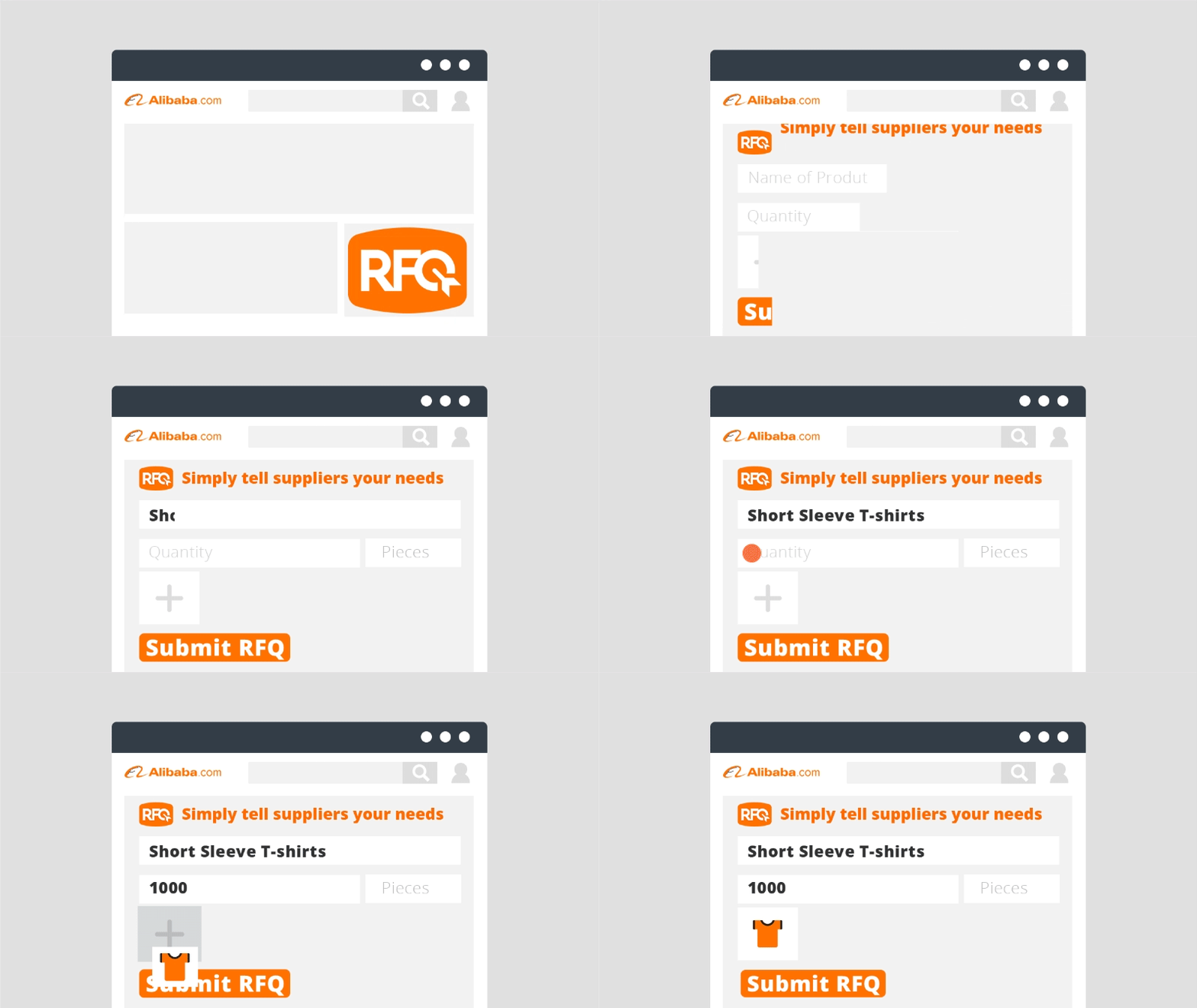
What Is RFQ in Global Sourcing?
RFQ (Request for Quotation) is a structured buying request where a buyer publishes product requirements and invites suppliers to submit price offers.
Instead of contacting suppliers one by one, RFQ flips the process:
- Buyers define requirements once
- Suppliers compete to respond
- Buyers compare quotes centrally
This model is widely used not only in Alibaba but also in private sourcing ecosystems managed by agencies like Ucsourcing, especially for private label and OEM projects.
Explore private label sourcing solutions here:
👉 https://ucsourcing.com/private-label-packaging-service/
RFQ vs Direct Supplier Search: Which Works Better?
Both RFQ and direct sourcing have advantages, but they serve different strategies.
| Factor | RFQ Model | Direct Supplier Search |
|---|---|---|
| Speed of sourcing | Fast (multiple quotes at once) | Slower (manual outreach) |
| Supplier control | Medium | High |
| Price discovery | Competitive bidding effect | Negotiation-based |
| Supplier quality filter | Mixed (needs screening) | Pre-screened by buyer |
| Best for | Fast sourcing & comparison | Strategic long-term sourcing |
In practice, experienced buyers often combine both methods.
For example:
- RFQ for quick market pricing
- Direct sourcing for verified factories
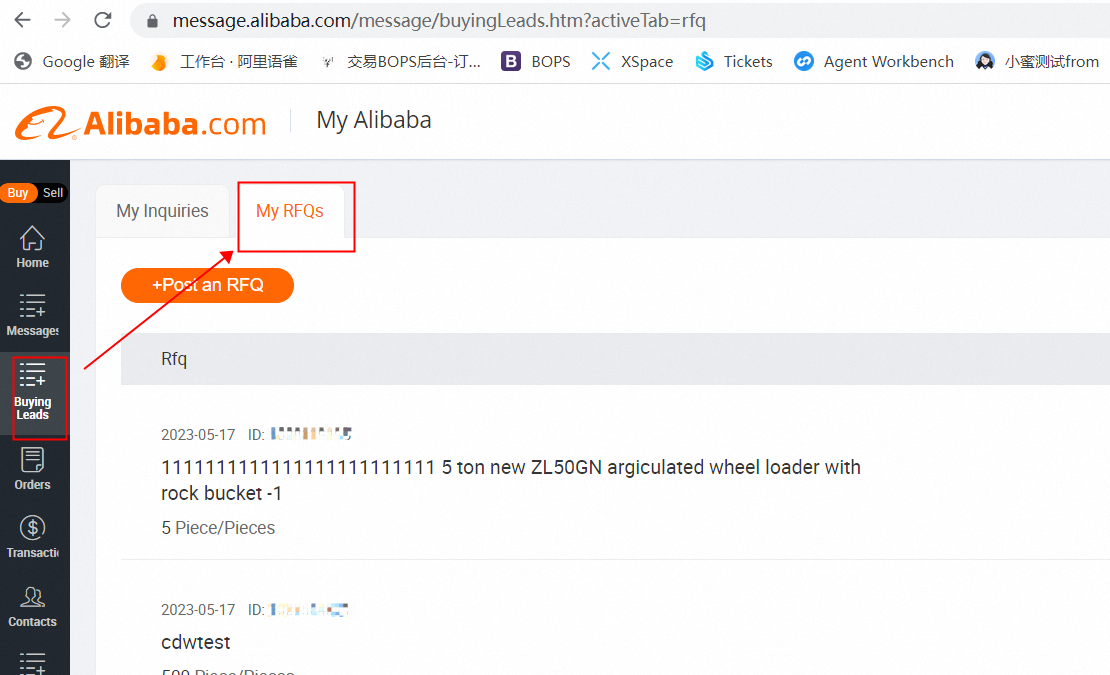
How RFQ Actually Works in Practice
The RFQ workflow is simple, but effectiveness depends on how well the request is structured:
- Buyer posts product requirement
- System distributes request to matching suppliers
- Suppliers submit quotations
- Buyer reviews and compares offers
- Shortlisted suppliers move to sampling or negotiation
However, the real difference between success and failure is not the system—it is how precise the RFQ is written.
How Buyers in Import-Heavy Countries Use RFQ Strategically
In markets like the US, UK, Germany, and Australia, importers often rely on RFQ systems because:
- They lack direct access to factories
- Time zone differences slow down communication
- Supplier verification is difficult remotely
- Product customization requires structured communication
That is why many companies now work with sourcing partners like Ucsourcing, who manage RFQ-style procurement professionally.
Product sourcing support:
👉 https://ucsourcing.com/products/
How to Write a High-Converting RFQ (Professional Framework)
A well-structured RFQ is essentially a mini product brief. Poor RFQs attract low-quality suppliers; clear RFQs attract competitive factories.
Key elements of an effective RFQ:
- Product description (clear category + use case)
- Technical specifications
- Materials and compliance requirements
- Order quantity (trial + scaling plan)
- Packaging requirements
- Shipping expectations
- Target price range (optional but helpful)
Example of a Strong RFQ Structure
A professional RFQ typically includes:
1. Introduction
Who you are and what you are sourcing.
2. Product Specifications
Materials, dimensions, function, colors, etc.
3. Order Quantity
Trial order + expected scaling.
4. Packaging Requirements
Custom branding or retail packaging needs.
5. Logistics Instructions
Shipping method and destination details.
Why RFQ Results Vary So Much
Many beginners expect RFQ to automatically deliver “best suppliers.” In reality, outcomes depend on three factors:
- Supplier participation quality
- Buyer requirement clarity
- Market competitiveness of the product
Low-quality RFQs attract trading companies and resellers, while well-structured RFQs attract factories or high-level OEM suppliers.
Factories vs Trading Companies in RFQ Results
One common misconception is that factories are always better than trading companies. In RFQ sourcing, this is not always true.
| Factor | Factories | Trading Companies |
|---|---|---|
| Price | Lower in bulk | Sometimes competitive |
| MOQ | Higher | Flexible |
| Product range | Narrow | Wide |
| Customization speed | Medium | Fast |
| Communication | Technical | Sales-focused |
In many cases, trading companies provide better flexibility for small-to-medium importers.
How to Identify the Best Supplier From RFQ Results
Once you receive multiple quotes, selection should not be based on price alone.
Key evaluation criteria:
- Response quality and professionalism
- Understanding of your requirements
- Willingness to suggest improvements
- Transparency in pricing breakdown
- Ability to provide samples quickly
- Communication consistency
A good supplier often behaves like a consultant, not just a seller.
The Role of Samples in RFQ Validation
Sampling is the most important step after RFQ comparison.
Through samples, you can evaluate:
- Material durability
- Product finishing
- Functional performance
- Packaging quality
- Compliance standards
Most experienced importers will never place bulk orders without physical sample validation.
Common RFQ Mistakes Importers Make
1. Too vague requirements
Suppliers cannot quote accurately without clear specs.
2. No quantity planning
MOQ mismatches lead to wasted negotiations.
3. Ignoring packaging costs
Packaging often changes final landed cost significantly.
4. Focusing only on price
Lowest price often equals highest risk.
5. Not verifying supplier background
RFQ includes mixed supplier types—screening is necessary.
Why Many Buyers Shift From RFQ Platforms to Sourcing Agents
While RFQ platforms are useful, they still require:
- Supplier filtering
- Negotiation
- Quality control
- Logistics coordination
This is why many importers in the US, UK, and EU now work with sourcing partners like Ucsourcing to manage the entire workflow.
Instead of managing RFQ manually, buyers get:
- Pre-vetted suppliers
- Negotiated pricing
- Quality inspection support
- Private label customization
- End-to-end sourcing execution
Learn more:
👉 https://ucsourcing.com/our-services/

FAQ: Alibaba RFQ and Global Sourcing
Is RFQ better than searching suppliers manually?
RFQ is faster for price discovery, but manual sourcing gives more control over supplier selection.
Can RFQ guarantee factory prices?
Not always. RFQ includes both factories and trading companies.
How many suppliers respond to RFQ?
Typically 5–15 suppliers depending on product category and demand clarity.
Is RFQ suitable for small businesses?
Yes, especially for testing products or initial sourcing.
Do professional sourcing companies still use RFQ?
Yes, but they combine RFQ with direct factory sourcing for better control.
Final Thoughts: RFQ Is a Tool, Not a Strategy
RFQ systems are powerful—but only when used correctly. The real advantage comes from how clearly you define your product and how effectively you filter suppliers.
For serious importers, RFQ is just the starting point. The real value comes from execution—supplier validation, negotiation, customization, and logistics.
That is why many global buyers eventually integrate RFQ with professional sourcing support to scale reliably.
If you are looking to streamline sourcing, reduce risk, and work with verified suppliers, we can help you build a more efficient procurement system.
Contact Us
WAPhone / WhatsApp: +86-18026272594
Email: [email protected]