Finding a supplier in China may look easy from the outside. You search online, send a few messages, compare prices, ask for samples, and place an order.
But once you start sourcing products for real, the process becomes much more complicated.
You may find hundreds of suppliers selling similar products, but it is hard to know who is a real factory, who is a trading company, who can handle customization, and who is only offering a low price to get your attention. You may also face slow replies, unclear quotations, poor samples, changing material quality, hidden costs, and shipment delays.
That is why many importers, Amazon sellers, retailers, and growing brands choose to work with a China sourcing agent.
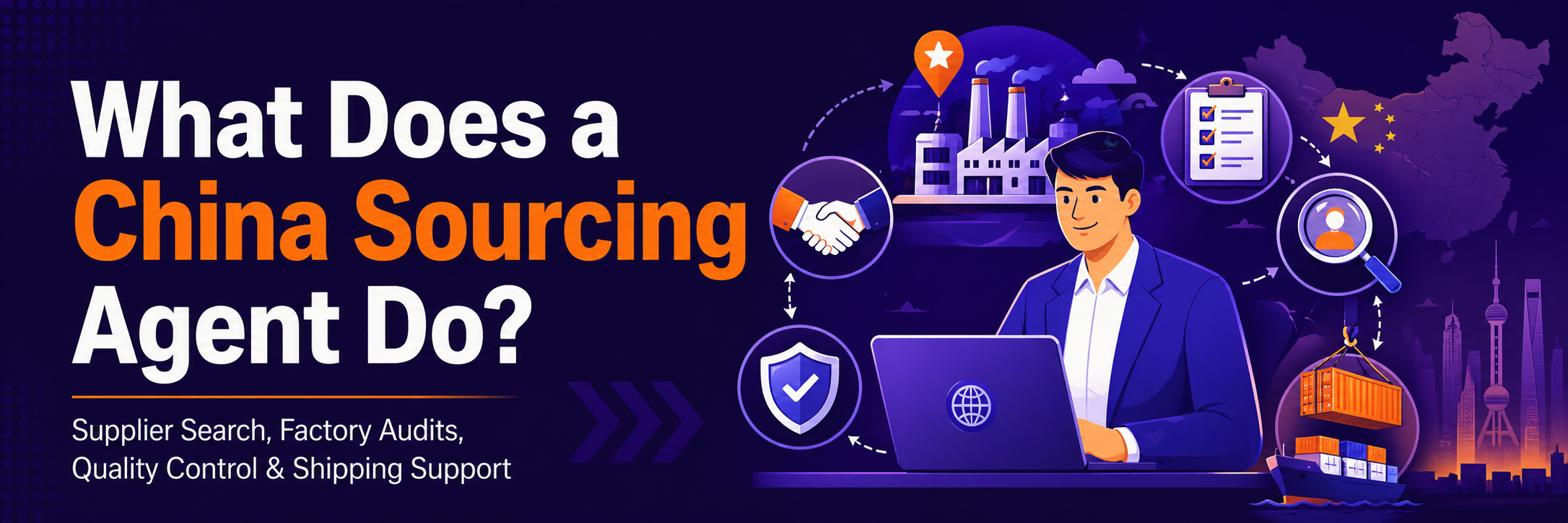
A China sourcing agent helps you find suitable suppliers, compare quotations, verify factories, develop samples, follow production, inspect goods, and arrange shipping. More importantly, a good sourcing agent helps reduce risks before you pay a deposit, before mass production starts, and before your goods leave China.
The real benefits of working with a sourcing agent are not only about saving time. They are about making your sourcing process more transparent, more controlled, and less risky.
Explore sourcing services here:
https://ucsourcing.com/our-services/
What Is a China Sourcing Agent?
A China sourcing agent is a local sourcing partner who helps overseas buyers purchase products from China. They support the buyer throughout the sourcing process, from supplier search and price comparison to sample development, production follow-up, inspection, consolidation, and shipping.
For many overseas buyers, sourcing from China can be challenging because of language differences, time zones, supplier verification, quality control, payment risk, and logistics. A sourcing agent helps bridge that gap.
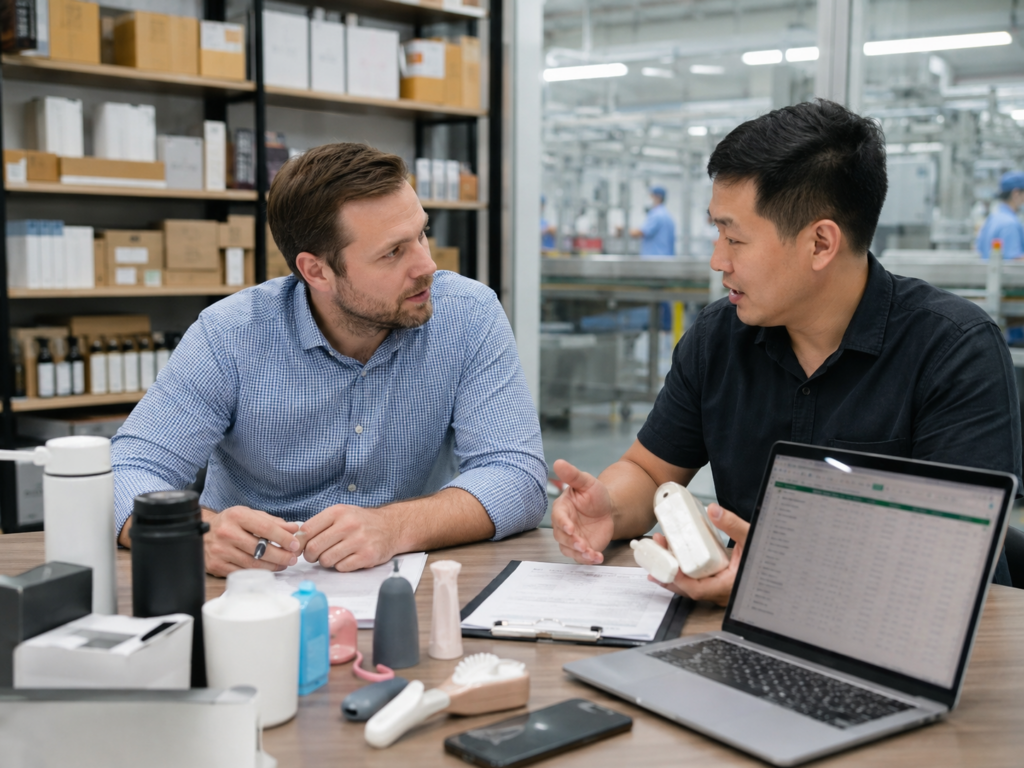
Instead of relying only on online supplier listings, a professional China sourcing agent can help you understand which suppliers are real manufacturers, which ones are trading companies, which ones are better for private label or custom orders, and which ones may not be suitable for your business.
At UCSOURCING, we help buyers who need more than a supplier list. Many clients need support with product development, packaging, supplier comparison, factory communication, quality inspection, order follow-up, and shipping. That is where a sourcing agent becomes valuable.
According to Amazon Business’ 2025 State of Procurement Report, 37% of procurement decision-makers said they want to spend less time sourcing suppliers for simple purchases. This shows how much time supplier searching can take, even for experienced procurement teams. For small and mid-sized importers, the time cost can be even higher because they often need to search suppliers, compare quotes, verify factories, check samples, and solve communication issues by themselves.
A China sourcing agent helps reduce this workload by filtering suppliers faster, removing unqualified options early, and helping buyers focus only on factories that match their product, budget, and quality requirements.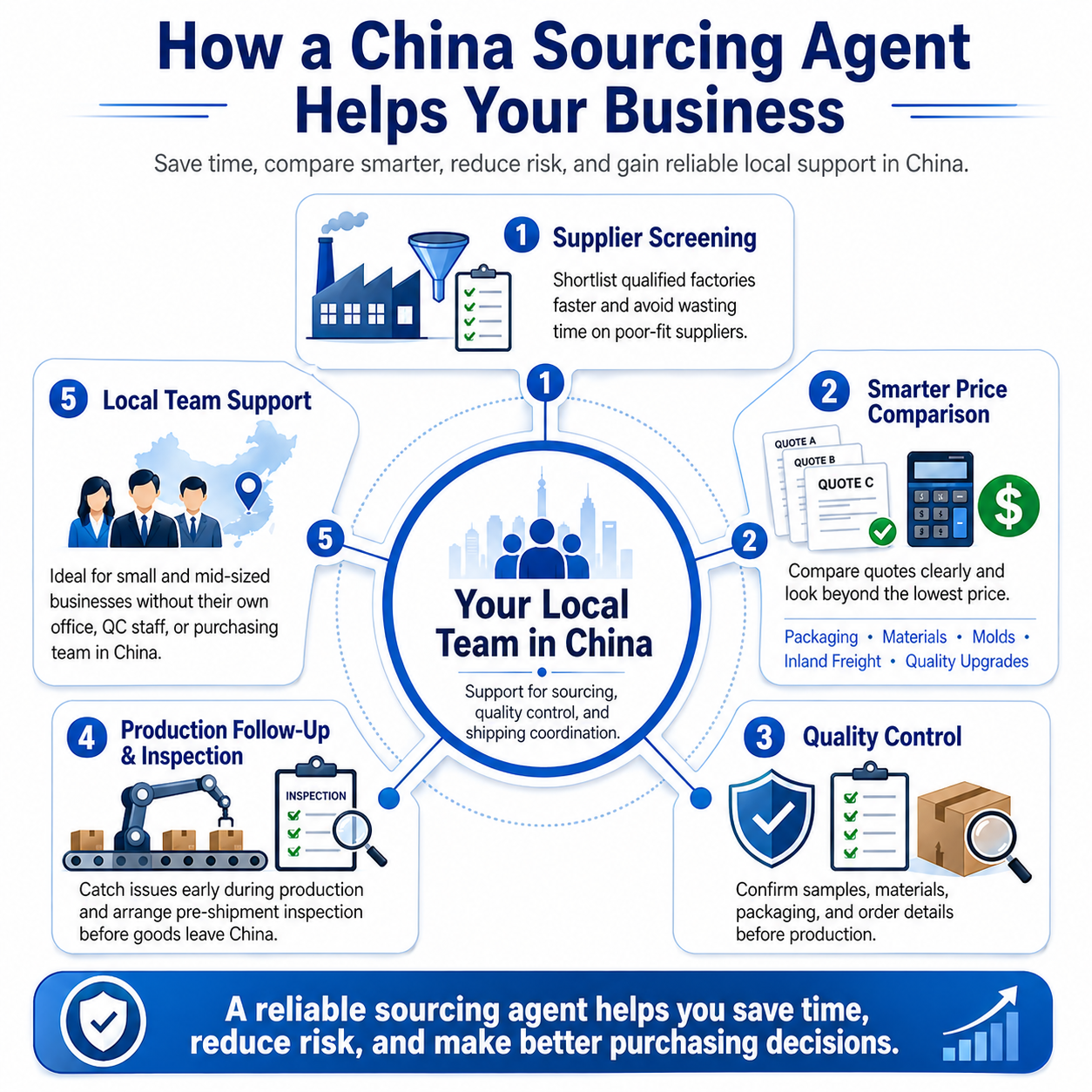
Benefits of Working with a Sourcing Agent:
The benefits of working with a sourcing agent become clear when you are sourcing a new product, customizing packaging, testing a new category, or buying from multiple factories.
Save Time on Supplier Searching
A sourcing agent can help you save time by filtering out unsuitable suppliers early. Instead of spending weeks talking to factories that cannot meet your requirements, you can focus on suppliers that actually match your product, budget, and market.
Compare Prices More Accurately
A sourcing agent can also help you compare prices more accurately. The lowest quote is not always the best deal. Some suppliers offer a very low price at the beginning, then add extra costs later for packaging, materials, molds, inland freight, or quality upgrades.
Reduce Quality Risks Before Shipment
Quality control is another major benefit. Before production, your sourcing agent can help confirm samples, materials, packaging, and order details. During production, they can follow up with the factory and catch problems early. Before shipment, they can arrange a pre-shipment inspection to check whether the finished goods match your approved sample and purchase order.
For small and mid-sized companies, a reliable China sourcing agent can work like your local team in China, especially if you do not have your own office, QC staff, or purchasing team there.
How to Choose a Sourcing Agent
If you are wondering how to choose a sourcing agent, do not choose based only on the lowest service fee. A cheap sourcing agent can become expensive if they cause quality problems, delays, hidden markups, or supplier confusion.
A good sourcing agent should be transparent, experienced, and organized. They should be able to explain how they find suppliers, how they compare quotations, how they manage samples, how they follow production, and how they handle quality inspection.
You should also check whether they understand your product category. Sourcing promotional gifts is very different from sourcing children’s products, apparel, rainwear, electronics accessories, stationery, or custom packaging. Each product category has different materials, safety requirements, production risks, and inspection points.
The best China sourcing agent is not simply the one who finds the lowest price. The best China sourcing agent is the one who helps you balance price, quality, lead time, compliance, packaging, and long-term supplier reliability.
How to Screen Chinese Factories?
Factory screening is one of the most important steps in China sourcing. A supplier may look professional online, but that does not always mean they have the right production ability.
When screening Chinese factories, start by checking whether the supplier has real experience with your product category. A factory that produces basic stationery may not be suitable for premium art kits. A supplier that sells hundreds of unrelated products may be a trading company instead of a direct manufacturer.
You should also check business information, production photos, export experience, product certificates, sample quality, production capacity, and communication quality. If you need customization, confirm whether the supplier can handle logo printing, packaging design, color matching, material changes, barcodes, labels, and carton marks.
For larger or more important orders, factory verification should be done before paying a large deposit. This can be done through a factory audit, video call, document check, or on-site visit.
The goal is simple: make sure the supplier is real, capable, and suitable for your order.
Factory Quality Inspection Process
A proper factory quality inspection process starts with confirming the approved sample, product specifications, packaging requirements, labels, and AQL standard before production.
During production, the factory should be checked to make sure the materials, colors, size, workmanship, and packaging match the buyer’s requirements.
Before shipment, a final inspection should review product appearance, function, quantity, packaging, carton marks, barcodes, and overall quality.
This process helps buyers catch problems early, reduce shipment risks, and make sure the goods meet the agreed standard before they leave the factory.
How to Do a Factory Audit?
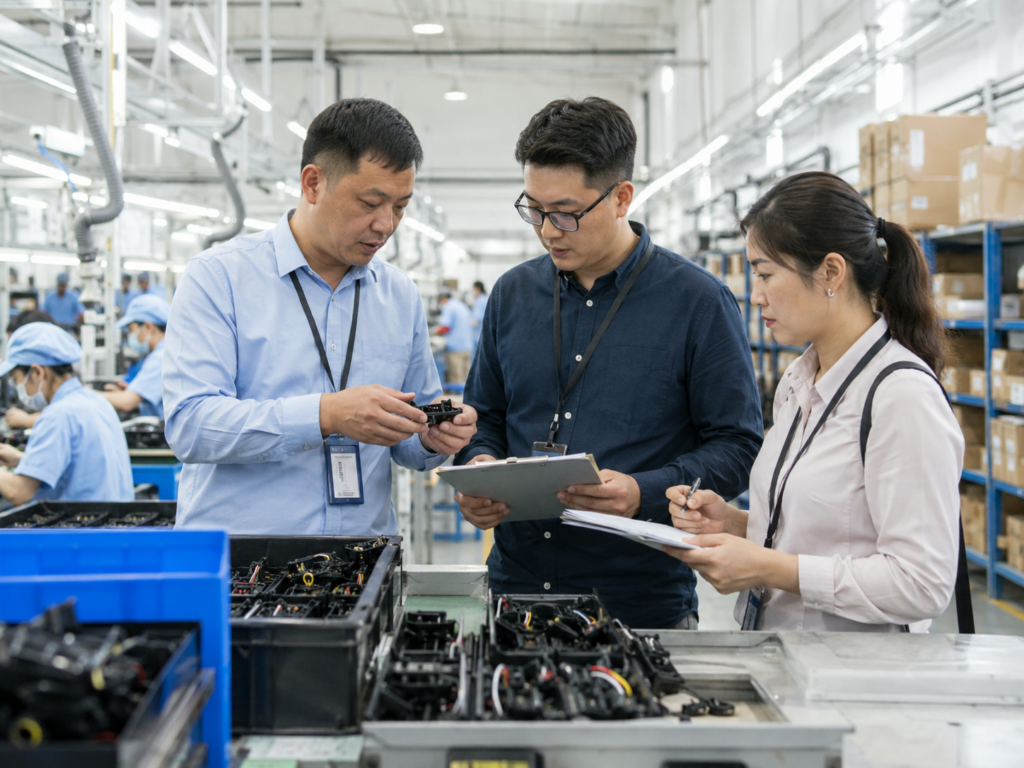
A factory audit is used to check whether a supplier can actually produce your goods properly. It is not just a factory visit or a few photos.
A proper factory audit should review the production area, equipment, workers, warehouse, quality control process, management system, previous products, and order handling ability. For custom products, the audit should also check whether the factory can control materials, colors, printing, molds, packaging, and production consistency.
If your product has safety or compliance requirements, the audit should also review whether the factory has relevant testing reports or experience with similar export markets.
A factory audit can help you find out whether the supplier is a real manufacturer, whether they outsource production, whether their capacity is enough, and whether their quality control process is reliable.
For buyers who cannot visit China in person, UCSOURCING can help check supplier conditions, review factory capability, and report potential risks before the order moves forward.
For custom development and branding, explore:
https://ucsourcing.com/private-label-packaging-service/
How to Do a Pre-Shipment Inspection?
A pre-shipment inspection is usually done when production is complete and most or all of the goods are packed.
The purpose is to check whether the finished goods match the approved sample, purchase order, packaging requirements, and quality standards. Inspectors usually check product appearance, size, color, function, quantity, labeling, packaging, carton marks, and workmanship.
For example, if you are sourcing pencil sets, inspection may include checking the color assortment, logo printing, pencil sharpening performance, broken leads, packaging quality, barcode placement, inner box quantity, outer carton strength, and whether the final goods match the approved sample.
A pre-shipment inspection is important because it gives you a chance to find problems before the goods leave China. Once the shipment arrives in your country, fixing quality issues becomes much more expensive and time-consuming.
What Is the AQL Quality Standard?
AQL stands for Acceptable Quality Limit. It is a common inspection method used to decide how many units should be checked from a shipment and what defect level is acceptable.
In most consumer goods inspections, defects are usually divided into three types: critical defects, major defects, and minor defects.
Critical Defects
Critical defects may create safety risks or make the product illegal to sell.
Major Defects
Major defects affect product use, appearance, or customer satisfaction.
Minor Defects
Minor defects are small issues that do not seriously affect use but still lower the product’s perceived quality.
AQL does not mean suppliers are allowed to make defective products on purpose. It is a statistical sampling method used to judge whether a production batch meets the agreed quality level.
Many buyers use AQL 2.5 for major defects and AQL 4.0 for minor defects, but the final standard should depend on the product type, sales channel, target market, and customer expectations.
Sample Approval Process
Sample approval is one of the most important steps before mass production. Many quality problems happen because the sample was not clearly confirmed.
A good sample approval process should include product size, material, color, function, logo position, printing method, packaging, label content, barcode, carton details, and any special market requirements.
For custom products, it is better to keep an approved sample as the production standard. This sample becomes the reference for mass production and inspection. If there is a dispute later, the finished goods can be compared against the approved sample.
Typical Sample Approval Flow
Product requirements → Supplier quotation → First sample → Buyer feedback → Revised sample → Final approved sample → Mass production → Inspection based on the approved sample
UCSOURCING can help manage this process, especially when a project involves multiple suppliers, different materials, custom packaging, or private-label requirements.
How to Avoid Material Substitution
Material substitution is a common sourcing risk. It happens when a supplier uses a cheaper or different material than the one approved in the sample.
Sometimes this is done to reduce cost. Sometimes it happens because the buyer’s material requirements were not written clearly enough.
To reduce this risk, buyers should confirm material details in writing before production. This may include material name, weight, thickness, composition, color code, surface treatment, sample photos, and testing requirements.
For important orders, buyers can also request pre-production samples, raw material photos, production updates, and inspection checks. If needed, third-party lab testing can be arranged to verify material composition, safety, or performance.
The key is to make the approved sample and purchase order as clear as possible. Vague requirements give suppliers too much room to make changes.
How Does a Sourcing Agent Charge?
Sourcing agent fees can vary depending on the service model. Some agents charge a percentage of the order value. Some charge a fixed fee. Some include their service cost in the product price. Others may charge separately for factory audits, inspections, sample handling, warehousing, or shipping coordination.
The most important thing is transparency. Before working with a sourcing agent, ask what is included, what is not included, and whether there may be extra charges.
At UCSOURCING, our service model is designed to make the process easier to understand. For full-service sourcing, we can support supplier selection, quotation comparison, sample coordination, production follow-up, quality inspection, consolidation, and shipping. For buyers who already have suppliers, we can also help with inspection and shipping coordination.
A sourcing fee should not be viewed only as an extra cost. If your sourcing agent helps you avoid a bad supplier, prevent quality issues, reduce delays, or improve packaging, the value can be much higher than the fee itself.
Sourcing Agent vs. Trading Company
Many buyers confuse a sourcing agent with a trading company, but they are not the same.
A sourcing agent works on behalf of the buyer. Their job is to help the buyer find suppliers, compare options, manage production, and reduce sourcing risk. A good sourcing agent should be transparent and help the buyer make better purchasing decisions.
A trading company usually buys from factories and resells products to buyers. This can make the buying process easier, but the buyer may not always know the original factory, original cost, or actual production situation.
This does not mean trading companies are always bad. Some trading companies are professional and useful, especially for small orders or product categories where they have strong experience. But if you need transparency, custom development, supplier comparison, and long-term supply chain control, working with a China sourcing agent may be a better choice.
How EXW, FOB, and DDP Work in China Sourcing
Shipping terms are a key part of China sourcing. Many buyers compare prices without checking whether the quote is EXW, FOB, or DDP. This can lead to confusion and unexpected costs.
EXW
EXW means the supplier price usually only covers the goods at the factory. The buyer is responsible for pickup, export customs, international freight, import customs, duties, taxes, and final delivery.
FOB
FOB means the supplier delivers the goods to the port and handles export customs in China. The buyer is responsible for international freight, destination charges, import customs clearance, duties, taxes, and final delivery.
DDP
DDP means the goods are delivered to the buyer’s address with duties and taxes included. This is often easier for small businesses and e-commerce sellers, but the price is usually higher because more services and risks are included.
A sourcing agent can help buyers choose the right shipping method based on order size, destination country, product type, budget, and delivery deadline. For example, a small Amazon seller may prefer DDP because it is simpler, while a larger importer may prefer FOB because they already have their own freight forwarder and customs broker.
UCSOURCING Service Process
A clear process helps reduce mistakes. At UCSOURCING, we usually support buyers through the following steps.
Step 1: Confirm Product Requirements
We confirm the product requirements, including material, size, quantity, packaging, target price, destination market, and customization needs.
Step 2: Search and Compare Suppliers
We search for and compare suitable suppliers. This includes checking supplier experience, quotation details, production ability, sample quality, and communication reliability.
Step 3: Arrange and Confirm Samples
We arrange samples and help the buyer confirm the details before mass production. If the sample needs improvement, we communicate with the supplier and follow up on revisions.
Step 4: Follow Production
After the order is placed, we follow production to reduce delays and make sure the factory understands the important details.
Step 5: Arrange Quality Inspection
We arrange quality inspection before shipment. The inspection can be based on the approved sample, purchase order, packaging requirements, and AQL standard.
Step 6: Coordinate Consolidation and Shipping
Finally, we help coordinate consolidation and shipping, including EXW, FOB, or DDP options depending on the buyer’s needs.
This process is especially useful for buyers who source multiple product categories, need customization, or do not have their own team in China.
Common China Sourcing Risks and How to Reduce Them
China sourcing can give buyers strong advantages, but the risks need to be managed properly.
Choosing Suppliers Only by Low Price
One common risk is choosing a supplier based only on the lowest price. The solution is to compare not only price, but also materials, production ability, packaging, quality control, and export experience.
Unclear Sample Approval
Another risk is unclear sample approval. The solution is to confirm a final approved sample before mass production and make sure inspection is based on that sample.
Inconsistent Quality
A third risk is inconsistent quality. The solution is production follow-up, pre-shipment inspection, and clear AQL standards.
Hidden Costs
A fourth risk is hidden cost. The solution is to confirm whether the quotation is EXW, FOB, or DDP and ask exactly what is included.
Poor Communication
A fifth risk is poor communication. The solution is to work with a sourcing agent who can communicate with factories in Chinese and explain your requirements clearly from the beginning.
Final Thoughts
Working with a China sourcing agent is not just about finding a supplier. It is about building a safer, more transparent, and more reliable sourcing process.
The best China sourcing agent should help you understand the market, screen factories, compare quotations, confirm samples, follow production, inspect quality, and arrange shipping. More importantly, they should help you avoid costly mistakes before they happen.
For importers, online sellers, retailers, and growing brands, the benefits of working with a sourcing agent are clear: less guesswork, better supplier control, lower risk, and a smoother path from product idea to final delivery.
If you are not sure how to choose a sourcing agent, start by looking for transparency, product experience, quality control ability, and a clear service process. With the right partner, sourcing from China can become much easier to manage and much easier to scale.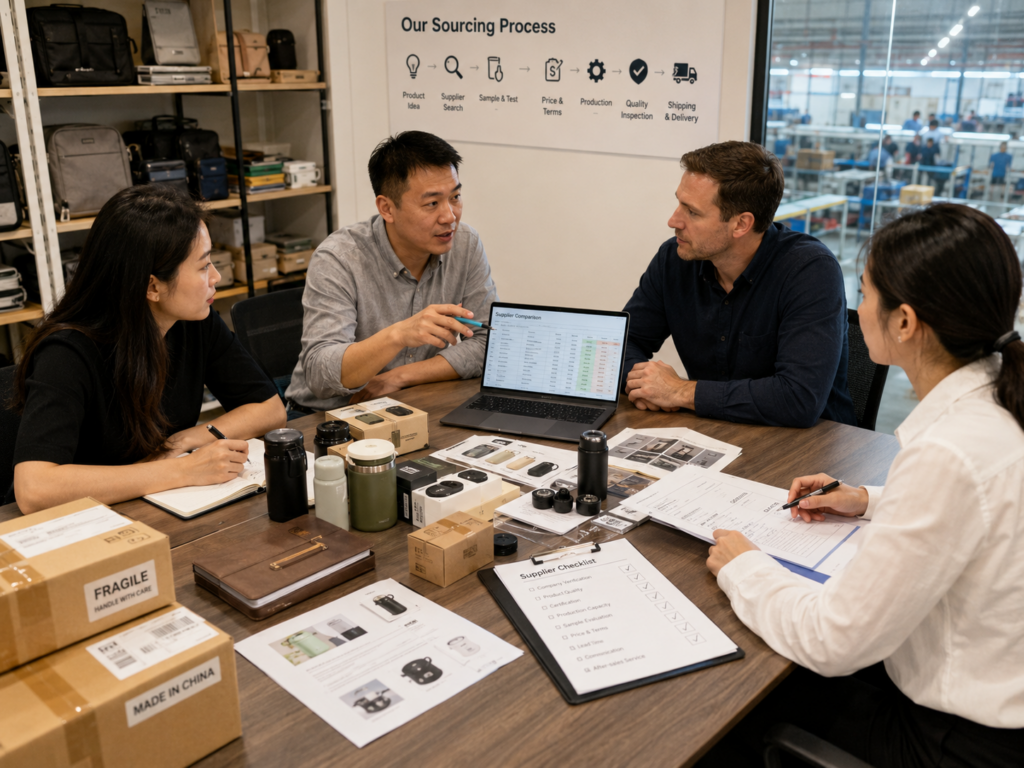
Explore branding solutions here:
https://ucsourcing.com/products/
Contact UCSOURCING
If you need to source from China, our team can assist you with everything from supplier selection to final delivery.
WhatsApp: +86-18026272594 name:Jenny
Email: [email protected]
[email protected]
We help global buyers source smarter, reduce risks, and build stable supply chains in China.