



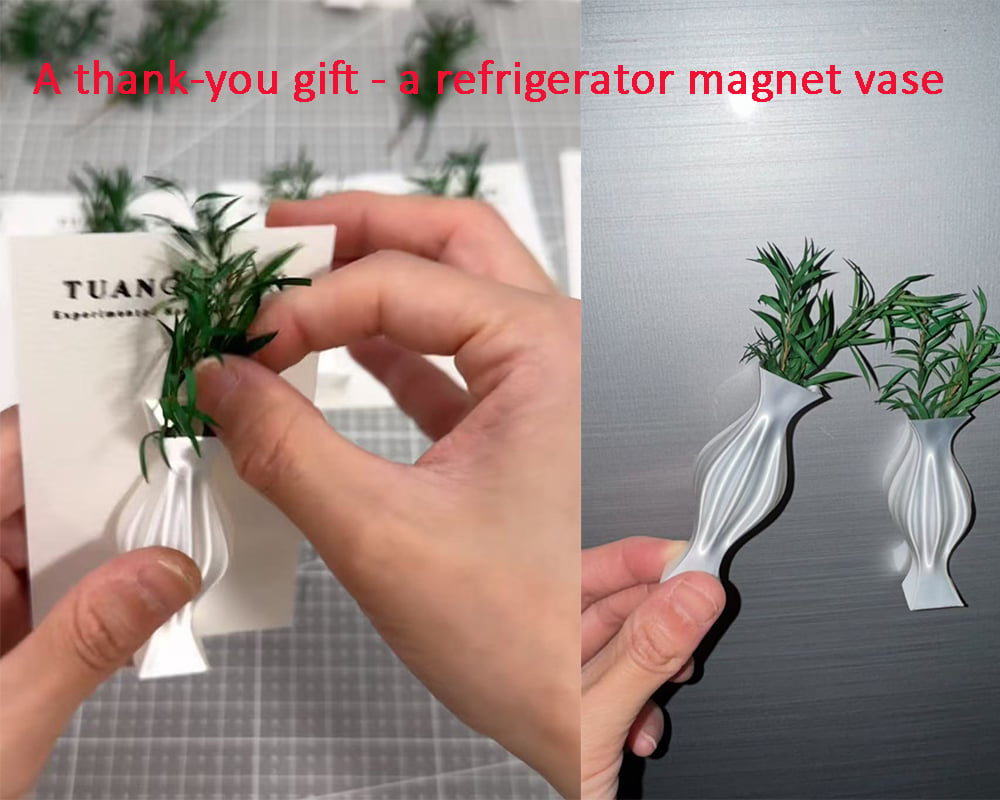
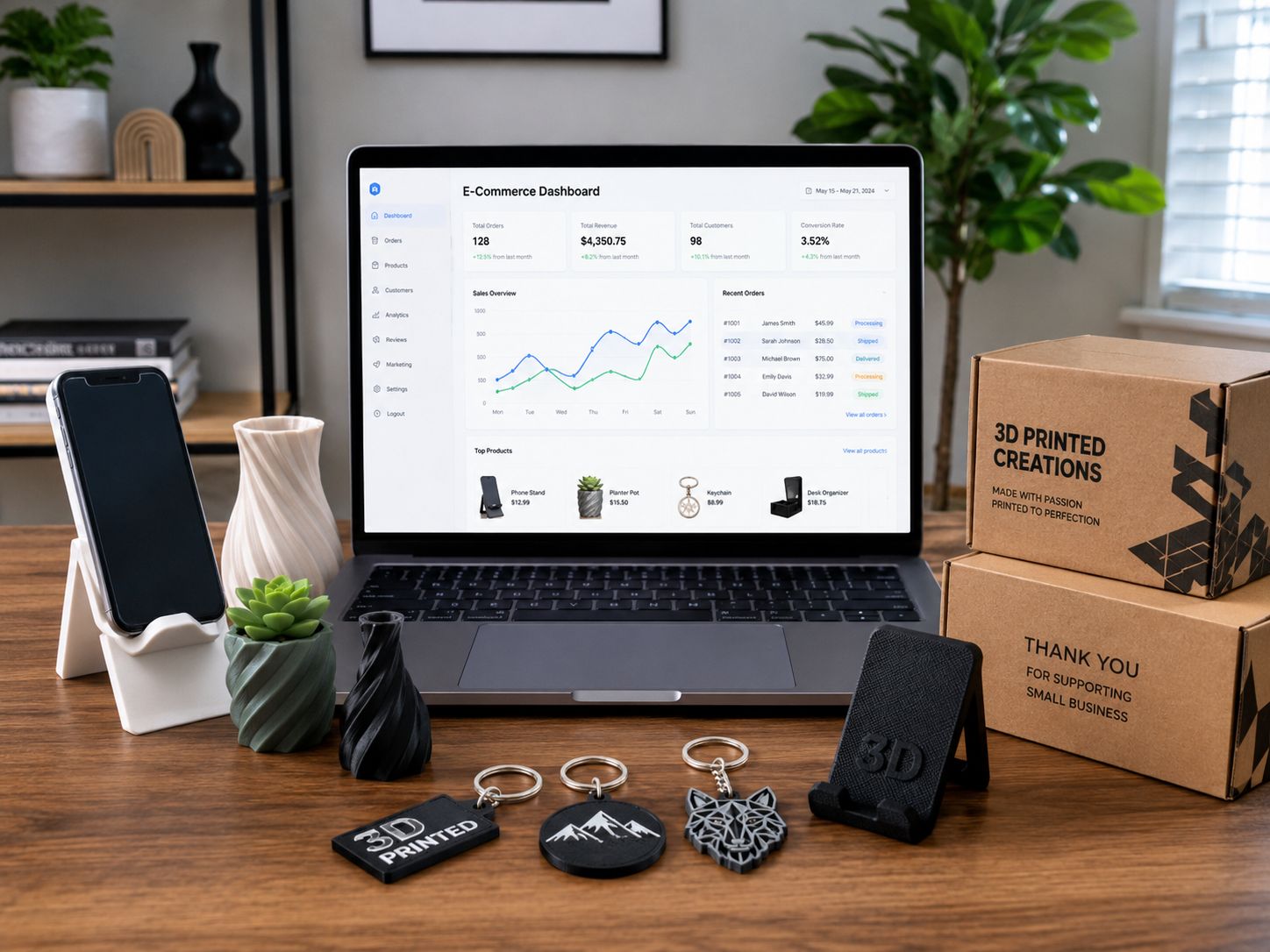
3D printing used to sound like something only engineers, hobbyists, or tech companies cared about. A few years ago, most people saw it as a tool for making prototypes, toys, or experimental parts that looked interesting but were not always ready for real customers.
That has changed.
Today, 3D printed consumer products are moving into everyday ecommerce, small-batch production, promotional gifts, replacement parts, custom accessories, home decor, gaming products, fashion items, and even product development for larger brands. The market is not just about “cool prints” anymore. It is about solving real business problems: how to launch faster, test products with less risk, customize orders, reduce mold costs, and serve niche buyers that traditional factories often ignore.
The growth is already visible. Voxel Matters reported that nearly 37 million consumer product parts were 3D printed in 2023, up 23% from 2022, with applications across footwear, eyewear, sporting goods, electronics, fashion, designer products, and furniture. The global additive manufacturing market is also projected to keep expanding strongly, with Grand View Research estimating the market at USD 30.55 billion in 2025 and projecting USD 168.93 billion by 2033.
For ecommerce sellers, this creates a very practical question:
Can 3D printing help you make money?
Yes — but not by printing random products and hoping they sell. The real opportunity is finding the right product, the right customer, the right design, and the right production model.
This article explains how 3D printed consumer products work in ecommerce, what kinds of 3D printed products are in demand, when 3D printing mass production makes sense, when 3D printing low volume production is the better choice, and how sourcing support from China can help brands turn a simple idea into a sellable product.
What Changed in 3D Printing?
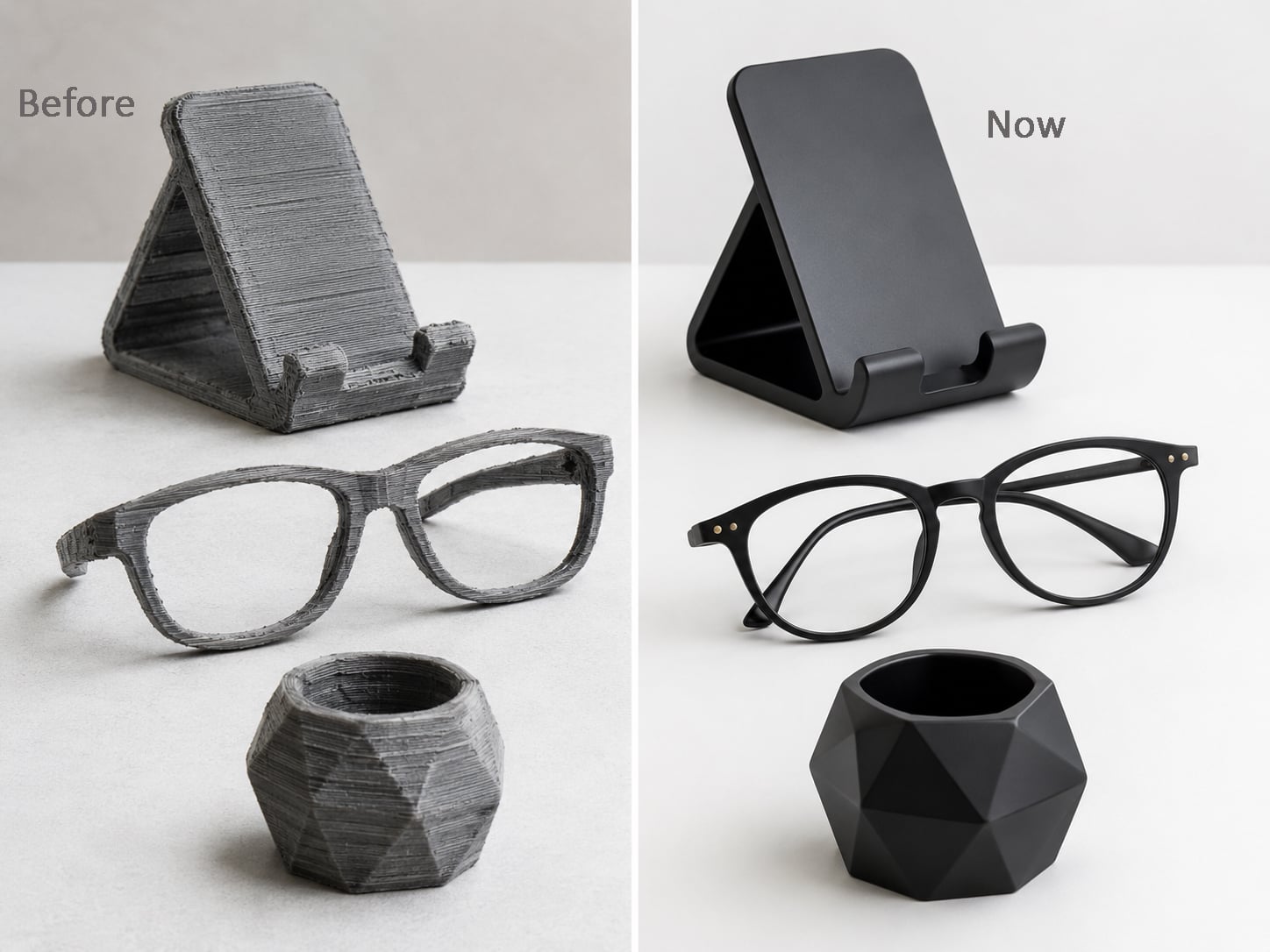
Early 3D printed products often had obvious layer lines, rough surfaces, limited colors, and weak material performance. For many buyers, the product looked “printed” in a bad way. It might have worked for a prototype, but not for something a customer would proudly use or gift.
Modern 3D printing is different. Printers are faster. Materials are stronger. Surface quality is better. Resin, FDM, SLS, MJF, DLS, and other technologies have given businesses more choices for different product needs. Some products still require sanding, polishing, painting, coating, or assembly, but the final result can now look much closer to a real consumer product.
The business model has also changed. In the past, a seller usually had two choices:
- Buy from existing stock products.
- Pay for a mold and make a large order.
That created a problem for small ecommerce sellers. If they wanted a custom product, the factory might ask for a high MOQ, high mold fee, and long production time. If the product failed, the seller was stuck with inventory.
3D printing gives sellers a third option: test and sell products in small batches before making a big investment.
That is why 3D printing low volume production matters. It lets sellers test a product idea, build a niche catalog, customize designs, and improve the product after receiving real customer feedback.
Why 3D Printing Fits Ecommerce So Well
Ecommerce is fast. Trends change quickly. A product can go viral on TikTok, Etsy, Amazon, Instagram, Pinterest, or Shopify in a few days. But traditional manufacturing is not always built for that speed.
If you need an injection mold, you may need to spend weeks on product design, mold development, sample corrections, factory negotiation, packaging confirmation, production scheduling, inspection, and shipping. That process still makes sense for many products, especially when you need thousands or hundreds of thousands of identical pieces.
But ecommerce often starts smaller.
A seller may want to test 50 pieces, 100 pieces, or 300 pieces first. A brand may want five different colors, three different shapes, or personalized names for each order. A designer may want to release a limited-edition product before deciding whether to invest in a mold.
This is where 3D printed consumer products fit naturally.
With 3D printing, the product starts from a digital file. If the design needs to change, you update the file. If one product variation sells better than another, you print more of that one. If a customer wants a custom name, special shape, logo, or size, you can adjust the model without remaking a mold.
This makes 3D printing especially useful for:
- Custom products
- Low-volume ecommerce launches
- Replacement parts
- Personalized gifts
- Promotional products
- Desk accessories
- Home decor
- Gaming miniatures
- Pet accessories
- Product testing
- Pre-sale campaigns
- Crowdfunding product samples
- Niche parts that factories do not want to mold
The best part is not just “printing something.” The best part is that 3D printing connects design, production, ecommerce testing, and customer feedback into one faster loop.
3D Printing Is Not Replacing Injection Molding — It Is Filling the Gap
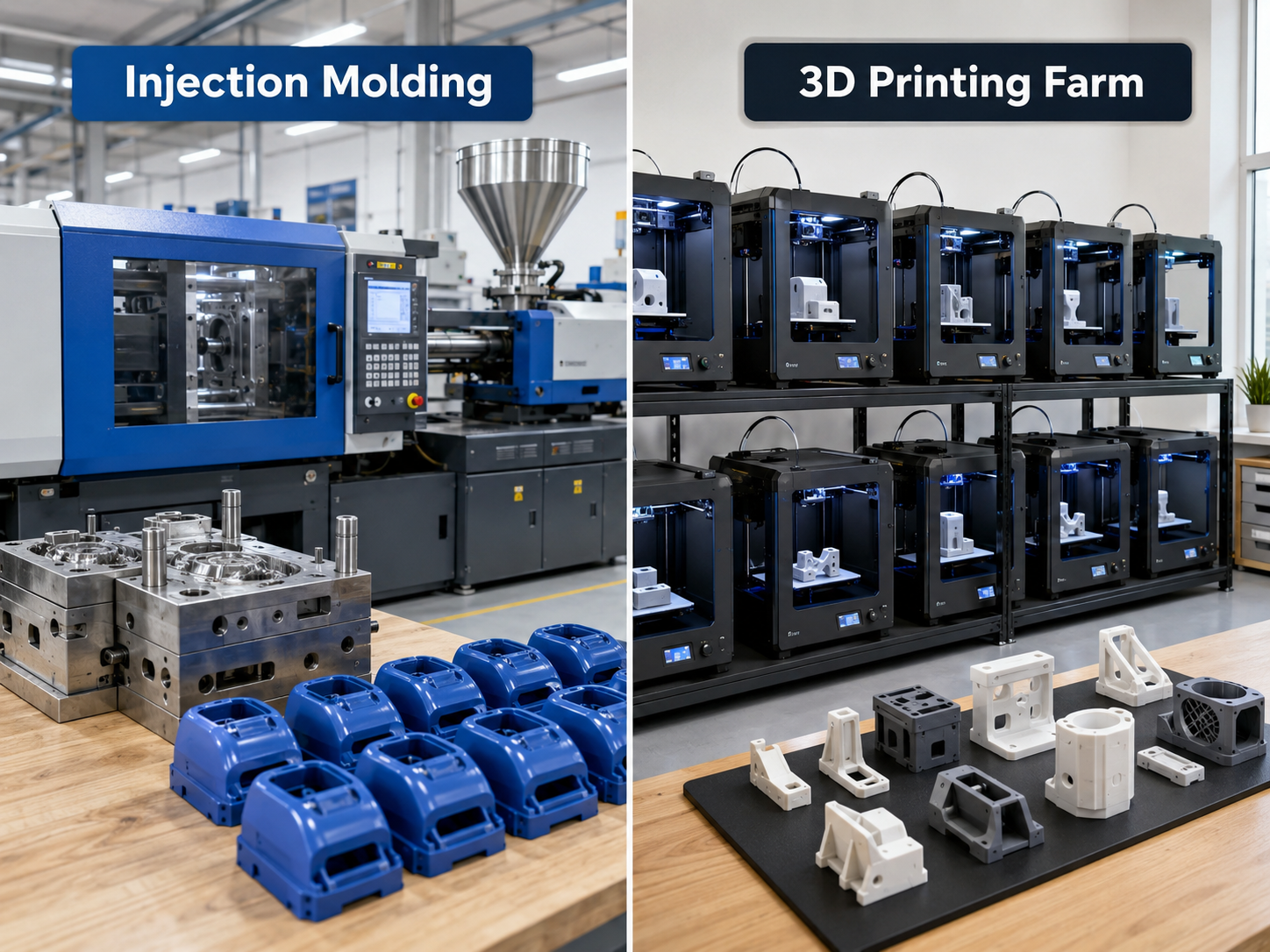
A common mistake is thinking 3D printing must compete with injection molding in every situation. That is not realistic.
Injection molding is still the best choice for many high-volume plastic products. Once the mold is ready, the unit cost can be very low. For simple parts produced in large quantities, injection molding usually wins.
But injection molding has one major weakness: the upfront cost.
A mold can be expensive. It also takes time. If your product is not proven yet, that mold becomes a risk. If you need several sizes or design variations, the cost increases again. If the market changes after production, inventory becomes a problem.
3D printing is not always cheaper per unit, but it can be much smarter at the beginning of a product’s life cycle.
Here is the practical way to think about it:
| Situation | Better Choice | Why |
|---|---|---|
| Testing a new product idea | 3D printing | No mold needed, faster sample changes |
| Selling 50–500 pieces | 3D printing low volume production | Lower risk and flexible design |
| Selling personalized items | 3D printing | Each order can be different |
| Making complex shapes | 3D printing | No mold limitations |
| Producing 50,000 identical simple parts | Injection molding | Lower unit cost at scale |
| Making replacement parts for old products | 3D printing | No need to reopen old tooling |
| Making promotional products with logos | 3D printing or hybrid | Good for small custom campaigns |
| Scaling a proven product | Hybrid or injection molding | 3D print first, mold later |
This is why many smart brands use 3D printing and injection molding together. They use 3D printing for prototypes, samples, low-volume sales, customized batches, or complex components. Then, when the product proves demand, they may switch part of the production to injection molding.
That is not competition. That is a better production strategy.
What Are 3D Printed Consumer Products?
3D printed consumer products are products made fully or partially through 3D printing and sold to end users. They can be functional, decorative, personalized, promotional, artistic, or part of a larger product.
The most important point is this: consumers usually do not buy a product because it is 3D printed. They buy it because it solves a problem, looks better, fits better, feels more personal, or is not available anywhere else.
A buyer does not want a “3D printed cable holder.” They want a clean desk.
A gamer does not want “printed resin.” They want a detailed miniature that makes their tabletop game more exciting.
A small brand does not want a “printed keychain.” They want a promotional product that makes customers remember their name.
This is why successful 3D printed consumer products usually fall into one of these categories:
- Useful products — organizers, holders, brackets, hooks, mounts.
- Custom products — names, logos, sizes, personalized shapes.
- Niche products — parts for hobbies, gaming, pets, tools, collectibles.
- Design products — home decor, lighting, art pieces, fashion accessories.
- Replacement parts — small parts that are hard to find elsewhere.
- Promotional products — branded gifts for events, companies, and ecommerce packaging.
When a product is useful, specific, and hard to find in regular retail stores, 3D printing becomes more than a manufacturing method. It becomes a business advantage.
How 3D Printing Helps Sellers Monetize Ideas
The biggest advantage of 3D printing is that it lowers the cost of testing ideas.
In traditional manufacturing, many ecommerce sellers hesitate because they do not know whether the product will sell. They may have an idea, but the factory asks for 1,000 pieces or more. The seller worries about paying for a mold, storing inventory, and losing money if the product does not move.
3D printing changes that.
A seller can start with a simple product idea, create a 3D model, print a small batch, take product photos, list it online, and test demand. If customers respond well, the seller can improve the product and increase volume. If the product does not sell, the seller has only lost a small batch, not a full container of inventory.
This makes 3D printing very powerful for ecommerce.
Here is a realistic path:
Step 1: Find a specific problem
Do not start with “I want to sell 3D printed products.” Start with a problem.
For example:
- People need a better cable holder for thick charging cords.
- Pet owners need a custom name tag with a special shape.
- Gamers need themed miniatures for a specific campaign.
- Coffee shops need small branded counter displays.
- A home office customer needs a desk organizer that fits a narrow space.
- A car owner needs a small clip or bracket that is no longer available.
Specific problems sell better than generic products.
Step 2: Check demand before printing
Search on Etsy, Amazon, TikTok, Pinterest, Reddit, Google Trends, eBay, and niche forums. Look at what people complain about. Look at what sells repeatedly. Read reviews. Customers often tell you what they want by complaining about existing products.
If a product has demand but many reviews say “too small,” “wrong size,” “breaks easily,” “not customizable,” or “doesn’t fit my model,” that is an opportunity.
Step 3: Design or improve the product
You do not always need a completely new idea. Sometimes the better opportunity is improving a product that already sells.
Maybe the market already has a phone stand, but not one that fits a thick case.
Maybe people buy cosplay accessories, but the fit is poor.
Maybe a common home organizer looks ugly, and you can make a cleaner design.
Maybe a promotional product exists, but the MOQ is too high for small brands.
3D printing lets you test those improvements quickly.
Step 4: Print small and test
This is where 3D printing low volume production becomes valuable. Instead of ordering thousands of units, you can start with 20, 50, or 100 pieces. Use real product photos. Test pricing. Offer several colors or design options.
Step 5: Improve based on customer feedback
If customers ask for another size, update the file. If they want a thicker wall, adjust the design. If they want a smoother surface, change material or post-processing. If they want branded packaging, add it later.
This is the real advantage: you can improve the product while selling.
Step 6: Scale the winning design
Once a product proves demand, you can choose how to scale:
- Continue 3D printing through a print farm.
- Use 3D printing for custom versions only.
- Move simple parts to injection molding.
- Use a hybrid model: printed parts + molded parts + assembled packaging.
- Create a product line around the winning design.
That is how 3D printing becomes a real ecommerce business instead of a hobby.
3D Printed Products in Demand
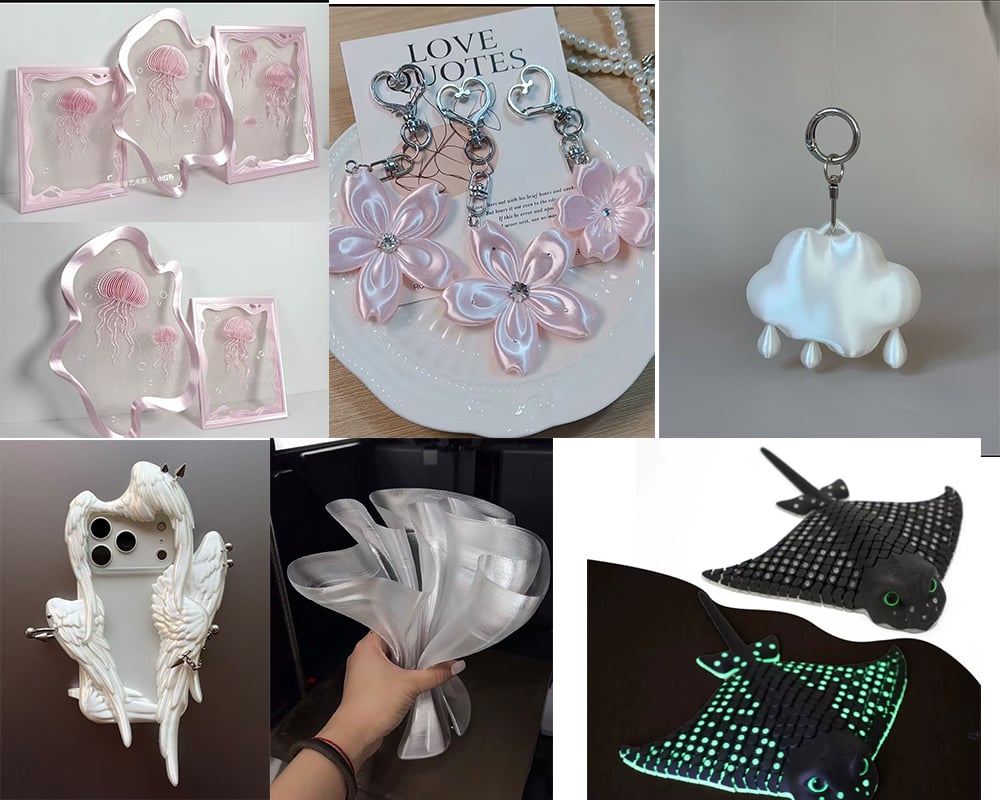
Not every printed item is worth selling. The best 3D printed products in demand usually have at least one of these traits:
- Customers want customization.
- The product solves a real problem.
- The product is hard to find in stores.
- The product is small enough to ship easily.
- The product can be made in many designs.
- The product has emotional value.
- The product serves a niche audience.
- The product does not need extremely low unit cost.
Here are categories that ecommerce sellers can consider.
1. Desk Accessories and Home Office Products
Remote work and home office upgrades have created steady demand for desk products. 3D printed desk accessories can include cable holders, headphone stands, monitor riser accessories, pen holders, phone stands, laptop cable clips, drawer dividers, and small organizers.
These products work because they are practical. A buyer sees the problem immediately. The product does not require much explanation.
For ecommerce, desk accessories are also easy to photograph and ship. Sellers can create minimalist, colorful, modern, gaming-style, or corporate versions. This makes them suitable for both direct-to-consumer sales and 3D printing promotional products.
A company, for example, could order a batch of custom desk cable organizers with its logo for employees or event giveaways. That is much more memorable than another basic pen.
2. Personalized Gifts
Personalized gifts are one of the easiest ways to turn 3D printing into sales. Buyers are often willing to pay more for a name, date, initials, pet name, wedding detail, or custom message.
Examples include:
- Name keychains
- Custom cake toppers
- Wedding table numbers
- Pet memorial items
- Personalized photo frames
- Holiday ornaments
- Custom signs
- Baby room name plaques
- Anniversary gifts
- Graduation gifts
The product does not have to be complicated. The emotional value creates the price difference.
For ecommerce sellers, personalized gifts also work well during holidays. Christmas, Valentine’s Day, Mother’s Day, Father’s Day, Halloween, weddings, birthdays, and graduation seasons all create demand.
3. Gaming Miniatures and Tabletop Accessories
Gaming communities are highly niche, highly engaged, and willing to pay for detail. Resin printing is especially useful here because it can produce smoother, more detailed parts.
Products can include fantasy characters, terrain pieces, dice towers, token holders, card organizers, dungeon tiles, and display stands.
This category requires good design and attention to copyright. Sellers should avoid copying protected characters or branded game assets without permission. But original designs, licensed files, or custom commissions can perform well.
4. Replacement Parts
Replacement parts are one of the most practical ecommerce opportunities for 3D printing.
Many small parts are not worth producing with injection molding because demand is too low or too fragmented. But when someone needs that part, they need it badly. A missing clip, knob, bracket, hinge cover, spacer, handle, or adapter can make a larger product unusable.
Examples include:
- Appliance knobs
- Furniture clips
- Vacuum cleaner attachments
- Old machine covers
- Automotive interior clips
- Curtain rail parts
- Toy replacement parts
- Camera mounts
- Drone guards
- Tool adapters
- Vintage product parts
This is where 3D printing has a clear advantage. It can serve long-tail demand that traditional manufacturing ignores.
5. Custom Phone Accessories
Phone accessories are competitive, but they remain popular because people constantly buy stands, cases, mounts, grips, cable holders, and charging accessories.
3D printing is especially useful for niche models, special mounts, desk setups, gaming stands, or personalized versions. A seller may not compete with mass-produced phone cases on price, but they can compete with design, personalization, and specific fit.
6. Home Decor and Small Interior Products
3D printed home decor can include planters, wall hooks, vases, lampshade elements, candle holders, geometric sculptures, wall art, shelf brackets, and decorative trays.
The key is design. Generic prints do not sell well for long. A strong visual style matters.
A seller can build a brand around modern minimalism, colorful pop design, eco-style textures, gothic decor, gaming rooms, pet-themed interiors, or seasonal decorations.
7. Pet Accessories
Pet owners like personalized and functional products. 3D printed pet products can include name tags, leash hooks, feeding station accessories, toy parts, cage accessories, aquarium decor, and custom signs.
For safety, sellers should be careful with chewable items, food-contact surfaces, sharp edges, and material choice. Not every printed part is suitable for pets. But decorative and organizational products can work well.
8. Promotional Products
3D printing promotional products can help companies create branded gifts without paying for a large mold or huge MOQ.
Examples include:
- Logo keychains
- Desk stands
- Business card holders
- Event badges
- Mini product replicas
- Custom trophies
- Branded packaging inserts
- Trade show giveaways
- QR code stands
- Nameplate gifts
- Small display props
This is a strong B2B opportunity. Many small companies, schools, clubs, ecommerce brands, and event organizers do not need 10,000 promotional items. They may need 100, 300, or 500 pieces. That is where 3D printing low volume production can be practical.
9. Fashion Accessories and Jewelry
3D printing is also used for jewelry, eyewear, watch parts, shoe components, and fashion accessories. Some products are directly printed. Others use 3D printing in the mold or casting process.
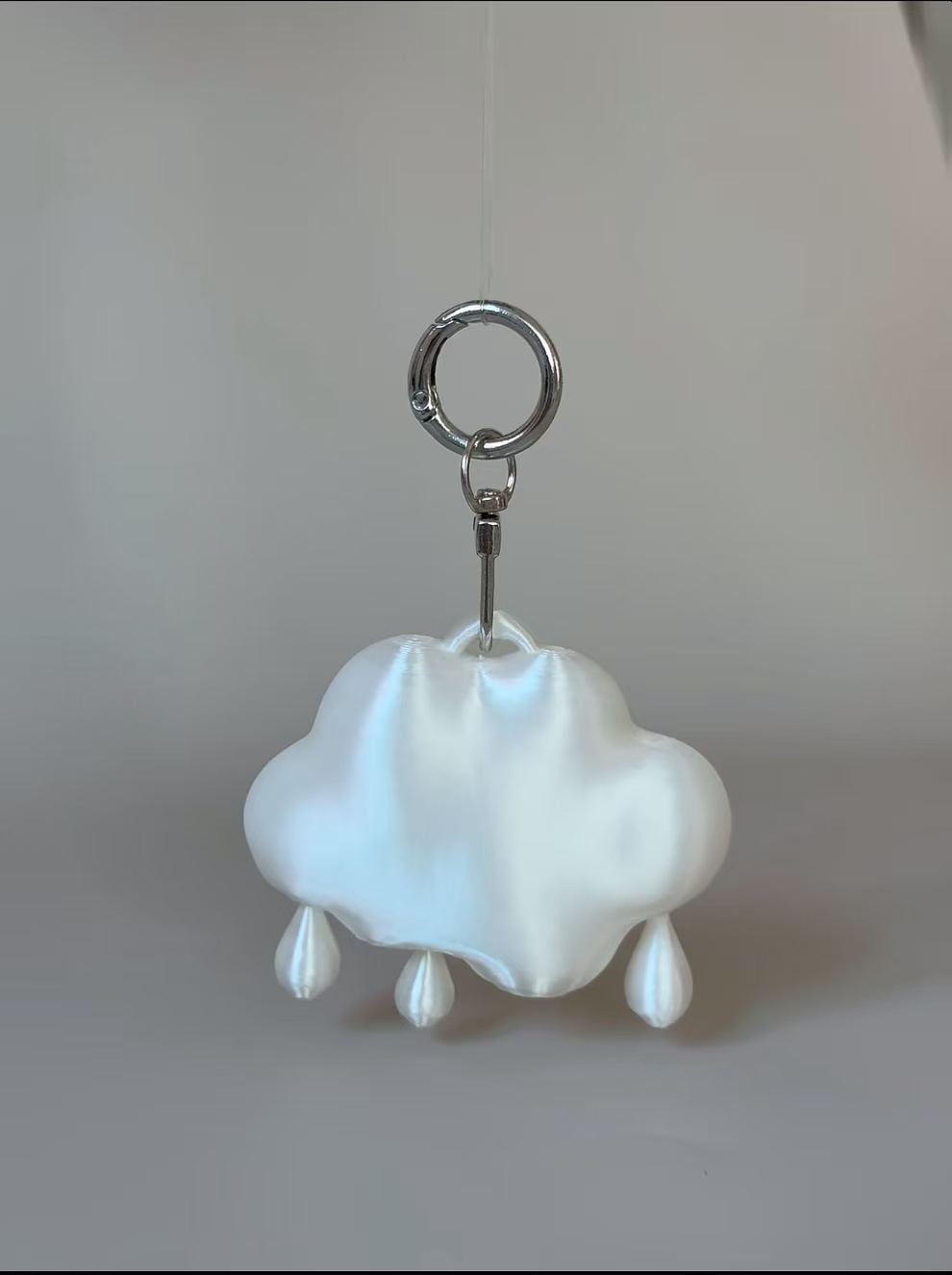
For small ecommerce sellers, the easier entry point is fashion accessories like earrings, pendants, hair clips, bag charms, shoe decorations, and custom display pieces.
For higher-end products, material and finishing become more important. Resin, nylon, metal printing, polishing, plating, or painting may be needed.
10. Art, Designer Products, and Limited Editions
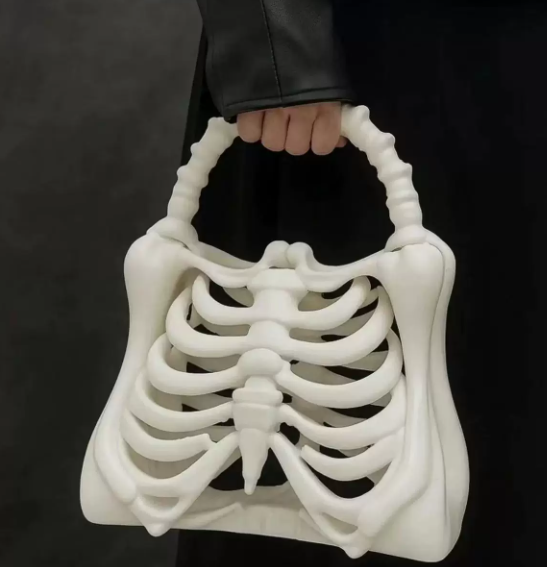
Artists and designers can use 3D printing to create limited-run products that would be too expensive or too complex with traditional manufacturing. This includes sculptures, collectible objects, experimental furniture parts, lighting elements, and modern decor.
These products are not always about low cost. They are about uniqueness.
That is an important point: 3D printed consumer products do not always need to be cheaper. Sometimes they can sell at a higher price because the design is rare, personalized, or difficult to manufacture another way.
3D Printing Mass Production: When Does It Make Sense?
3D printing mass production is possible, but it must be used correctly. It makes the most sense when the product benefits from customization, complex geometry, fast iteration, or lower tooling risk.
Major brands have already shown that 3D printing can work at serious production levels. Adidas announced its Future craft 4D footwear project with Carbon’s Digital Light Synthesis technology and said it aimed to create more than 100,000 pairs by the end of 2018. Chanel also used industrial 3D printing for mascara brushes; Voxel Matters reported in 2024 that Erpro had printed more than 22 million mascara brushes for Chanel.
These examples matter because they show 3D printing is no longer limited to prototypes. But they also show something else: successful 3D printing mass production usually focuses on products where the process creates a real advantage.
For Adidas, lattice midsoles allowed performance geometry that traditional foam molding could not easily create in the same way.
For Chanel, 3D printing allowed a brush design with micro-features and a mold-free production approach that supported industrial-scale output.
For smaller ecommerce sellers, the same logic applies at a smaller scale. Do not use 3D printing just because it sounds modern. Use it when it helps the product become better, faster, more customized, or easier to test.
3D Printing Low Volume Production: The Sweet Spot for Ecommerce
For most ecommerce brands, 3D printing low volume production is more important than mass production.
Why?
Because most new products do not start with huge demand. They start with uncertainty.
You may not know:
- Which color will sell best.
- Which size customers prefer.
- Whether people will pay your target price.
- Whether your product photos are strong enough.
- Whether the design needs changes.
- Whether the product should be bundled with another item.
- Whether a seasonal product will still sell after the trend passes.
Low-volume production gives you room to test. It lets you sell without overcommitting.
For example, imagine you want to sell a custom magnetic cable organizer for gamers. With injection molding, you may need to finalize the mold before knowing whether gamers want that exact shape. With 3D printing, you can test a few designs first:
- A version for one cable.
- A version for three cables.
- A wall-mounted version.
- A desk-mounted version.
- A version with a logo.
- A version in several colors.
After 30 days of sales, you may discover that the three-cable desk version sells best. Then you can improve that version and scale it.
This is how ecommerce sellers should think: print, test, learn, improve, scale.
Why China 3D Printing Farms Matter
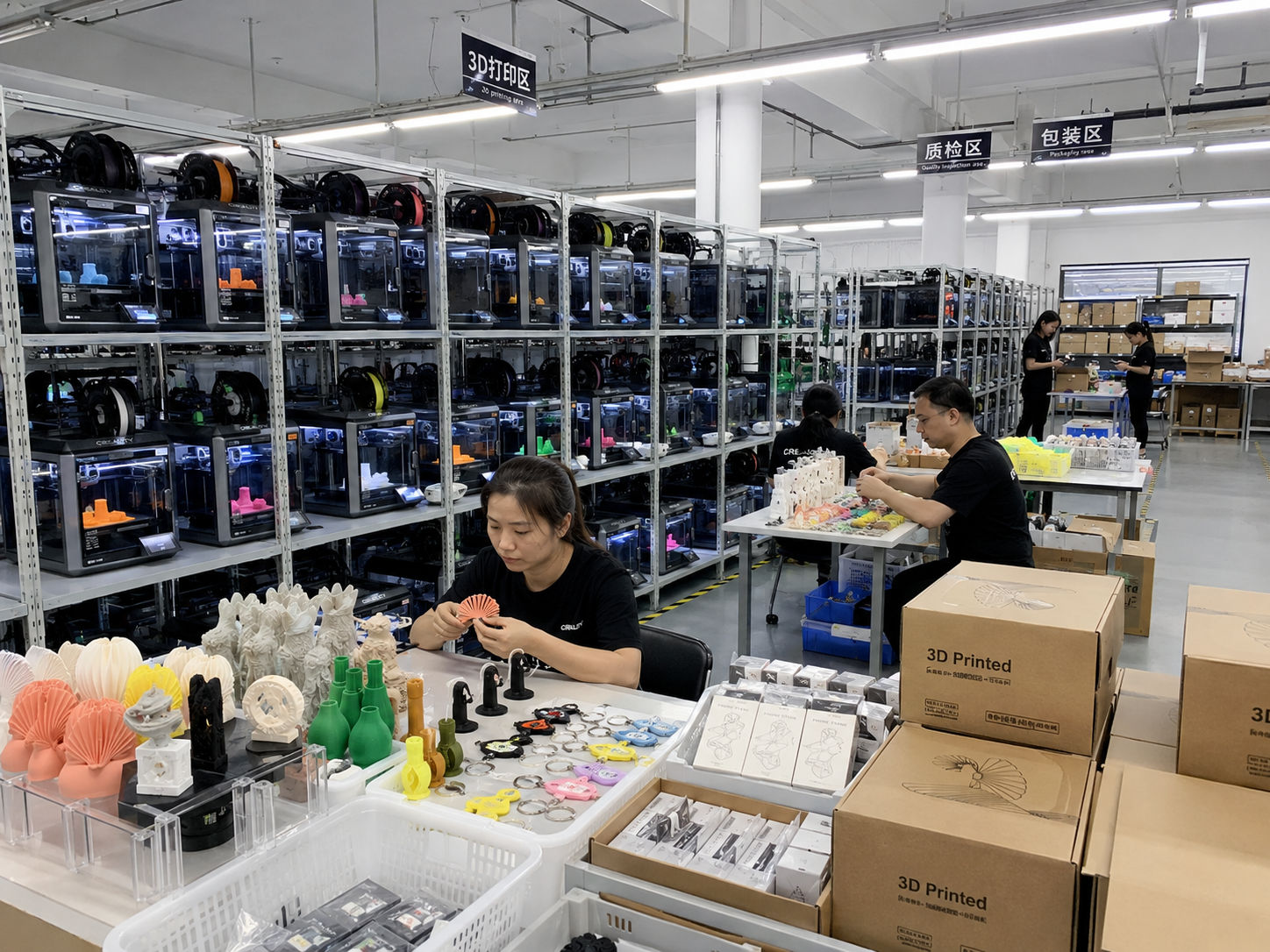
China already has a strong manufacturing ecosystem, and 3D printing farms are becoming part of that ecosystem. A 2025 Form next Asia Shenzhen report described an impressive 3D printer farm section at the show, with many printed and packaged products, led by companies such as Creality and supported by filament manufacturers and local innovators. Voxel Matters also reported in 2026 that at least one factory in China had 5,000 3D printers and was moving toward 10,000, while China’s 3D printing equipment output reportedly surged in 2025.
For ecommerce sellers, this matters because 3D printing is not only a home-printer business anymore. Print farms can help produce small batches, repeated orders, custom batches, and product testing runs faster than many traditional production setups.
China also has an advantage because 3D printing can connect with other supply chain services:
- Product design improvement
- 3D modeling
- Sample printing
- Material sourcing
- Post-processing
- Painting
- Packaging
- Assembly
- Quality inspection
- International shipping
- DDP logistics
- Ecommerce product sourcing
- Hybrid production with other factories
This is important because a sellable product is not just a printed object. It needs packaging, inspection, shipping protection, and sometimes assembly with metal, fabric, electronics, magnets, screws, foam, or molded plastic parts.
That is where a sourcing partner can help.
Our Service: How UCSOURCING Helps with 3D Printed Consumer Products
Many ecommerce sellers have a good idea but do not know how to turn it into a stable product. They may find a 3D printing supplier online, but they still face problems:
- Is the material right?
- Is the surface smooth enough?
- Can the supplier repeat the same quality?
- Is the part strong enough?
- Will the size be accurate?
- Can the supplier package it properly?
- Can the design be protected?
- Can small orders be handled?
- Can the supplier scale if the product sells?
- Can the product be combined with non-printed parts?
- Can the shipment be delivered safely?
Our Service at UCSOURCING is built to help buyers solve these problems before they become expensive mistakes.
We help ecommerce sellers, small brands, wholesalers, and product developers source from China with practical support from sample development to production follow-up and shipping. For 3D printed consumer products, we can help communicate with suppliers, compare materials, check sample quality, confirm packaging, follow up production, arrange inspection, and coordinate international logistics.
If your product is still in the idea stage, we can help you discuss whether 3D printing low volume production is suitable. If your product already has sales, we can help explore whether 3D printing mass production, print farm production, or hybrid production makes more sense. If the product is better made by injection molding later, we can help you compare that option too.
The goal is not to force every product into 3D printing. The goal is to find the right production method for your business stage.
For example:
- If you want 100 custom promotional products for an event, 3D printing may be practical.
- If you want 300 pieces of a niche ecommerce accessory, 3D printing may reduce mold risk.
- If you want 5,000 pieces of a simple plastic part, we may compare 3D printing with injection molding.
- If you want a product with a printed custom part plus a fabric bag, screws, packaging, or stickers, we can help coordinate the full supply chain.
That is what buyers often need most: not just a printer, but a complete sourcing and production solution.
How 3D Printing Promotional Products Create New B2B Opportunities
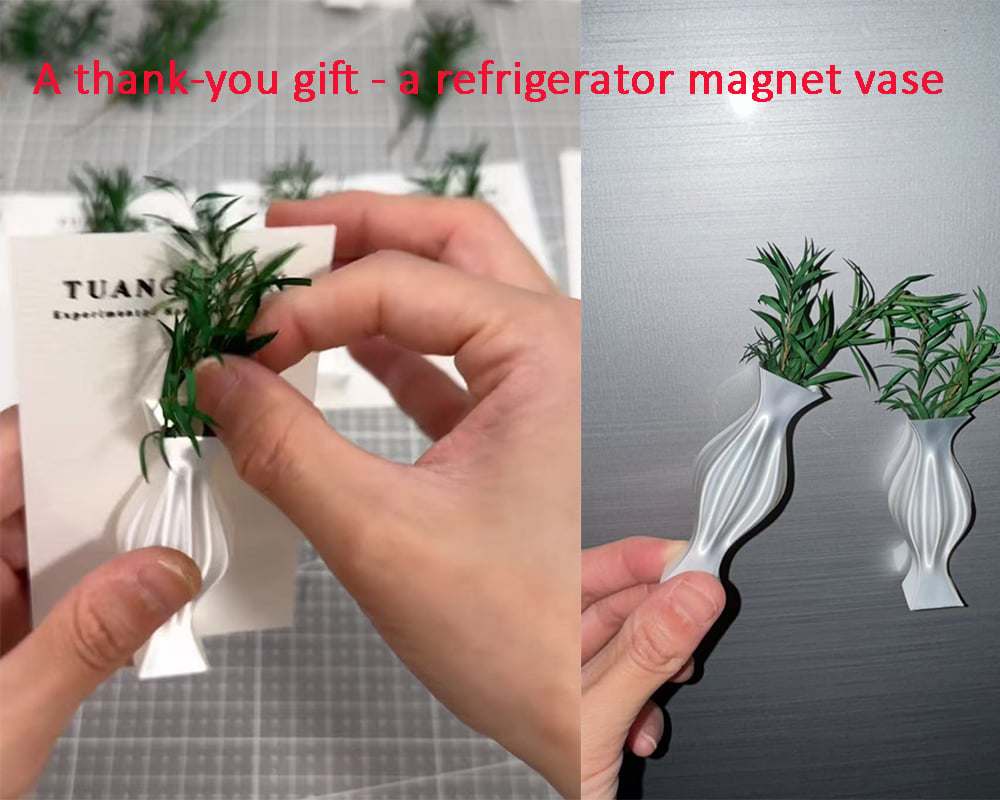
Promotional products are usually simple: pens, tote bags, keychains, mugs, notebooks, stickers, and small gifts. They work, but they can also feel generic.
3D printing promotional products create a new option for brands that want something more custom without paying for large molds.
A small business can order a desk item shaped like its product. A coffee brand can make mini cup-shaped keychains. A software company can create a small 3D printed QR code stand for events. A school can create custom awards. An ecommerce brand can add a small branded charm inside customer packages.
This works especially well for:
- Trade shows
- Product launches
- Corporate gifts
- School events
- Sports events
- Brand campaigns
- Influencer packages
- Crowdfunding rewards
- Shopify store packaging
- Customer loyalty gifts
The reason 3D printing promotional products are interesting is not just customization. It is flexibility. A brand can order a small campaign quantity, test reactions, then reorder or update the design for the next campaign.
For small brands, this is much better than ordering thousands of generic items that may sit in storage.
Product Ideas: What Can You Sell with 3D Printing?
Here are practical 3D printed consumer products that can work for ecommerce. The best idea depends on your niche, target market, and product design ability.
Home and Organization
- Wall hooks
- Cable clips
- Drawer organizers
- Toothbrush holders
- Spice rack labels
- Remote control holders
- Plant holders
- Shelf brackets
- Curtain accessories
- Small storage boxes
These products work because customers understand the use immediately. They also allow many design styles.
Office and Desk
- Laptop stands
- Phone stands
- Headphone hooks
- Pen holders
- Business card holders
- Keyboard risers
- Cable trays
- Webcam covers
- Monitor accessories
- Desk nameplates
These are good for both consumer sales and B2B promotional products.
Gifts and Personalization
- Name keychains
- Custom ornaments
- Wedding table numbers
- Cake toppers
- Custom signs
- Baby name plaques
- Personalized bookmarks
- Anniversary gifts
- Pet memorial plaques
- Graduation gifts
Personalization increases perceived value.
Gaming and Hobby
- Miniatures
- Dice towers
- Terrain
- Card holders
- Model parts
- Paint racks
- Controller stands
- Display bases
- Board game organizers
- Collectible cases
Niche buyers often care deeply about details, so good design and finishing are important.
Automotive and Tools
- Interior clips
- Small brackets
- Tool holders
- Knobs
- Adapters
- Garage organizers
- Mounting parts
- Dashboard accessories
- Custom covers
- Spare parts for discontinued items
These products must fit well and use suitable materials.
Fashion and Lifestyle
- Earrings
- Bag charms
- Shoe accessories
- Hair clips
- Sunglasses display stands
- Watch stands
- Belt accessories
- Custom pendants
- Decorative buttons
- Limited-edition art pieces
This category is design-driven. Quality finishing matters more than just printing.
Pet Products
- Name tags
- Leash hooks
- Bowl stands
- Custom signs
- Aquarium decorations
- Cage accessories
- Toy organizers
- Pet photo frames
- Grooming tool holders
- Treat container labels
Avoid unsafe materials or products that pets may chew and swallow.
Why Some Products Should Not Be 3D Printed
3D printing is useful, but it is not magic. Some products are better made by traditional methods.
You should be careful with:
- Food-contact products without proper material and coating.
- Products for babies or small children.
- Load-bearing parts that require certified strength.
- Products exposed to high heat.
- Products requiring perfect waterproof sealing.
- Products requiring very low unit cost at large volume.
- Products requiring strict safety certification.
- Products with protected designs or brand IP.
- Products needing extremely smooth surfaces without post-processing.
A good sourcing decision is not “3D print everything.” A good decision is choosing the process that fits the product.
Sometimes the best solution is hybrid manufacturing. For example, you may use injection molding for a simple shell, 3D printing for a custom insert, metal parts for strength, and printed packaging for brand presentation.
Materials for 3D Printed Consumer Products

Material choice affects strength, appearance, flexibility, heat resistance, safety, cost, and finishing. Choosing the wrong material can ruin a product even if the design looks good.
PLA
PLA is common, affordable, and easy to print. It is often used for decorative products, prototypes, desk accessories, and simple consumer items. It can look clean, but it may not be ideal for high heat or heavy stress.
PETG
PETG is tougher than PLA and has better resistance to moisture and impact. It can be a better choice for functional items, holders, and products that need more durability.
ABS
ABS is stronger and more heat-resistant than PLA, but it can require better printing conditions. It is often used for functional parts, but finishing and warping control matter.
TPU
TPU is flexible. It is useful for protective parts, grips, flexible holders, wearable accessories, and certain phone-related products.
Nylon
Nylon can be strong and durable. It is often used for functional parts, gears, clips, brackets, and products requiring toughness.
Resin
Resin can create very detailed and smooth products, making it popular for miniatures, jewelry-like items, prototypes, and detailed decorative pieces. But resin parts may require washing, curing, and careful handling.
Composites
Carbon-fiber-filled or glass-fiber-filled materials can improve stiffness and strength. These are useful for certain functional parts, but they may cost more and require suitable printers.
Material should never be selected only by price. It should match the product use.
Surface Finish: Why “Smooth” Matters for Ecommerce
Ecommerce buyers judge products by photos first. If a product looks rough, cheap, or unfinished, customers may not trust it.
Modern printers can create much better surfaces than older machines, but finishing still matters. Depending on the product, post-processing may include:
- Sanding
- Tumbling
- Polishing
- Painting
- Dyeing
- Vapor smoothing
- UV curing
- Support removal
- Coating
- Assembly
- Quality inspection
- Packaging cleaning
For 3D printed consumer products, the finish should match the price point.
A $5 cable clip does not need luxury finishing, but it should not have sharp edges or ugly defects.
A $50 personalized decor item needs a cleaner finish.
A promotional product should look good enough to represent a brand.
This is why supplier selection is important. A print farm may have capacity, but ecommerce products need consistency. A product that looks good in the sample must look good in repeat batches.
How to Price 3D Printed Consumer Products
Pricing is not only material cost. Many beginners make this mistake.
A real price should include:
- Material
- Printer time
- Machine wear
- Failed prints
- Labor
- Design time
- Post-processing
- Packaging
- Shipping carton
- Platform fees
- Payment fees
- Marketing cost
- Customer service
- Returns or replacements
- Profit margin
For ecommerce, perceived value also matters. A personalized gift can sell for more than a basic functional part. A niche replacement part can sell for more because the customer cannot easily find it elsewhere. A limited-edition decor piece can sell based on design, not material weight.
This is why the best 3D printed products in demand are not always the cheapest products. They are products where customization, fit, design, or urgency increases value.
Selling 3D Printed Products Online
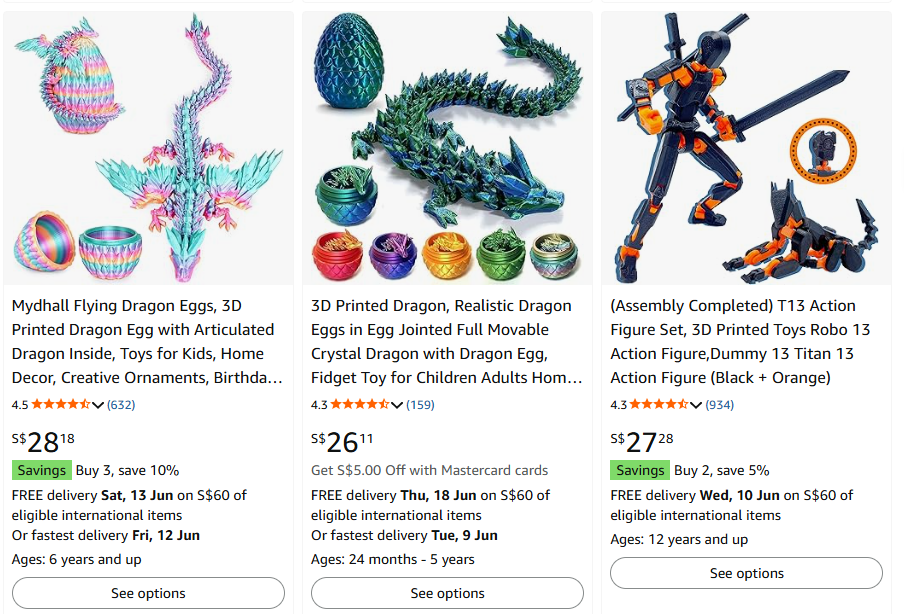
A good product still needs the right sales channel.
Etsy
Etsy works well for personalized gifts, decor, miniatures, wedding products, ornaments, jewelry-style accessories, cosplay props, and handmade-style products.
The key is strong product photography, clear customization options, and good reviews.
Shopify
Shopify is better if you want to build your own brand. It requires more marketing, but you control the customer relationship, brand story, and product line.
Shopify works well for niche brands, custom product collections, promotional product businesses, and social media-driven stores.
Amazon
Amazon can work for functional products, but competition is higher. You need clear differentiation, good packaging, stable inventory, and strong quality control.
eBay
eBay can work for replacement parts, hobby parts, vintage product parts, and niche components.
TikTok and Instagram
Social media is powerful for visual products. 3D printing has a natural advantage because the production process is interesting to watch. Videos showing the print process, support removal, assembly, and final use can attract customers.
B2B Direct Sales
For 3D printing promotional products, direct outreach can work well. Schools, clubs, companies, event organizers, ecommerce brands, and local businesses may need small custom batches.
Product Photography for 3D Printed Products
A 3D printed product needs clear photos because buyers may wonder if the product is strong, smooth, or professional.
Good photos should show:
- Front view
- Side view
- Close-up surface
- Product in use
- Size comparison
- Color options
- Packaging
- Customization examples
- Lifestyle scene
- Details of texture or logo
For example, if you sell a phone stand, show the stand holding a phone. If you sell a pet tag, show it on a collar. If you sell a desk organizer, show it on a real desk. Do not only show a plain render.
Renders can help show design, but real product photos build trust.
Quality Control for 3D Printed Consumer Products
Quality control matters because 3D printed products can fail in ways that buyers notice quickly.
Common issues include:
- Layer separation
- Warping
- Rough surface
- Weak walls
- Size deviation
- Poor support removal
- Color inconsistency
- Brittle resin
- Sharp edges
- Poor fitting
- Visible defects
- Weak packaging
- Dust or residue
- Unstable assembly
For ecommerce, consistency is more important than one perfect sample.
Before selling, you should check:
- Does the product fit its intended use?
- Does the size match the listing?
- Does the color match photos?
- Is the surface acceptable?
- Are edges safe?
- Does the part break under normal use?
- Is the packaging strong enough?
- Can the supplier repeat the same quality?
- Is the product legal to sell in your target market?
- Does the product infringe any brand or design rights?
A product that sells well but gets poor reviews will not last long.
How 3D Printing Supports Product Development
3D printing is not only for final products. It is also useful before a product reaches production.
A seller can use 3D printing to:
- Make first prototypes.
- Test size and hand feel.
- Compare product shapes.
- Create product photography samples.
- Show samples to investors.
- Test packaging fit.
- Make custom fixtures.
- Create display props.
- Produce small launch batches.
- Build a proof of concept for crowdfunding.
This can reduce the risk of product development. Instead of guessing from a digital drawing, you can hold the product, test it, improve it, and show it to potential buyers.
That is especially important for ecommerce because customers buy with their eyes. A physical sample helps create better photos, videos, and marketing materials.
Can 3D Printing Be Used for Mass Customization?
Yes, and this is one of its strongest advantages.
Mass customization means producing many products, but each product may be slightly different. Traditional manufacturing struggles with this because molds and tooling are designed for repeatability. Variation increases cost.
3D printing handles variation more easily because the printer reads digital files. A name, size, pattern, logo, shape, or internal structure can change without creating a new mold.
Examples include:
- Custom insoles
- Personalized eyewear frames
- Nameplate gifts
- Custom helmet liners
- Personalized desk items
- Dental aligners
- Custom gaming miniatures
- Event products with attendee names
- Brand-specific promotional products
HP’s official Multi Jet Fusion page even frames the technology as useful whether buyers need one part or one million 3D printed parts, reflecting how industrial 3D printing is now positioned for both small and larger production needs.
For ecommerce sellers, mass customization can be a way to avoid direct price competition. Instead of selling the same product as everyone else, you sell a version made for the customer.
3D Printing and Product Design Freedom
Traditional manufacturing often forces designers to simplify. Molds need draft angles. CNC machining has tool access limitations. Assembly may require multiple parts.
3D printing allows shapes that are difficult or impossible with traditional methods. This includes:
- Lattice structures
- Hollow internal channels
- Organic shapes
- Lightweight structures
- Complex textures
- Interlocking parts
- Custom ergonomic forms
- Part consolidation
- Internal supports
- Personalized geometry
For consumer products, design freedom can create both functional and emotional value.
A shoe midsole can be lighter and more responsive.
A desk organizer can fit a specific setup.
A promotional item can be shaped exactly like a brand mascot.
A replacement part can be redesigned stronger than the original.
A home decor product can have a unique texture that looks handmade and modern.
Design is where 3D printing becomes more than a production method. It becomes part of the product’s selling point.
Where 3D Printing Works Best in the Product Life Cycle
3D printing can support different stages:
Stage 1: Idea Validation
Print a rough sample to see whether the idea makes sense.
Stage 2: Prototype Improvement
Adjust shape, size, material, fit, and function.
Stage 3: Product Photography
Make better-looking samples for listing photos, ads, and videos.
Stage 4: Low-Volume Launch
Sell a small batch and test demand.
Stage 5: Custom Production
Offer personalization, colors, or size options.
Stage 6: Scale Production
Use print farms, hybrid production, or transition to injection molding.
Stage 7: After-Sales Support
Print replacement parts, accessories, or updated versions.
This full life-cycle value is why 3D printing is so useful for ecommerce. It does not only help you make a product. It helps you improve the product after the market responds.
A Realistic Ecommerce Example
Imagine a seller wants to launch a custom desk headphone hook.
With traditional production, the seller might need to open a mold, order 1,000 pieces, and hope the market likes it.
With 3D printing, the seller can test several versions:
- Clamp-on hook
- Adhesive hook
- Wall-mounted hook
- Under-desk hook
- Gaming-style hook
- Minimalist office hook
- Logo version for corporate buyers
The seller lists three styles first. After two weeks, the under-desk version sells best. Customers say they want a stronger screw hole and a wider hook for larger headphones. The seller updates the file and prints a second batch.
Then a company asks for 300 pieces with a logo for an employee gift. The seller offers a branded version as 3D printing promotional products.
After six months, the product sells consistently. The seller can continue printing or consider injection molding for the basic version while keeping 3D printing for custom versions.
This is how a simple product becomes a business.
Common Mistakes Sellers Make with 3D Printed Products
Mistake 1: Selling Generic Files Everyone Has
If many sellers use the same free or common design, price competition becomes brutal. Create original designs or improve existing concepts.
Mistake 2: Ignoring Finishing
A product may function well but still look cheap. Surface finish, color, edges, and packaging affect reviews.
Mistake 3: Choosing the Wrong Material
A decorative product and a functional clip do not need the same material. Match material to use.
Mistake 4: Copying Branded Designs
Do not copy famous characters, logos, game assets, car badges, or protected designs without permission. IP problems can shut down listings.
Mistake 5: Underpricing Labor
Post-processing and packing take time. If you do not include labor in pricing, profit disappears.
Mistake 6: Scaling Too Soon
Do not order a large batch before testing demand. Start small, prove the product, then scale.
Mistake 7: Not Checking Supplier Repeatability
A good sample does not guarantee good production. Repeatability matters.
Packaging for 3D Printed Consumer Products
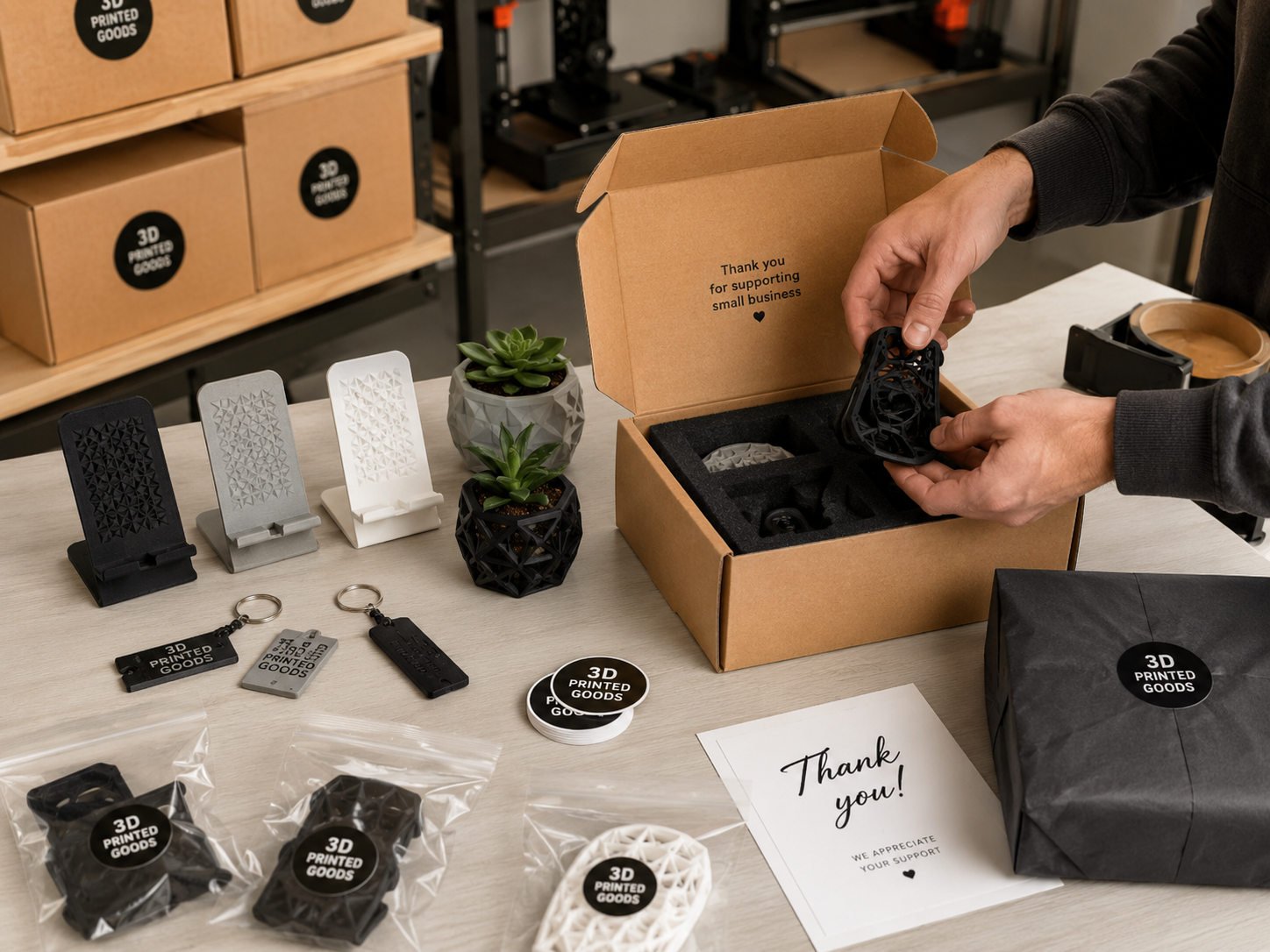
Packaging is part of the product experience. It protects the item, improves perceived value, and reduces damage during shipping.
For small 3D printed consumer products, packaging can include:
- Bubble bags
- Kraft boxes
- Foam inserts
- Paper sleeves
- Product cards
- QR code cards
- Custom stickers
- Instruction sheets
- Warning labels
- Brand thank-you cards
If the product is fragile, packaging must be tested. Resin miniatures, thin decor pieces, and long printed parts may break if packed poorly.
For promotional products, packaging is even more important because the product represents a brand. A cheap-looking package can reduce the value of the gift.
How to Work with a 3D Printing Supplier
Before placing an order, prepare clear information:
- 3D file format
- Product size
- Quantity
- Material requirement
- Color
- Surface finish
- Tolerance requirement
- Strength requirement
- Usage environment
- Packaging style
- Logo or customization
- Delivery address
- Target market
- Expected retail price
- Whether the product needs assembly
Ask the supplier:
- What printing technology will be used?
- What material is recommended?
- Can you provide sample photos?
- What tolerance can you control?
- What post-processing is included?
- How do you inspect parts?
- Can you repeat the same color?
- What is the production lead time?
- Can you scale if the product sells?
- Can you pack for ecommerce shipping?
A professional supplier should be able to answer these questions clearly.
When to Use a China Sourcing Agent
A sourcing agent is useful when you need more than one supplier or when the product is not purely 3D printed.
For example, your final product may need:
- A 3D printed shell
- Magnets
- Screws
- Foam pads
- Silicone parts
- Stickers
- Printed box
- Instruction manual
- Barcode labels
- DDP shipping
One 3D printing supplier may not handle everything well. A sourcing agent can help connect the full chain.
UCSOURCING can help buyers communicate with suppliers, compare pricing, check samples, follow production, inspect goods, and arrange shipping from China. For ecommerce sellers, this helps reduce language barriers, quality risks, and logistics confusion.
3D Printing for Small Brands: Why It Lowers Risk
Small brands often do not fail because their ideas are bad. They fail because they spend too much too early.
They buy too much inventory. They choose the wrong supplier. They make a mold before testing demand. They cannot update the product after feedback. They spend money on packaging before knowing whether customers like the product.
3D printing helps reduce that risk.
You can start smaller. You can update faster. You can customize more easily. You can serve niche customers. You can test seasonal products without overstock.
For a small ecommerce brand, this flexibility can be more valuable than the lowest unit cost.
3D Printed Products and Social Media Marketing
3D printing is highly visual. That makes it suitable for short videos.
Good video ideas include:
- Time-lapse printing
- Removing supports
- Before-and-after finishing
- Custom name being printed
- Packaging an order
- Testing product strength
- Showing different colors
- Comparing old vs improved design
- Customer reaction videos
- Printing a limited edition
These videos help customers understand the process and trust the product. They also make the product feel more personal.
For TikTok and Instagram, the story matters. Do not only show the machine. Show the problem, the design, the print, and the final use.
Future Trends in 3D Printed Consumer Products
3D printing is moving toward faster machines, better materials, larger print farms, smoother surfaces, and stronger ecommerce integration.
Several trends are likely to grow:
1. More Print Farms
As print farms become more common, sellers will be able to order small and medium batches more easily.
2. Better Surface Finish
Modern printers and post-processing methods will continue to improve the look of finished products.
3. More Hybrid Products
Many future products will combine 3D printed parts with molded plastic, metal, textile, wood, electronics, or silicone.
4. More Personalization
Customers increasingly expect products that fit their taste, size, name, hobby, pet, or lifestyle.
5. More Localized and On-Demand Production
Brands may reduce inventory by producing closer to demand or printing after orders are placed.
6. More B2B Custom Gifts
Companies want promotional products that feel different. 3D printing can create small-batch custom gifts faster.
7. More Ecommerce Testing
Sellers will use 3D printing to test product ideas before committing to traditional manufacturing.
This does not mean every product will be printed. It means 3D printing will become another practical tool in the supply chain.
FAQ
What are the best 3D printed consumer products to sell?
The best products are usually personalized gifts, desk accessories, replacement parts, gaming miniatures, home decor, pet accessories, phone stands, custom promotional products, and niche hobby parts. The best choice depends on your target customer and design quality.
Is 3D printing mass production possible?
Yes, 3D printing mass production is possible, especially for products that need customization, complex geometry, or flexible production. However, injection molding is still better for very large volumes of simple identical parts.
Is 3D printing low volume production good for ecommerce?
Yes. 3D printing low volume production is one of the best uses for ecommerce sellers because it reduces mold risk, allows product testing, and supports custom designs.
Are 3D printed products strong enough?
Some are, if the right material, design, wall thickness, and printing method are used. Decorative products may not need high strength, but functional parts must be tested carefully.
Can I use 3D printing for promotional products?
Yes. 3D printing promotional products are useful for small custom batches, logo gifts, event items, desk accessories, branded keychains, awards, QR code stands, and custom packaging inserts.
Should I use 3D printing or injection molding?
Use 3D printing for prototypes, low-volume orders, customization, complex designs, and niche parts. Use injection molding for large quantities of simple products where low unit cost matters most.
Can UCSOURCING help with 3D printed products from China?
Yes. UCSOURCING can help buyers communicate with suppliers, develop samples, compare materials, check quality, arrange packaging, and ship products from China. Pls click here to contact us.