Most importers from the USA, UK, Canada, Australia, EU, UAE, Saudi Arabia, South Africa, India, Pakistan, and Nigeria discover Alibaba the same way: someone tells them “just search on Alibaba, everything is cheap there.”
They go in, see unbelievable prices, and immediately start asking two questions:
-
Why is everything so cheap?
-
Are these products actually genuine, or am I going to get scammed?
Below is a detailed, experience-based breakdown of why Alibaba prices can be so low, where the real risks are, and how a professional China sourcing agent like Ucsourcing (based in Yiwu) fits into this picture.
Why Are Alibaba Products So Cheap?
On the surface, the answer is simple: Alibaba is a wholesale platform and China is a low-cost manufacturing base. But that’s only the starting point. There are several structural reasons why prices on Alibaba often look shockingly low compared to retail prices in the USA, Europe, or the Middle East.
1. Wholesale Pricing and Bulk Orders
Alibaba is not designed as a retail platform. It’s built for bulk purchasing. That alone changes pricing dramatically.
-
When you buy one piece in a store, you’re paying for retail markup, rent, staff, marketing, and taxes.
-
When you buy 500 or 5,000 pieces from a manufacturer, those layers disappear and you see something closer to the factory’s ex-works or FOB price.
Suppliers will usually publish a price range like:
-
100–499 pcs: $4.50
-
500–999 pcs: $4.10
-
1,000+ pcs: $3.80
And if you go much higher than their listed maximum quantity—say 5,000 or 10,000 units—there’s often room for further negotiation on both unit price and payment terms.
Shipping also starts to work in your favor with volume:
-
Very small quantities go by courier or air—expensive per kilo.
-
Once your shipment reaches 2–3 CBM or more, sea freight becomes an option, and the per-unit shipping cost can drop dramatically.
An experienced China sourcing agent knows when your quantity justifies switching from air/courier to LCL or FCL sea freight, and how to combine orders from several suppliers into one cost-effective shipment.
2. Lower Labor Costs in China
Labor is one of the biggest components of manufacturing cost.
In developed markets like the US, UK, or Western Europe, minimum wages, social security, and compliance costs are high. In China, despite wages rising over the years, labor is still comparatively cheaper and more flexible in manufacturing hubs.
This doesn’t mean products are automatically “low quality.” It mostly means:
-
Assembly, packaging, and manual operations cost less.
-
Factories can afford to run large production lines for labor-intensive products that would be uneconomical in Europe or North America.
Of course, low labor cost can be misused—some factories cut corners on training, safety, or QC to stay competitive. That’s why you need on-the-ground quality inspection rather than assuming cheap = bad or cheap = good.
Ucsourcing’s China sourcing services are built around this reality: use China’s cost advantage, but not at the expense of reliability.

3. Cheaper Raw Materials and Energy
China has built powerful clusters around key materials and components:
-
Textiles & cotton: massive local production makes fabric and basic garments relatively low-cost.
-
Ceramics: mature clusters produce tiles, mugs, tableware, and bathroom items at scale.
-
Metals & plastics: integrated upstream supply chains reduce the cost of hardware, tools, accessories, and many consumer products.
-
Batteries & electronics: access to lithium resources, component makers, and specialized machining further drives down costs.
Add to this the fact that industrial electricity and infrastructure have historically been cheaper compared with many Western countries. For factories running machines 24/7, this is a major cost advantage.
When you see a plastic storage box on Alibaba for $1 that costs $9.99 in a big-box retail store in your country, you’re not just seeing “cheap Chinese goods”—you’re seeing the compounded effect of:
-
Lower material cost at source
-
Lower energy cost
-
High-volume production
-
Streamlined logistics
4. Extremely Mature Industrial Clusters
One of China’s real “superpowers” is its industrial clusters.
-
Electronics in Shenzhen and Dongguan
-
Toys in Chenghai
-
Ceramics in Foshan
-
Textiles in Guangzhou and Zhejiang
-
Small commodities in Yiwu
Within each cluster, you have:
-
Component suppliers
-
OEM/ODM factories
-
Packaging manufacturers
-
Mold makers
-
Electronics and tooling specialists
-
Logistics hubs and consolidators
This density means:
-
Components travel shorter distances
-
Lead times are shorter
-
Factories can switch suppliers quickly
-
Small and medium factories benefit from shared infrastructure
All of that pushes costs lower without necessarily damaging quality. It’s part of the reason companies like Apple, Lego, and many well-known Western brands manufacture in China.
A local Yiwu sourcing agent like Ucsourcing can move inside these clusters quickly: visiting multiple factories, comparing workmanship, auditing suppliers, and negotiating better terms—all in a single day if necessary.

5. Competition and Export-Oriented Policies
China is heavily export-oriented. To support this, the Chinese government has long implemented export tax rebate policies and other incentives for manufacturers.
At the same time, Alibaba itself creates fierce competition:
-
Thousands of suppliers list similar products
-
Everyone sees each other’s prices
-
New sellers often price aggressively to win customers
Result:
-
Suppliers compress margins
-
Many trading companies survive on thin commission
-
Some factories are willing to work at minimal profit to keep production lines busy
This combination of policy + platform competition pushes Alibaba prices down even further than traditional offline wholesale models.
If Alibaba Products Are So Cheap, Are They Genuine?
Here’s the part that makes most buyers nervous—especially in countries like the USA, UK, Canada, Australia, UAE, Saudi Arabia, South Africa, Pakistan, India, and Nigeria, where enforcement on intellectual property and safety standards can be strict.
The honest answer is nuanced:
-
Most generic products on Alibaba are “genuine” in the sense that they are real, functional, and manufactured as described—especially if we’re talking about unbranded, non-luxury items such as kitchenware, stationery, simple electronics, tools, or home goods.
-
Problems appear when you mix branded goods and prices that are “too good to be true.”
1. Branded Products at Unrealistic Prices
If a seller claims:
-
Original Nike shoes at 80% below retail
-
“OEM iPhone 14 Pro Max” for a few hundred dollars
-
Luxury cosmetics or designer handbags at tiny fractions of official prices
You are not looking at legitimate goods. These are:
-
Counterfeit
-
Grey-market
-
Refurbished and reassembled
-
Or outright scams
In many countries, importing such goods is not only risky—it’s illegal. You risk:
-
Customs seizures
-
Fines
-
Legal action from brand owners
-
Account bans on Amazon, eBay, or other platforms
Rule of thumb: buy branded goods only from official distributors, brand-authorized wholesalers, or your local brand subsidiaries. Do not use Alibaba for branded items if you care about compliance and long-term business.
2. “Verified Supplier” Does Not Mean “Zero Risk”
Alibaba’s “Verified Supplier” label is often misunderstood.
-
It means a third party has checked that the company exists and has certain capabilities.
-
It does not mean Alibaba guarantees every shipment, nor that the supplier is a factory rather than a trading company.
In many categories, 70–80% of “verified” suppliers are actually traders, not manufacturers. That can be fine, but:
-
Your costs may be higher
-
Communication becomes slower
-
Quality control becomes more complicated
-
Responsibility gets blurred when there is a problem
Many importers spend weeks chatting, negotiating, and comparing “verified” suppliers and still end up with:
-
Delayed delivery
-
Changed materials
-
Substandard packaging
-
Inconsistent quality between the first and second order
This is not a platform problem as much as a sourcing and risk management problem.
3. Quality Is Not Just About “Fake vs Real”
For most business buyers, “genuine” should really mean “consistent and quality-assured”.
Examples of problems that can occur even with legitimate suppliers:
-
Using thinner plastic or cheaper metal than the approved sample
-
Skipping key steps in production to save time
-
Poor packaging that leads to transit damage
-
Ignoring specific standards required in your country
-
Changing components without informing you
None of this is “fake” in the obvious sense—but it can destroy your reputation and margins.
This is why many serious importers from the USA, UK, Canada, Europe, Australia, UAE, Saudi Arabia, South Africa, Pakistan, India, and Nigeria do not rely purely on their own judgment when using Alibaba. Instead, they combine online sourcing with an on-the-ground China sourcing company that can check what is really happening at the factory level.
How a Sourcing Agent Fits Into the Alibaba Picture
A good sourcing agent doesn’t replace Alibaba—they make Alibaba safe and efficient to use, and they open access to many excellent factories that don’t even list there.
Here’s what Ucsourcing does for clients who are interested in Alibaba products or similar items:
1. Supplier Background Check
-
Verify whether the supplier is a real factory or a trader
-
Check business registration, product scope, and export experience
-
Confirm whether they’ve handled shipments to your country (USA, UK, EU, Middle East, Africa, etc.)
-
Review certifications and test reports for authenticity and relevance
2. Sample Evaluation and Golden Sample Setting
-
Collect and compare samples from multiple suppliers
-
Evaluate workmanship, materials, packaging, and consistency
-
Agree on a “golden sample” with the factory, which becomes the benchmark for mass production
3. Negotiation and Contracting
-
Negotiate prices based on realistic volumes, not one-off online quotes
-
Clarify payment terms, tolerances, lead times, and penalties for delays or non-conformity
-
Build contracts that include clear quality standards rather than vague descriptions
4. Production Follow-Up and QC
-
Conduct mid-production and pre-shipment inspections
-
Perform tests on function, safety, and packaging
-
Take photos and videos of production and finished goods
-
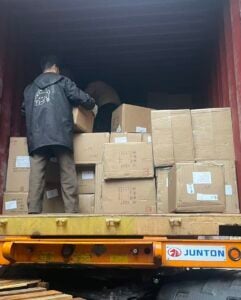
Oversee container loading to reduce damage risk
All of these services are available through Ucsourcing’s sourcing and inspection solutions.
Why Buyers from High-Demand Countries Choose Ucsourcing
Ucsourcing is based in Yiwu, one of the world’s most important hubs for general merchandise and export. We are part of ZHEJIANG FEIPAI IMP & EXP CO., LTD and operate as a dedicated service brand for global importers.
We work with clients from:
-
USA & Canada
-
UK & EU countries
-
Australia & New Zealand
-
UAE, Saudi Arabia, Qatar, Kuwait
-
South Africa, Nigeria, Kenya
-
Pakistan, India, Bangladesh, and other Asian markets
What they value most:
-
Transparent 5% flat service fee – no hidden kickbacks from factories.
-
Access to real factories in the right industrial clusters.
-
One-stop solution: sourcing, price negotiation, customization, inspection, consolidation, and shipping.
-
Honest communication when a product or supplier is not suitable.
-
Practical problem-solving instead of just passing messages.
You can see an overview here:
👉 Ucsourcing Services – China Sourcing, Inspection & Logistics
Practical Advice If You’re Planning to Buy from Alibaba
For importers in the USA, UK, Canada, Australia, UAE, Saudi Arabia, South Africa, Pakistan, India, Nigeria and similar markets, here is a realistic checklist:
-
Use Alibaba prices as a reference, not absolute truth.
-
Be wary of luxury brands or “OEM” versions of big-name electronics at huge discounts.
-
Don’t rely only on chat—ask for documents, certificates, and real production photos.
-
Always request and approve a sample before bulk order.
-
For orders above a few thousand dollars, arrange independent inspection in China.
-
If you don’t speak Chinese or can’t travel, consider working with a local sourcing agent.
The cost of a professional China sourcing agent and inspection partner is usually a fraction of what a single bad shipment can cost you.
Final Thoughts: Cheap Isn’t the Problem—Uncontrolled Cheap Is
Alibaba is not the enemy. It’s a tool.
-
Cheap prices often come from genuine structural cost advantages in China.
-
Real products can be sold at a fraction of Western retail prices and still be legitimate.
-
The real danger lies in blind trust, lack of verification, and chasing bargains that make no commercial sense.
If you treat Alibaba as a magic shortcut, you are likely to get hurt.
If you treat it as one channel inside a controlled sourcing process, supported by a local partner like Ucsourcing, it becomes a powerful part of your supply chain.

Contact Ucsourcing – Your On-Ground Team in China
If you’re considering importing from Alibaba or directly from Chinese factories and want to lower your risk while keeping costs competitive, we’d be happy to help.
WhatsApp: +86-18026272594
Email: [email protected]
Address: No.201, Building 56, 8 Street, Changchun District, Yiwu City, China 322000
Services & Contact Page:
👉 Get in Touch with Ucsourcing
We stand between you and the factory—not to block you, but to protect your interests, your margins, and your brand.