


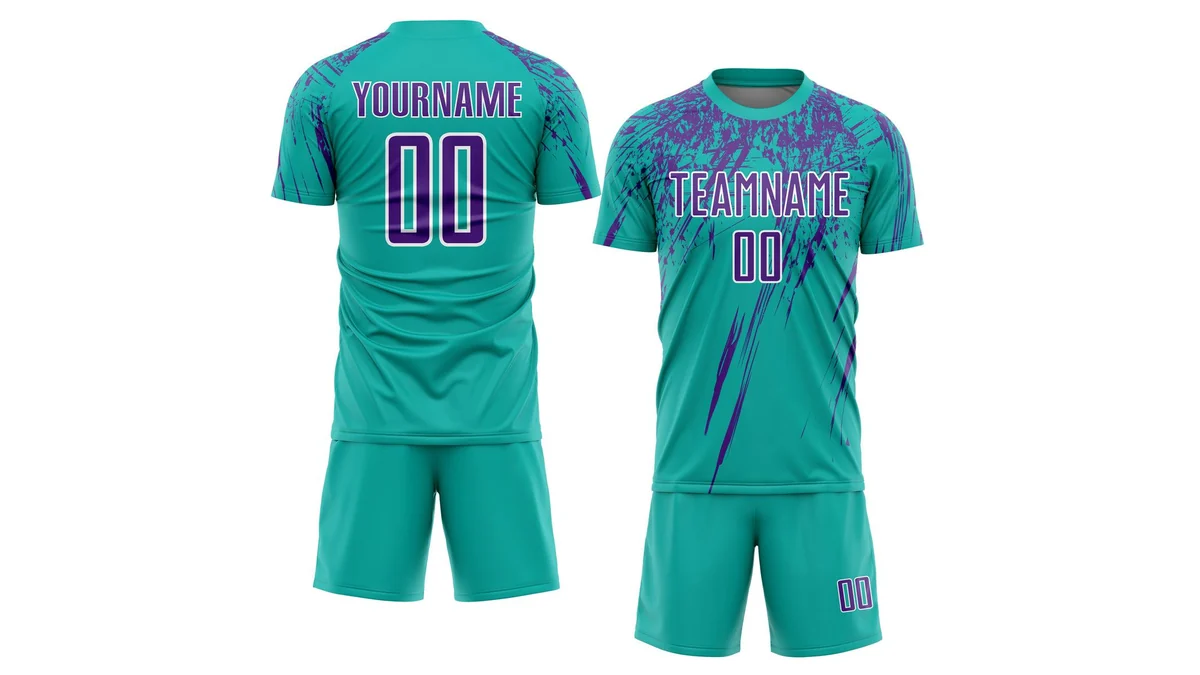


A sportswear supplier sends you a quotation for a new collection: seamless leggings, sports bras, running shirts, training shorts, and team jerseys. The prices look reasonable, the sample photographs are convincing, and the company says it can handle everything under one roof.
But can it? The leggings may be knitted on specialized circular machines, while the running shirts come from a conventional cut-and-sew line. Sports bras require different fit-development skills, and team jerseys may be printed in another facility. A supplier can coordinate all these products without manufacturing every item itself.
That arrangement is not necessarily a problem. The problem begins when the buyer does not know who is making what, which specifications apply to each product, or who is accountable when the result differs from the approved sample. For brands comparing sportswear manufacturers in China, choosing the right production capability matters more than collecting the largest number of quotations.
Not Every Sportswear Factory Can Make Every Type of Sportswear
Sportswear is a broad product category rather than a single manufacturing process. A basic training T-shirt may need fabric sourcing, cutting, sewing, and printing. Seamless gym sets use different knitting equipment, high-support sports bras call for specialist fit development, and technical jackets may need functional trims, special finishing, and more elaborate construction.
A large catalog does not prove that one production facility makes everything shown. The business may manufacture some styles in-house, purchase fabrics from independent mills, subcontract decoration, or coordinate entire garments through partner factories. Each approach can work, provided the responsibilities and controls are clear.
Match the Garment to the Manufacturing Capability
| Sportswear Product | Manufacturing Capability | Question to Ask |
|---|---|---|
| Yoga and gym leggings | Stretch-fabric patterns, cutting, seam construction | How are waistband fit, fabric stretch, and gusset construction controlled? |
| Seamless activewear sets | Circular knitting, programming, yarn and finishing control | Where are knitting, dyeing, and final assembly performed? |
| Sports bras | Bra pattern development, cups, underbands, fit evaluation | What support categories and size ranges has the factory developed? |
| Running shirts and tops | Performance knitwear, sewing and ventilation details | Which tests support the intended performance claims? |
| Running and training shorts | Lining, waistband, pockets, movement-related construction | Can the factory reproduce the approved lining and pocket design? |
| Team jerseys and uniforms | Sublimation, printing, sizing, personalized order management | How are names, numbers, and carton assortments checked? |
| Compression wear | Controlled-stretch materials and close-fitting patterns | How are fit and any claimed compression effects evaluated? |
| Technical sports jackets | Woven fabrics, functional trims and finishing | Which finishes and weather-protection claims are tested? |
The supplier’s answers should point to identifiable processes and evidence, not just attractive samples. Photographs of equipment are a starting point; production records, development samples, facility details, and relevant inspections help establish whether the claimed capability matches the order.
 | |
Sportswear Fabric Selection Starts With the Activity
Two leggings fabrics might both be described as 75% nylon and 25% spandex at 220 GSM and still behave differently. Their yarns, knit construction, surface finishing, extensibility, and stretch recovery can all affect the way the garment feels and fits. Composition and weight alone are not a complete specification.
For yoga leggings, coverage during bending, comfort, and recovery may be priorities. Running shirts require an appropriate combination of garment weight, ventilation, moisture handling, and comfort. A sports bra depends on the interaction between the fabric, underband, straps, and cups. Technical outerwear may use woven materials and treatments that are irrelevant to a training T-shirt.
Polyester, Nylon, Spandex, and Other Sportswear Materials
Polyester is common in running tops, jerseys, shorts, and tracksuits. Nylon blends are frequently used in leggings and sports bras, while spandex contributes extensibility in many fabric constructions. None is automatically superior in every garment. A heavier fabric does not guarantee better opacity, and increasing the spandex percentage does not alone guarantee stronger recovery.
Mesh fabrics can provide ventilation in selected garment areas, while woven nylon or polyester materials may suit lightweight jackets and outdoor designs. Interlock, jersey, rib, and other knit structures produce different results even when the fiber compositions are similar.
For important designs, a sportswear fabric specification should identify the fiber composition, knit or weave, fabric weight, width, appearance, stretch in relevant directions, recovery, dimensional stability, and appropriate colorfastness or performance expectations. Keep an approved swatch associated with the product specification, especially when the exact fabric feel or shade affects the brand.
Recycled Materials and Environmental Claims
If recycled polyester is specified, request evidence appropriate to the exact recycled-content claim. Fabric performance data and supply-chain traceability answer different questions. A certificate from a yarn mill does not automatically certify the finished garment or every factory involved in production.
Buyers should also confirm whether the available documentation supports the proposed wording on labels, packaging, and online listings. A material described as recycled should not automatically be presented as environmentally superior in every respect without suitable evidence.
Seamless Activewear and Cut-and-Sew Are Different Production Routes
Many seamless leggings and workout tops are made on specialized circular knitting machines. The knitted structure may include engineered textures and stretch zones. Some assembly, gusset work, or other sewing can still be required: seamless does not promise a garment without any stitching.
Cut-and-sew garments start with fabric supplied in rolls. The factory develops patterns, cuts individual pieces, and assembles them with suitable seam constructions. This method gives designers flexibility to combine materials, add mesh inserts, incorporate pockets, and adjust shaping through panels. Seamless knitting offers other design possibilities, particularly where the fabric structure itself creates visual or functional zones.
How to Check a Seamless Manufacturer
For a custom seamless set, ask which machines produce the garment, how knitting programs and sizes are developed, which yarns are used, and whether dyeing and finishing happen in-house or through subcontractors.
A factory with its own knitting equipment may still outsource certain operations. That is not automatically a concern, but the buyer should understand who manages the subcontracted work, approves material changes, and controls the finished garment.
Photographs of machinery do not establish that the equipment will be used for a particular order. Relevant samples, factory access, production documentation, and technical discussions can provide better evidence.
Why the Production Method Changes MOQ
Seamless products may involve knitting programs, yarn minimums, dyeing batches, and machine setup. Cut-and-sew products have different cost drivers, including fabric purchasing, cutting efficiency, pattern grading, and sewing complexity.
Two visually similar pairs of leggings can therefore carry different prices and minimum quantities. The quotation should explain whether the factory is using an established design, available yarn or fabric, or a newly developed construction.
Leggings and Sports Bras Require Different Fit Development
Leggings are one of the clearest examples of why sportswear cannot be evaluated like ordinary casual clothing. A pair may look excellent when the wearer stands still, then become too transparent during bending or squatting. The waistband may slide during running or roll during repeated movement.
These problems are not always solved by choosing a heavier fabric. Opacity depends on the fabric construction, color, garment dimensions, and extension during wear. Waistband stability involves the pattern, construction, material recovery, and the proportions of the intended customer.
A product marketed as squat-proof needs a defensible assessment under relevant wearing conditions. Testing one unstretched fabric swatch or a single garment size may not support the claim across an entire collection.
Sports bras introduce a different development challenge. A bra for yoga or light activity does not necessarily provide the movement control expected for running. Support depends on the underband, straps, cups, lining, materials, and overall fit.
Tightness alone is not proof of support. Removable padding, molded cups, adjustable straps, and different bust-to-underbust proportions also influence comfort and function.
A factory producing good leggings may not have equivalent experience in sports bra fit development. Buyers planning to advertise low-, medium-, or high-support products should establish suitable evaluation criteria for the intended activity.
Running Shirts and Training Shorts Have Their Own Construction Requirements
Running apparel is often marketed around moisture management and lightweight comfort, but those descriptions need to be supported by actual fabric and garment characteristics.
For a running shirt, the knit construction, ventilation, seam placement, finishing, and garment weight all influence the wearing experience. A fabric described as quick-dry should be evaluated using relevant methods rather than judged only by its fiber composition.
Training shorts may require an inner lining, a stable waistband, suitable stretch or side openings, and pockets positioned to limit unwanted movement. Two-in-one running shorts introduce an additional fitted inner layer that needs its own measurements and construction checks.
The factory should demonstrate that the approved design remains comfortable during the activity for which it is intended. This is different from checking whether ordinary casual shorts have been sewn neatly.
| |
Teamwear Is a Different Branch of Custom Sportswear
Custom athletic clothing also includes basketball jerseys, football kits, cycling jerseys, and other team uniforms. Many of these products follow a different development process from fashion-oriented gym wear.
Sublimated team jerseys may be printed on fabric panels before assembly. Artwork placement, cutting accuracy, printing, and seam alignment all influence the final appearance.
A team order can include individual names, player numbers, sponsor logos, multiple sizes, and different team colorways. Even when the total order quantity is modest, the number of unique SKUs can be substantial.
Quality control must therefore address approved artwork versions, printing accuracy, color consistency, size allocations, and packing identification. A strong teamwear manufacturer may have better systems for these requirements than a factory specializing in seamless leggings.
The reverse is also true: experience in producing sublimated jerseys does not automatically prove that a factory can manufacture technical sports bras or seamless activewear.
| |
Compression Wear and Performance Claims Need Particular Care
A close-fitting garment is not automatically a product delivering controlled compression. The pressure experienced by the wearer depends on material properties, garment dimensions, pattern construction, and body shape.
If the brand makes a measurable compression claim, the evaluation method needs to be specified. Claims about treating medical conditions or preventing blood clots may introduce medical-device regulatory requirements, depending on intended use and destination market.
Weather protection and UV performance require separate consideration. A water-repellent fabric is not automatically a waterproof jacket. Seams, closures, fabric construction, and finishing can all influence the result.
A UV-protective running top also needs suitable evidence for its advertised UPF rating. Product descriptions should reflect functions supported by relevant testing of the material and product rather than repeating a general supplier claim.
Use Product-Specific Testing Rather Than One Universal Checklist
Sportswear performance testing should start with the garment’s intended activity and the specific claim being made. AATCC TM195 addresses liquid moisture-management properties of textile fabrics, while AATCC TM183 addresses ultraviolet transmission or blocking.
Neither is a universal certificate of sportswear quality. Results from a different material, finish, or development version may not support the actual garment being sold.
Product-Specific Testing and Approval
| Garment or Claim | Evaluation Focus | Approval Question |
|---|---|---|
| Yoga and gym leggings | Opacity under extension, recovery, dynamic fit | Which sizes, colors, and stretch conditions were evaluated? |
| Sports bras | Fit and movement-related support | What assessment supports the advertised support level? |
| Running tops | Moisture management, drying, ventilation | Which methods support the quick-dry claim? |
| Compression wear | Fit and claimed pressure characteristics | Is the pressure effect defined and measured? |
| UPF clothing | Ultraviolet transmission or blocking | Does the report apply to the material being sold? |
| Water-repellent jackets | Water repellency and finish durability | Do the tested properties support the marketing claim? |
| Team uniforms | Print accuracy, sizing, SKU identification | Are player names, numbers, and size allocations correct? |
| General sportswear | Colorfastness, pilling, wash stability | Were test methods and acceptance criteria agreed in advance? |
A useful laboratory report identifies the relevant material, test method, conditions, and result. The buyer and supplier should agree on the required acceptance criteria before cutting or knitting begins, rather than debating the meaning of “premium quality” after delivery.
Sportswear Compliance Depends on the Destination Market
General apparel rules apply to sportswear, while technical products may also raise questions involving chemicals, textile performance claims, and additional requirements. Legal obligations, voluntary testing, and advertising language must be distinguished.
United States: Textile Labels and Apparel Flammability
For covered textile apparel sold in the United States, applicable FTC rules address fiber composition, country of origin, responsible business identification, and care labeling.
A coordinated sportswear set may contain garments with different fiber compositions. A generic label should not be repeated across the collection when it does not accurately describe each applicable item.
The CPSC’s general clothing textile flammability regulation, 16 CFR Part 1610, applies to covered garments. Certain fabrics qualify for specified testing exemptions, but these should not be confused with the entire garment being outside the underlying regulation. Product category and any additional children’s product requirements also need review.
PFAS Restrictions and Water-Repellent Sportswear
Some durable water-repellent finishes have historically used PFAS chemistry. California restrictions on regulated PFAS in new textile articles began in 2025. A narrowly defined category of outdoor apparel for severe wet conditions has distinct transitional provisions through the beginning of 2028, including obligations during that period.
An ordinary running jacket should not be presumed to qualify for that exception simply because it is marketed for outdoor use. Importers need to review the actual finishing chemistry, product category, and destination market.
Water-repellency performance and chemical compliance are separate questions. A fabric may perform well in a water-repellency test while still requiring examination of the substances used in its finishing process.
UPF Protection and Antimicrobial Claims
UPF labels and claims should be supported by appropriate fabric evidence and requirements applicable in the destination market. Reports must be relevant to the product specification and the claims placed on labels or online listings.
Anti-odor and antimicrobial claims also require care. In the United States, a treatment claiming to protect the textile itself may raise different regulatory questions from a claim that the garment protects the wearer against harmful microorganisms.
Certain public-health antimicrobial claims can involve EPA pesticide regulatory requirements. A factory describing its fabric as antibacterial does not automatically establish that the buyer can use every related claim on consumer packaging.
European Union: Fiber Composition and Other Requirements
EU Regulation (EU) No 1007/2011 governs fiber composition labeling for covered textile products. Additional chemical, product safety, and language obligations may apply depending on the garment and the markets where it is offered.
There is no single factory certificate that automatically proves every sportswear design complies in every destination country.
Useful official references include the FTC textile labeling guidance, CPSC clothing guidance, and EU textile labeling guidance.
Where to Find Sportswear Manufacturers in China
China’s sportswear supply chain includes fabric mills, knitting operations, apparel factories, dyeing and finishing facilities, print shops, and trading suppliers. Manufacturing resources vary by region, but the supplier’s actual production capability matters more than the city listed in its contact details.
Fujian: Sportswear and Performance Apparel
Fujian, including Quanzhou, Jinjiang, Shishi, and Xiamen, has established sportswear and related textile manufacturing resources. The region is worth investigating for knit garments, performance apparel, and certain specialized production routes.
However, not every manufacturer in Fujian has the same capabilities. A factory experienced in running T-shirts may have different equipment and development skills from one producing technical jackets or sports bras.
Guangdong: Custom Development and Cut-and-Sew
Guangdong, particularly Guangzhou and Dongguan, offers garment development resources, cut-and-sew manufacturing, material sourcing, and decoration services.
The region is worth considering for fashion-oriented activewear, original garment styles, and a broad range of OEM/ODM development projects. Buyers should still identify the actual sample-development site, garment factory, and any external fabric or finishing partners.
Zhejiang: Knitting, Apparel, and Sourcing Networks
Zhejiang has important knitting and apparel manufacturing resources, including areas around Ningbo and Haining. Specialist seamless capabilities should be verified at the individual-factory level rather than assumed from a supplier’s address.
Yiwu can be useful for comparing existing sportswear styles, sourcing mixed assortments, coordinating accessories, and consolidating orders from different manufacturers. A trading company based in Yiwu may arrange production in another province.
Searches for activewear manufacturers china, athletic apparel manufacturers china, and sports apparel manufacturers china can identify potential suppliers, but search rankings and product catalogs do not establish where the goods are actually made.
How to Verify Manufacturing Claims
A supplier may show photos of machinery, factory buildings, and certification logos. These are starting points for evaluation rather than proof that every claimed production capability applies to the proposed order.
Confirm the legal company, actual production site, relevant machinery, and which manufacturing steps are completed in-house. If knitting, dyeing, coating, printing, or final assembly is outsourced, determine who controls the subcontractor.
Certificates should be checked for the holder, issuing organization, validity, covered facility, and scope. A recycled-content certification belonging to a fabric mill does not automatically mean the garment factory or finished product carries the same certification.
For higher-value orders, relevant production records, sample reviews, factory visits, or independent inspection arrangements may help buyers verify the supplier’s claims.
Private Label Activewear Has Three Different Development Routes
Two buyers can both request private label activewear while needing very different manufacturing services.
One may want an existing product with a custom logo. Another may need a modified waistband, different fabric, or new colors. A third may want an original pattern, proprietary design, or developed seamless knit construction.
These are not equivalent orders. The development work, minimum quantities, sample costs, and intellectual property considerations can differ substantially.
Route 1: Existing Styles With Custom Branding
The supplier offers established garments, and the buyer selects available colors, sizes, logos, labels, or packaging options. Because the underlying construction is already developed, the project may require less sampling and development work.
However, buyers have limited control over the original fit, fabric, and garment construction. This route may suit a brand testing the market, provided the available design meets its requirements.
Route 2: Modified Existing Styles
The buyer starts with an established garment but requests changes to fabric, waistband, pockets, trims, fit, or other details.
Some modifications are straightforward, while others affect the entire pattern or production process. The supplier should explain whether new samples, additional materials, or new minimum quantities are required.
Route 3: Full Custom Development
Fully custom sportswear may require original patterns, size grading, fabric development, special knitting programs, engineered construction, and repeated fit sampling.
This gives brands more design control but may increase development time and production commitments.
Buyers should also establish who owns the approved patterns, artwork, knitting files, and other development materials, and whether the same design can be reproduced for future orders.
Comparison of Private Label Development Routes
| Development Route | Customization Scope | Main Commercial Consideration |
|---|---|---|
| Existing styles with branding | Logo, labels, packaging, available colors | Lower development complexity but limited design control |
| Modified existing styles | Selected fabric, fit, construction, and trim changes | Additional sampling and possible new material minimums |
| Full custom development | Original patterns, fabrics, knitting structures, and sizing | Higher development requirements, cost, and production planning |
A private label activewear manufacturer may offer all three approaches, but the MOQ advertised for an existing style should not be assumed to apply to original product development.
MOQ and Quotations Need to Be Compared at SKU Level
A supplier may advertise a minimum order quantity of 100 pieces, but the real requirement may depend on each style, color, fabric, or decoration.
Consider a buyer ordering 600 garments across three styles, four colors, and five sizes. That is not the same production task as making 600 identical garments.
Minimum quantities may arise from yarn purchasing, fabric dyeing, printing setup, knitting programs, cutting efficiency, or the factory’s production schedule.
Stock styles, modified designs, and fully custom development should therefore be quoted separately. The quotation should identify sample fees, development charges, fabric requirements, decoration, labels, packaging, testing, and shipping terms.
When comparing a direct factory with custom sportswear suppliers or a sourcing partner, confirm which services and responsibilities are included in each quotation.
The lowest unit price is not automatically the best commercial offer if it excludes necessary development work, inspection, or logistics services.
From Approved Samples to Repeatable Production
An attractive sample confirms that the supplier can produce an attractive sample. It does not prove that every size, color, and subsequent production batch will behave exactly the same way.
Sportswear can be sensitive to relatively small material or construction changes. A different yarn may alter stretch recovery. A modified waistband can change leggings fit. A revised sports bra pattern may influence support. A different finishing process can affect how a running shirt performs after washing.
For each product, retain the approved garment and supporting specifications. These may include material references, size measurements, construction details, approved artwork, trims, performance requirements, and packaging instructions.
For repeat orders, document approved changes rather than relying on the supplier to remember every detail. The same principle applies when different manufacturers are producing garments intended to form one coordinated collection.
How UCSOURCING Helps Coordinate Multi-Category Sportswear Orders
A buyer developing leggings, sports bras, running shirts, and team jerseys may find it difficult to identify one manufacturer that genuinely specializes in every item.
A more practical sourcing strategy is to review each product’s manufacturing requirements and determine which styles can be handled by the same factory and which may benefit from specialized suppliers.
UCSOURCING can assist buyers with supplier research and quotation comparisons based on those requirements. A collection containing seamless gym wear and conventional cut-and-sew sportswear, for example, may call for different production capabilities.
A clear sourcing brief identifies the garment construction, fabrics, size range, branding, quantities, destination market, and applicable performance expectations.
During development, supplier samples can be compared with the approved requirements, and proposed material or construction substitutions can be clarified before bulk production.
Depending on the agreed project scope, UCSOURCING can also coordinate production follow-up, quality inspection arrangements, SKU verification, packing checks, and shipment consolidation.
This may be useful for importers purchasing sportswear alongside caps, bags, accessories, or branded packaging from different Chinese suppliers.
Working with a sourcing partner does not remove the need for product testing or buyer approval. The value is in organizing communication, comparing manufacturing options, and keeping the requirements of a multi-supplier order aligned.
| |
If you are looking for sportswear manufacturers in China, developing a private-label activewear collection, or sourcing custom athletic clothing across different categories, contact UCSOURCING with your design references, target market, sizes, estimated quantities, and preferred materials.
A sportswear collection should look consistent on the shelf, but its products do not all need to come from the same production line. What matters is choosing capable manufacturers, specifying the right performance for each garment, and maintaining the approved details through production and shipment.
Frequently Asked Questions
Can one sportswear manufacturer produce an entire collection?
Some manufacturers can handle multiple sportswear categories, while others coordinate part of the production through external facilities. Buyers should establish which operations are completed in-house and how subcontracted manufacturing is managed.
What is the difference between seamless and cut-and-sew activewear?
Seamless activewear commonly uses specialized knitting machines to create tubular structures and engineered knit zones. Cut-and-sew sportswear uses fabric cut into pattern pieces and assembled through sewing. Both approaches can produce suitable garments for different applications.
What is the typical MOQ for custom sportswear?
There is no universal MOQ. Minimum quantities depend on garment construction, fabric availability, colors, sizes, artwork, and customization requirements. Existing stock styles may have different minimums from fully custom-developed products.
Can I start a private-label activewear brand with existing designs?
Yes. Some suppliers offer existing garments that can be customized with logos, labels, or packaging. Changes to fit, fabric, or construction may require additional samples and development.
Which sportswear fabrics are best for leggings and running tops?
The appropriate material depends on the intended use. Nylon-spandex and polyester-spandex blends are common, but knit construction, stretch recovery, fabric weight, finishing, and garment design all affect performance.
How do buyers verify an activewear supplier in China?
Confirm the legal company, actual production location, relevant machinery, manufacturing responsibilities, subcontracted processes, sample capabilities, and applicable certification details. Factory visits or independent inspections may be appropriate for some projects.
What makes teamwear manufacturing different from gym wear?
Teamwear often involves sublimation printing, player names, numbers, sponsor logos, and many individual size and design combinations. Gym wear may place greater emphasis on fit, stretch, support, and fabric performance.
What compliance requirements apply to sportswear imported into the United States?
Depending on the garment, applicable obligations may include fiber composition and origin labeling, care instructions, apparel flammability, and requirements related to chemical finishes or marketing claims. Requirements must be assessed for the specific product.
Does UCSOURCING manufacture sportswear directly?
UCSOURCING is a China sourcing service provider. We help buyers identify suppliers, compare quotations, coordinate samples, arrange suitable quality checks, and organize shipments according to the agreed service scope.


