




This guide explains the main badminton shuttlecock types, how their materials and head constructions differ, what buyers should know about LED lighting designs, and which manufacturing details are worth checking when sourcing from China.
What Are the Main Types of Badminton Shuttlecocks?
Badminton shuttlecocks generally fall into three broad categories: natural feather shuttlecocks, synthetic shuttlecocks and illuminated LED shuttlecocks. These categories serve different markets, and their specifications should not be compared as though they were interchangeable.
| Shuttlecock Type | Main Material | Typical Application | Important Buying Consideration |
|---|---|---|---|
| Goose Feather | Natural goose feathers and cork head | Training and higher-level play, depending on grade | Feather consistency, flight and durability |
| Duck Feather | Natural duck feathers and cork head | Training, clubs and recreational markets | Feather quality and price-performance balance |
| Nylon Shuttlecock | Synthetic nylon skirt and head | Recreational and repeated practice | Skirt flexibility and flight stability |
| Plastic Shuttlecock | Moulded synthetic skirt | Beginners, schools and casual sports | Material strength and shape consistency |
| LED Shuttlecock | Feather or synthetic construction with lighting components | Night games and recreational entertainment | Light position, visibility and battery design |
One important point for buyers is that supplier terminology is not always consistent. Some manufacturers use nylon and plastic as separate product descriptions, while others use them interchangeably for synthetic shuttlecocks. Always confirm the actual skirt material and construction rather than relying only on the product name.
Feather Badminton Shuttlecocks: Goose Feather vs Duck Feather
Natural feather shuttlecocks remain an important category in badminton because their construction provides a playing feel and flight response that many players prefer. However, not all feather shuttlecocks perform equally. Feather selection, shaft structure, curvature, alignment and the quality of the head all influence the finished product.
Goose Feather Shuttlecocks
Goose feather shuttlecocks are commonly positioned in the higher-quality segments of the market. Their suitability depends on the actual feather grade, the uniformity of the feather shafts and how consistently the manufacturer assembles the shuttlecock.
For wholesale buyers, a higher price should not automatically be treated as proof of better performance. Request samples from the exact grade being quoted, then compare flight consistency, feather breakage, balance and durability under similar playing conditions.
Duck Feather Shuttlecocks
Duck feather shuttlecocks cover a wide range of quality and price levels. They are used in various training and recreational segments, and selected grades can offer a practical balance between purchasing cost and playing performance.
The main challenge is consistency. Two products described as duck feather shuttlecocks may use feathers with different shaft strength, curvature and overall quality. Buyers should therefore specify the feather grade and expected performance instead of requesting duck feathers alone.
| Comparison | Goose Feather | Duck Feather |
|---|---|---|
| Market Positioning | Often positioned in higher-grade ranges | Available across budget and mid-range categories |
| Price | Generally higher for comparable grades | Often more economical |
| Performance | Depends on feather selection and assembly | Depends on feather selection and assembly |
| Buyer Priority | Flight consistency and feather quality | Cost control and batch consistency |
Neither material guarantees a particular playing level by itself. Feather grade, manufacturing control and the finished shuttlecock specification matter just as much.
How the Shuttlecock Head Affects Quality
The head is not just the part that players hit with their rackets. Its material, density, shape and connection to the skirt affect balance, impact response and product consistency.
Natural Cork Heads
Natural cork is used in feather shuttlecocks, particularly in products designed for more demanding playing applications. Buyers should ask whether the head is made from full natural cork or a different cork construction.
Composite Cork Heads
Composite cork combines cork materials into a manufactured structure. It is available in different grades and constructions, with differences in density, bonding and surface finishing.
Rubber and Synthetic Heads
Some synthetic shuttlecocks use rubber or moulded synthetic head materials. These designs are generally selected according to the product’s intended use and price range.
Nylon and Plastic Shuttlecocks for Recreational and Training Markets
Synthetic shuttlecocks are an alternative to natural feather models. Their moulded skirts can provide a more uniform appearance and are often selected for beginners, schools, recreational facilities and customers who prioritize repeated use over the specific flight characteristics of feather shuttlecocks.
Nylon Shuttlecocks
Nylon shuttlecocks use a synthetic skirt rather than individual natural feathers. The skirt’s flexibility, thickness, shape and connection to the head all influence how the shuttlecock behaves during play.
Buyers should compare more than the outside appearance. A skirt that is too stiff or too soft may produce a different playing response, while inconsistent moulding can affect the balance and durability of the finished product.
Plastic Shuttlecocks
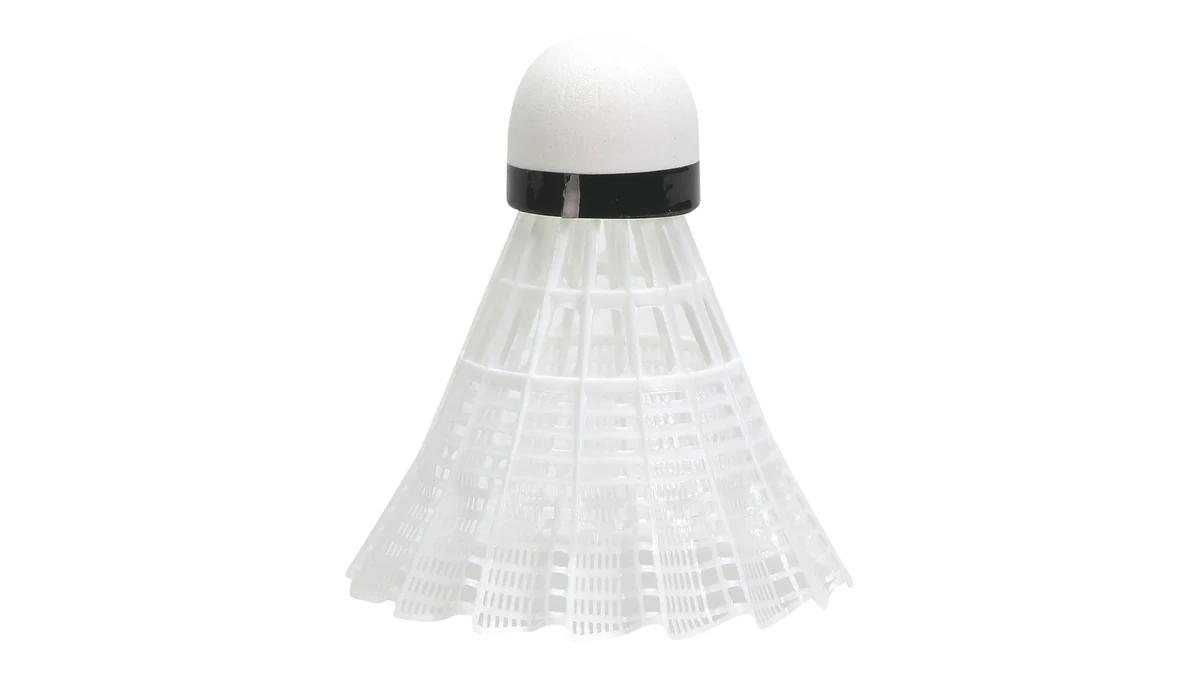
Plastic shuttlecocks are commonly used in entry-level and recreational product ranges. Their synthetic skirts can be manufactured in different colours and designs, making them suitable for sports retailers and promotional product ranges.
For bulk orders, check the skirt’s resistance to deformation, the strength of the connection between the head and skirt, and whether repeated impacts cause cracks or loose components.

Colour is another purchasing consideration. While white remains a familiar choice, synthetic shuttlecocks are also available in yellow, green, orange, blue and other colours. The right selection depends on the intended playing environment, target customer and product positioning.
LED Badminton Shuttlecocks: Internal and External Lighting Designs
LED badminton shuttlecocks are designed to make the shuttlecock more visible during low-light recreational play. They are particularly interesting for novelty sports products, outdoor entertainment, promotional gifts and retailers looking for something different from conventional badminton equipment.
However, not all illuminated shuttlecocks use the same lighting construction. One of the most important details to confirm is where the light source is installed and how the light reaches the visible parts of the product.
Internal Lighting in the Head
Some LED shuttlecocks place the lighting components inside or around the head structure. The light may then pass through a translucent or specially designed skirt, making the shuttlecock appear illuminated across a larger area.
When assessing this construction, buyers should check the visibility of the light, the position of the LED module, the battery compartment and whether the design allows the lighting component to be replaced or switched on and off conveniently.
Lighting Positioned Around the Skirt
Other designs use LED components or light-emitting elements positioned closer to the skirt. This can create a more direct lighting effect around the shuttlecock’s outer structure.
The visual result depends on the number and position of the light sources, the skirt material and the way the light is distributed. Buyers should not assume that two products with the same advertised LED colour will have the same brightness or visibility.
LED Colours and Shuttlecock Body Colours
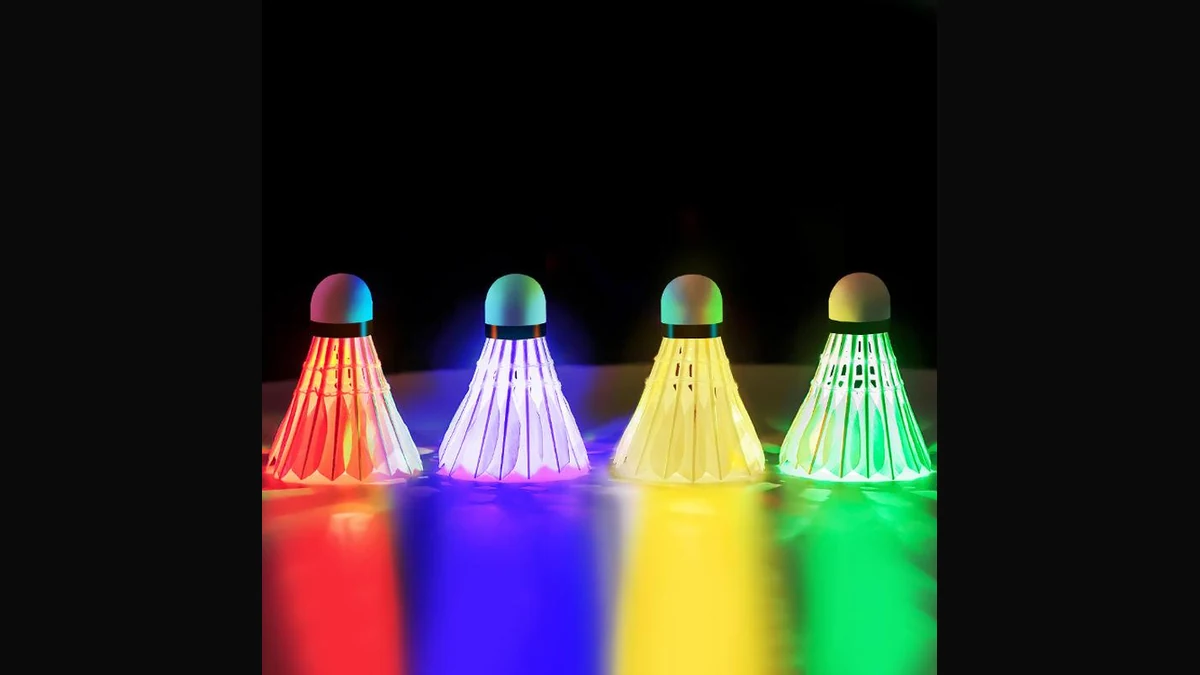
LED shuttlecocks can be supplied with different lighting colours, including red, blue, green and multicolour effects, depending on the electronic design. Some products also combine different skirt colours with illuminated components.
For private-label buyers, it is useful to separate two specifications when requesting a quotation:
- Skirt colour: The visible colour of the shuttlecock body when the light is switched off.
- LED colour: The colour emitted when the lighting system is operating.
A transparent or translucent skirt may produce a different lighting effect from an opaque coloured skirt. Request photos and videos of the exact sample with the lights both switched on and switched off.
What to Check Before Ordering LED Shuttlecocks
| Item | Questions to Ask the Supplier |
|---|---|
| Light Position | Is the light installed in the head or around the skirt? |
| LED Colour | Are red, blue, green or multicolour options available? |
| Switch | Is the light activated by a switch, impact or another mechanism? |
| Battery | What battery type is used, and is it replaceable? |
| Operating Time | How long does the light remain usable under normal conditions? |
| Visibility | How visible is the shuttlecock in the intended playing environment? |
| Durability | Does the lighting assembly remain secure after repeated impacts? |
| Packaging | Are batteries included, and are there any transport or labelling requirements? |
LED shuttlecocks should be evaluated as recreational illuminated products rather than assumed to be suitable for official competitive badminton. If a buyer intends to sell them as standard sports equipment, the applicable performance requirements should be checked separately.
Where Are Badminton Shuttlecocks Manufactured?
Production location can matter when buyers are comparing suppliers, particularly for feather shuttlecocks. Raw-material availability, manufacturing skills, automation, labour costs and export experience all influence the type of product a factory can supply.
China: A Major Manufacturing and Export Base
China is an important source of badminton shuttlecocks for international buyers. One particularly notable production area is Jiangshan in Quzhou, Zhejiang Province.
According to a report published by the Zhejiang provincial government in August 2025, Jiangshan accounted for nearly two-thirds of China’s total shuttlecock output. The report also described exports to 43 countries and regions, demonstrating the importance of this manufacturing cluster in the domestic industry.
Other Chinese production and supporting facilities are found in different provinces. Their capabilities can vary, with some manufacturers specializing in shuttlecock assembly while others focus on feather processing, raw materials or related badminton products.
India: Traditional Shuttlecock Manufacturing Clusters
India also has a history of shuttlecock manufacturing, particularly in West Bengal and northern India. Uluberia in Howrah district, West Bengal, is known for its traditional shuttlecock-making industry, while Jalandhar in Punjab is another established sports-goods manufacturing area.
The Indian government’s project profile for feather shuttlecock manufacturing also identifies manufacturing concentrations in areas such as Jalandhar, Meerut and Delhi. These clusters demonstrate that the industry is not limited to large automated factories; smaller workshops and traditional production units also play a role.
Other International Production Sources
International shuttlecock supply also includes manufacturers in Taiwan and Indonesia, alongside smaller production operations in other countries. The scale, material specialization and export capabilities of individual manufacturers differ, so buyers should evaluate factories on their actual product range and production records rather than relying only on country of origin.
How Are Badminton Shuttlecocks Manufactured?
Manufacturing processes vary according to whether the shuttlecock uses natural feathers, synthetic materials or electronic lighting components. Understanding the main production stages helps buyers identify where quality problems can occur.
Natural Feather Shuttlecock Production
Natural feather production involves several preparation and assembly stages. Feathers must be selected and sorted before they are cut and assembled into the shuttlecock skirt. The feathers are then fixed into the head, aligned and secured to maintain the intended shape.
Because natural feathers vary, sorting and manual inspection remain important. Differences in feather curvature, shaft strength and alignment can affect the finished product’s balance and flight characteristics.
Synthetic Shuttlecock Production
Synthetic shuttlecocks generally involve moulding or forming the skirt components, producing the head and assembling the parts. The dimensions of the moulded skirt and the quality of the connection between the skirt and head are important inspection points.
LED Shuttlecock Assembly
LED models require additional assembly steps involving the lighting components, battery and housing. The electronic parts must be installed securely without compromising the overall construction of the shuttlecock.
For these products, a visual inspection alone is not enough. Buyers should test the lighting function, switch operation, battery performance and the security of the assembled components.
How to Evaluate Badminton Shuttlecock Quality Before Bulk Ordering
A product photo can show the overall design, but it cannot tell a buyer whether the shuttlecock will maintain consistent performance across thousands of pieces. Before approving a bulk order, define the specifications and inspection criteria that matter to the target market.
Material and Construction Checks
- Confirm whether the product uses goose feathers, duck feathers, nylon or another synthetic material.
- For feather models, check feather alignment, shaft condition, skirt shape and the consistency of the feather selection.
- Confirm whether the head is full natural cork, composite cork, rubber or another synthetic material.
- For plastic and nylon models, inspect skirt thickness, flexibility, moulding quality and connection strength.
- For LED models, check lighting position, brightness, switch function and battery installation.
Performance and Durability Checks
Flight testing should be carried out using a consistent testing method. For products intended for organized badminton play, buyers should confirm whether the specifications align with the relevant Badminton World Federation requirements and the intended playing category.
For recreational products, the testing criteria may be different. Repeated impact testing, skirt deformation, head detachment and LED function checks can help identify problems before shipment.
Packaging and Batch Consistency
Packaging is often overlooked when buyers compare quotations. A tube of shuttlecocks, a retail box and a bulk-packed carton can have very different costs and shipping requirements.
Confirm the number of pieces per tube, tube material, carton quantity, individual packaging, barcode requirements and private-label printing before finalizing the purchase order.
What Affects the Wholesale Price of Badminton Shuttlecocks?
Two badminton shuttlecocks may look almost identical in a product photograph but have very different production costs. The price is influenced by the raw materials, manufacturing process, quality grade, packaging and order requirements.
| Cost Factor | What Changes the Price? | What Buyers Should Confirm |
|---|---|---|
| Feather Material | Goose feather, duck feather and feather grade | Exact material and grade |
| Head Construction | Full cork, composite cork or synthetic head | Material and construction details |
| Skirt Material | Natural feathers, nylon or moulded plastic | Material specification and durability |
| LED Components | Light source, battery, switch and assembly | Lighting configuration and battery type |
| Customization | Colour, logo, design and packaging | Printing method and customization MOQ |
| Order Quantity | Production volume and material purchasing | Price breaks at different quantities |
When requesting a quotation, avoid asking suppliers for a single price covering several different specifications. A more useful comparison is to request separate prices for each material, grade and packaging configuration.
How to Choose the Right Badminton Shuttlecock Supplier in China
Finding a supplier is only the first step. The more important question is whether the supplier can consistently produce the product you intend to sell.
For importers and distributors, the following points are worth checking before making a purchasing decision.
Verify the Actual Manufacturing Capability
Some suppliers manufacture shuttlecocks themselves, while others purchase finished products from different factories. Neither arrangement is automatically unsuitable, but buyers should understand who controls production and who is responsible for quality.
Request Samples Before Confirming Specifications
Samples should represent the exact material, grade, colour and construction being quoted. If the final order involves several models, approve each model separately rather than relying on one general sample.
Confirm Customization and Packaging Options
For private-label projects, ask about logo printing, tube design, retail packaging, colour combinations and minimum order quantities. Confirm whether the packaging design and approved sample will be followed during mass production.
Set Quality Inspection Requirements Before Production
Inspection criteria should be agreed upon before production starts. For example, the buyer may need to check material consistency, skirt dimensions, head attachment, packaging quantity and LED operation. The exact inspection plan should reflect the product and its intended market.
How UCSOURCING Supports Badminton Shuttlecock Buyers
For overseas buyers sourcing badminton shuttlecocks from China, coordinating several suppliers and product specifications can take time. UCSOURCING provides sourcing and purchasing support from Yiwu, helping buyers compare product options and coordinate the steps between supplier selection and shipment.
Our support can include:
- Supplier Search: Identify suitable manufacturers and suppliers according to the required material, product grade and order quantity.
- Product Comparison: Compare goose feather, duck feather, nylon, plastic and LED shuttlecock options based on the buyer’s specifications.
- Sample Coordination: Arrange samples and help confirm product details before bulk production.
- Customization: Coordinate logo printing, colour selection, tube design and retail packaging with suppliers.
- Production Follow-up: Follow production progress and communicate specification requirements.
- Quality Inspection: Coordinate pre-shipment inspection based on agreed criteria, with AQL 2.5 as the standard inspection approach where applicable.
- Consolidation and Shipping: Receive goods at our Yiwu warehouse, coordinate consolidation and arrange shipping options according to the destination and order requirements.
We can also help buyers sourcing badminton equipment alongside other sports and recreational products consolidate orders from different suppliers where practical.
Looking for a Badminton Shuttlecock Supplier in China?
Whether you need feather shuttlecocks for sports distribution, nylon models for recreational retail or customized LED shuttlecocks for a new product range, the first step is to define the specifications clearly.
Send us your product requirements, reference photos or target price. We can help compare suitable suppliers and coordinate samples, customization, production follow-up, inspection and shipping.
To help us prepare a more accurate quotation, please include:
- Shuttlecock type and material
- Required grade or performance level
- Head material and construction
- Skirt and LED colours, if applicable
- Logo and packaging requirements
- Estimated order quantity
- Destination country or port
- Target price and required delivery date
Contact UCSOURCING to discuss your badminton shuttlecock sourcing requirements.


