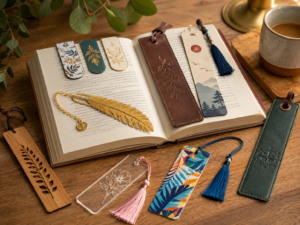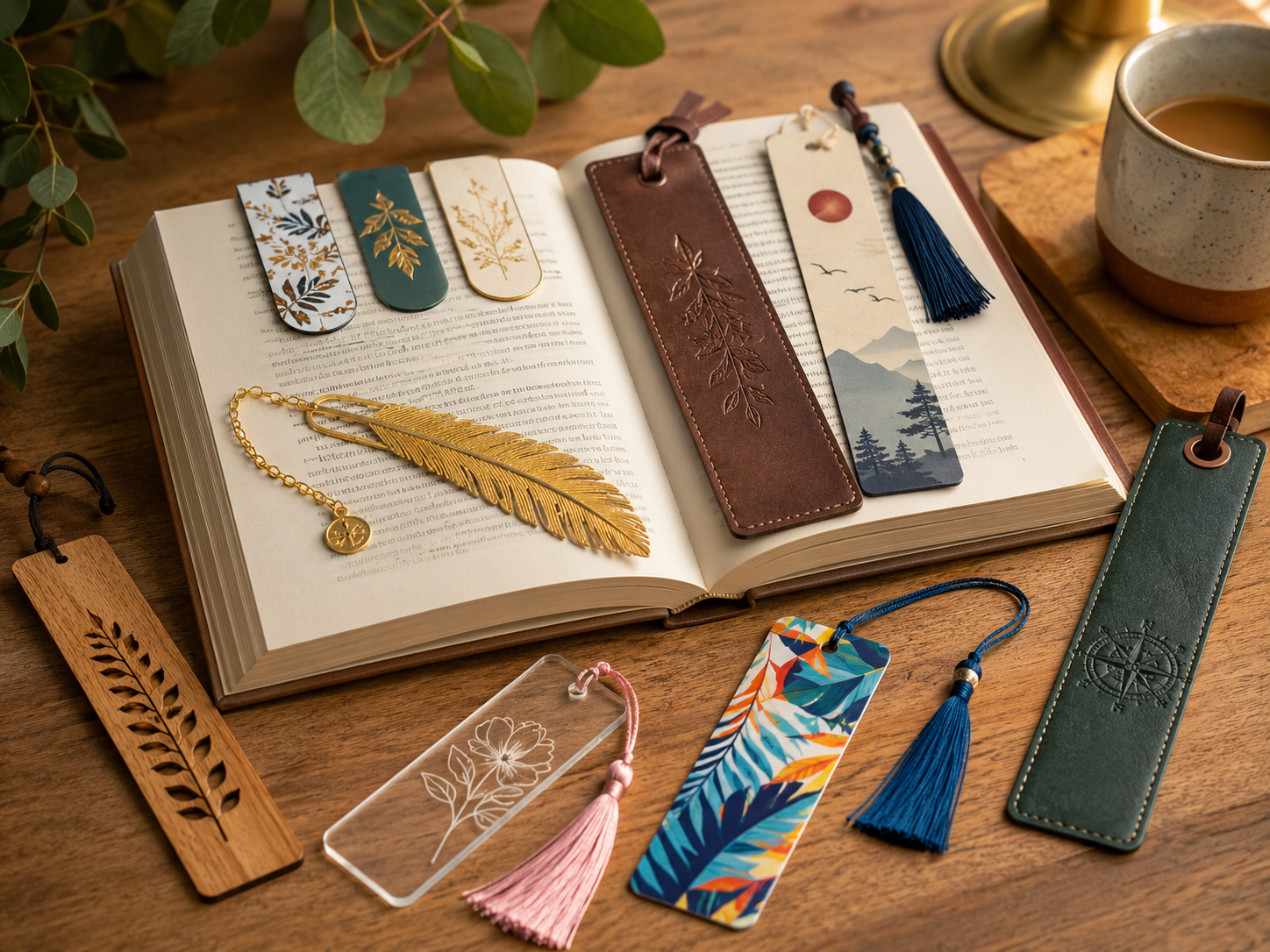
Custom made bookmarks may look like simple products, but for bookstores, schools, museums, authors, gift shops, libraries, and event organizers, they are much more than a small paper insert. A well-made bookmark can carry a brand message, promote a new book, support a school campaign, become a museum souvenir, or be sold as part of a gift set.
The challenge is that custom bookmarks are not only about printing a logo on a piece of material. Buyers need to think about material, bookmark size, printing clarity, edge finishing, tassels, coating, packaging, color accuracy, minimum order quantity, and whether the supplier can protect the original design.
Many buyers search for custom made bookmarks online and quickly find hundreds of suppliers. But choosing the right factory is not always easy, especially when you are sourcing from overseas. Some factories only accept large orders. Some can print basic paper bookmarks but cannot handle metal, leather, acrylic, PVC, or magnetic bookmarks. Some suppliers may not understand your design details clearly because of language differences. In worse cases, a design file may be shared too widely or copied without permission.
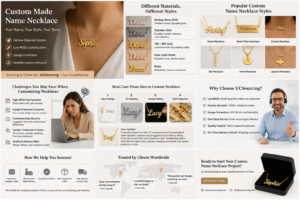
This is why working with a reliable sourcing supplier can make the process much safer. For buyers who are not sure how to import from China or how to manage small-batch customization, UCSOURCING helps source suitable factories, compare materials, confirm samples, protect design files, follow production, inspect quality, and arrange shipping.
Talk to a Sourcing Expert:https://ucsourcing.com/contact-us/
What Are Custom Made Bookmarks Used For?
Custom bookmarks are widely used in both retail and promotional markets. They are small, lightweight, easy to ship, and easy to customize, which makes them suitable for many different business scenarios.
Bookstores often use bookmarks as giveaways with book purchases. Schools use them for reading programs, graduation gifts, student rewards, and library events. Museums and art galleries use bookmarks as souvenir products featuring famous artworks, exhibitions, cultural symbols, or historical collections. Authors use custom made bookmarks for book launches, signing events, and fan merchandise. Gift shops sell bookmarks as low-cost impulse-buy products near checkout counters.
For brands, bookmarks can also work as promotional tools. A bookmark can include a logo, website, QR code, slogan, product image, or campaign message. Compared with many other promotional items, bookmarks bookmark the customer’s reading moment and stay visible for a long time.
The most important point is that custom bookmarks must match the buyer’s audience. A school may need safe, affordable, colorful paper bookmarks. A museum may prefer metal, wood, or acrylic bookmarks with a premium finish. A children’s book brand may choose soft PVC or magnetic bookmarks. A luxury stationery brand may need leather bookmarks with debossed logos and gift packaging.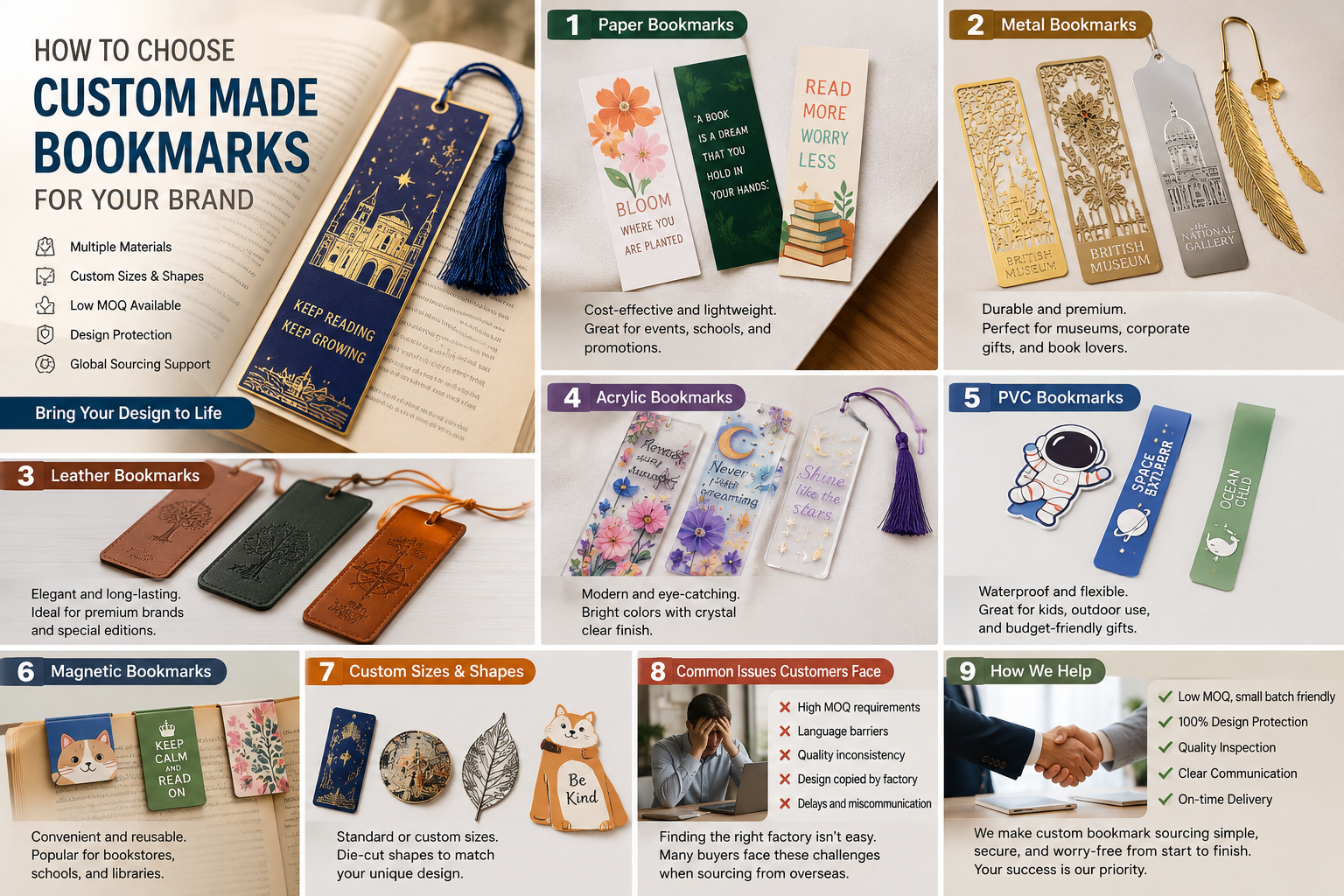
What Materials Are Commonly Used for Custom Bookmarks?
Different materials create different price levels, visual styles, and production requirements. Before placing an order, buyers should understand how each material works.
Paper Bookmarks
Paper is the most common material for custom made bookmarks. It is affordable, lightweight, easy to print, and suitable for schools, bookstores, libraries, promotional events, and book campaigns.
Common options include coated paper, art paper, kraft paper, recycled paper, and thick card stock. Buyers can choose matte coating, glossy coating, soft-touch lamination, UV coating, gold foil, silver foil, embossing, rounded corners, or hole punching with tassels.
Paper bookmarks are a good choice for large promotional orders, but buyers should not only compare unit price. Thin paper may bend easily. Poor coating may scratch or peel. Low-quality printing may make text blurry, especially when the design includes small fonts, QR codes, fine artwork, or detailed illustrations.
For paper custom bookmarks, bookmark size is also important. A standard size may be easier and cheaper to produce, while unusual sizes may require more cutting adjustment.
Magnetic Bookmarks
Magnetic bookmarks are popular for students, children’s books, planners, journals, and gift sets. They fold over the page and hold the position with magnets, so they are less likely to fall out than normal paper bookmarks.
However, magnetic bookmarks require more attention during production. The magnet strength must be suitable. If it is too weak, the bookmark may slip. If it is too strong or too thick, it may damage thin book pages. The folding line must also be accurate, and the two magnetic sides need to align properly.
For custom magnetic bookmarks, buyers should confirm the folded size, unfolded size, magnet thickness, printing side, surface finish, and packaging method before production. A small mistake in folding position can affect the whole user experience.
Metal Bookmarks
Metal bookmarks are often used for museum souvenirs, luxury stationery, corporate gifts, cultural products, and premium book accessories. Common materials include stainless steel, brass, copper, aluminum, and zinc alloy.
Metal bookmarks can be laser cut, etched, engraved, plated, painted, or filled with enamel. They can look very elegant, especially for designs with historical patterns, art lines, initials, or brand symbols.
But metal bookmarks also bring more sourcing challenges. The buyer needs to confirm thickness, edge smoothness, plating color, anti-rust treatment, laser cutting precision, and whether the product may scratch book pages. If the design requires a special shape, the factory may need a mold or cutting tool. For small orders, not every factory is willing to accept the project.
This is where a china sourcing agent can help. UCSOURCING can check whether the design is suitable for laser cutting, stamping, etching, or mold production, and help the buyer find a factory that accepts a realistic MOQ.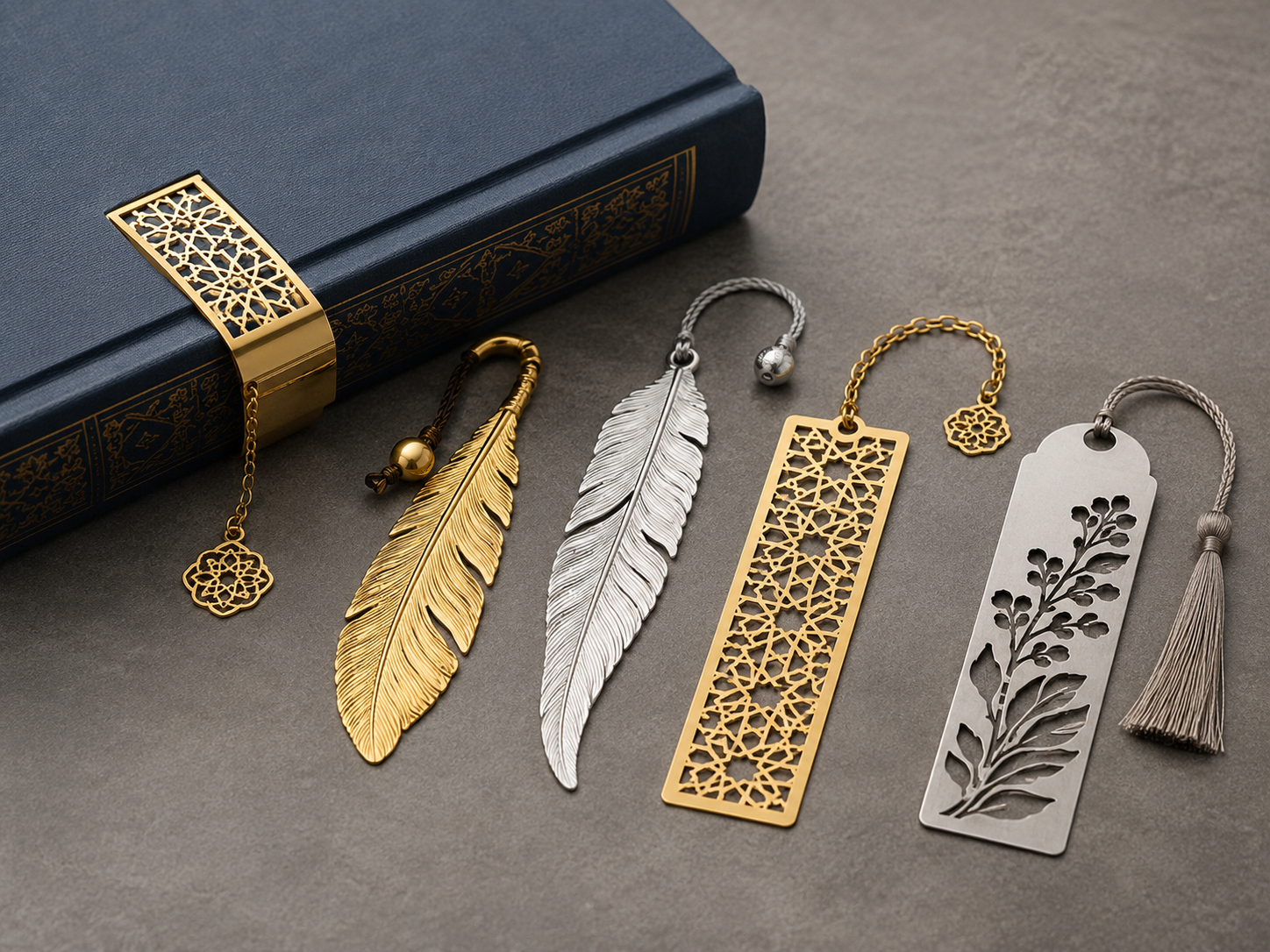
Leather Bookmarks
Leather bookmarks are suitable for premium gifts, journals, hotels, corporate branding, book clubs, and luxury stationery sets. They can be made from genuine leather, PU leather, or recycled leather.
Common customization methods include debossing, embossing, foil stamping, stitching, edge painting, laser engraving, and adding metal charms. Leather bookmarks feel warmer and more premium than paper bookmarks, but buyers must pay attention to material consistency, smell, thickness, edge finishing, and color difference between batches.
For overseas buyers, leather material names can sometimes be confusing. “Genuine leather,” “PU leather,” “vegan leather,” and “recycled leather” may look similar in photos, but they are very different in cost, feel, durability, and compliance. A professional sourcing supplier should help confirm the real material before mass production.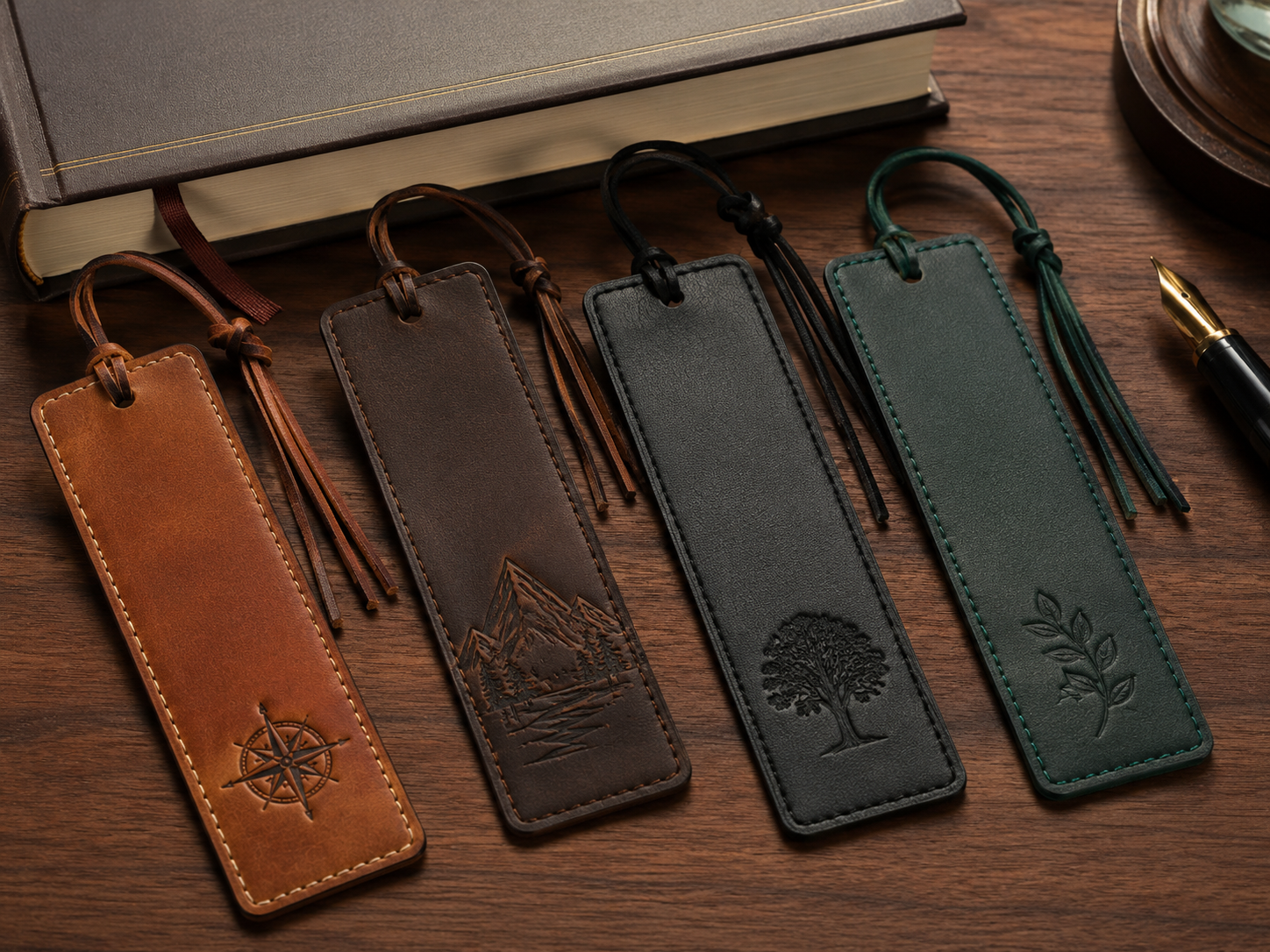
Wooden Bookmarks
Wooden bookmarks are popular for eco-style gifts, museum shops, nature-themed brands, cultural products, and handmade-style stationery. They can be made from bamboo, maple, walnut, beech, basswood, or plywood.
Wood can be laser engraved, printed, carved, stained, or painted. It gives a natural look, but it also has production risks. Wood grain may vary. Thin wood may bend or crack. Laser engraving may burn too dark if the machine setting is not controlled well. Edges must be smooth enough to avoid hurting users or damaging pages.
For wooden custom bookmarks, buyers should ask for real material photos, thickness details, sample confirmation, and packing protection. Because wood is sensitive to moisture, export packaging also matters.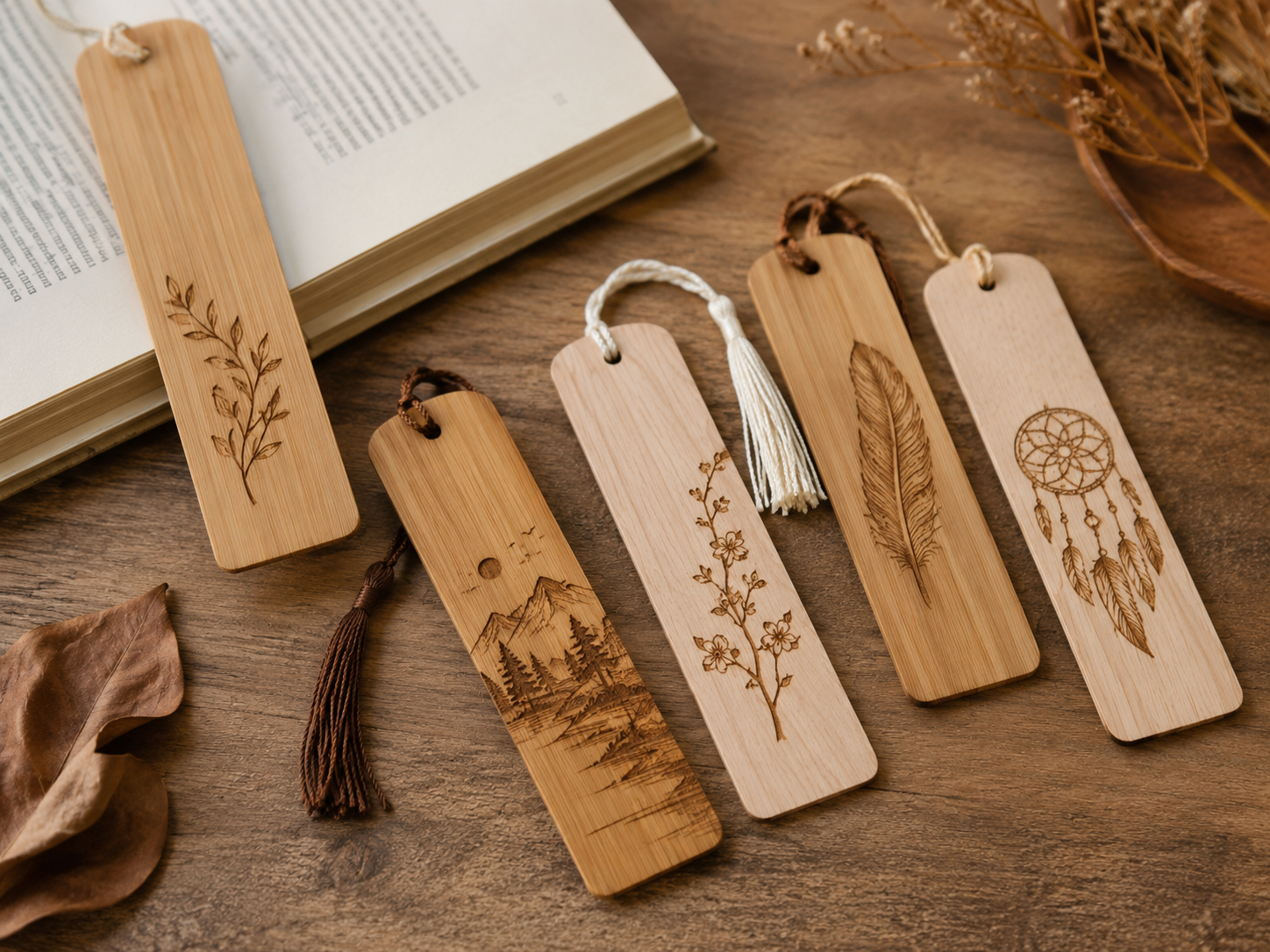
Acrylic Bookmarks
Acrylic bookmarks are bright, modern, and suitable for anime-style products, art merchandise, creator brands, school gifts, and retail stationery. They can be transparent, frosted, glitter, colored, printed, or laser cut into custom shapes.
Acrylic can make a bookmark look eye-catching, but the buyer must check thickness, surface scratches, protective film, printing adhesion, edge polishing, and hole position for chains or tassels. Acrylic is also more fragile than paper or PVC, so packaging needs to prevent scratching and cracking during shipping.
For custom acrylic bookmarks, sample checking is very important. Product photos may look beautiful online, but real printing color and transparency may be different.
PVC and Soft Rubber Bookmarks
PVC bookmarks are flexible, colorful, and suitable for children’s products, cartoon designs, school campaigns, character merchandise, and waterproof bookmarks. They can be made in 2D or 3D effects with raised logos, molded shapes, and bright colors.
PVC customization often involves mold cost. For buyers with a special shape or raised design, the factory may need to create a mold first. If the order quantity is small, mold cost can make the unit price higher. Some buyers may also need 3D design files or prototype samples before opening a mold.
A professional sourcing in China process should include checking whether the design can be made with existing tooling, whether 3D printing can be used for sample display, and whether mold cost is reasonable for the expected order volume.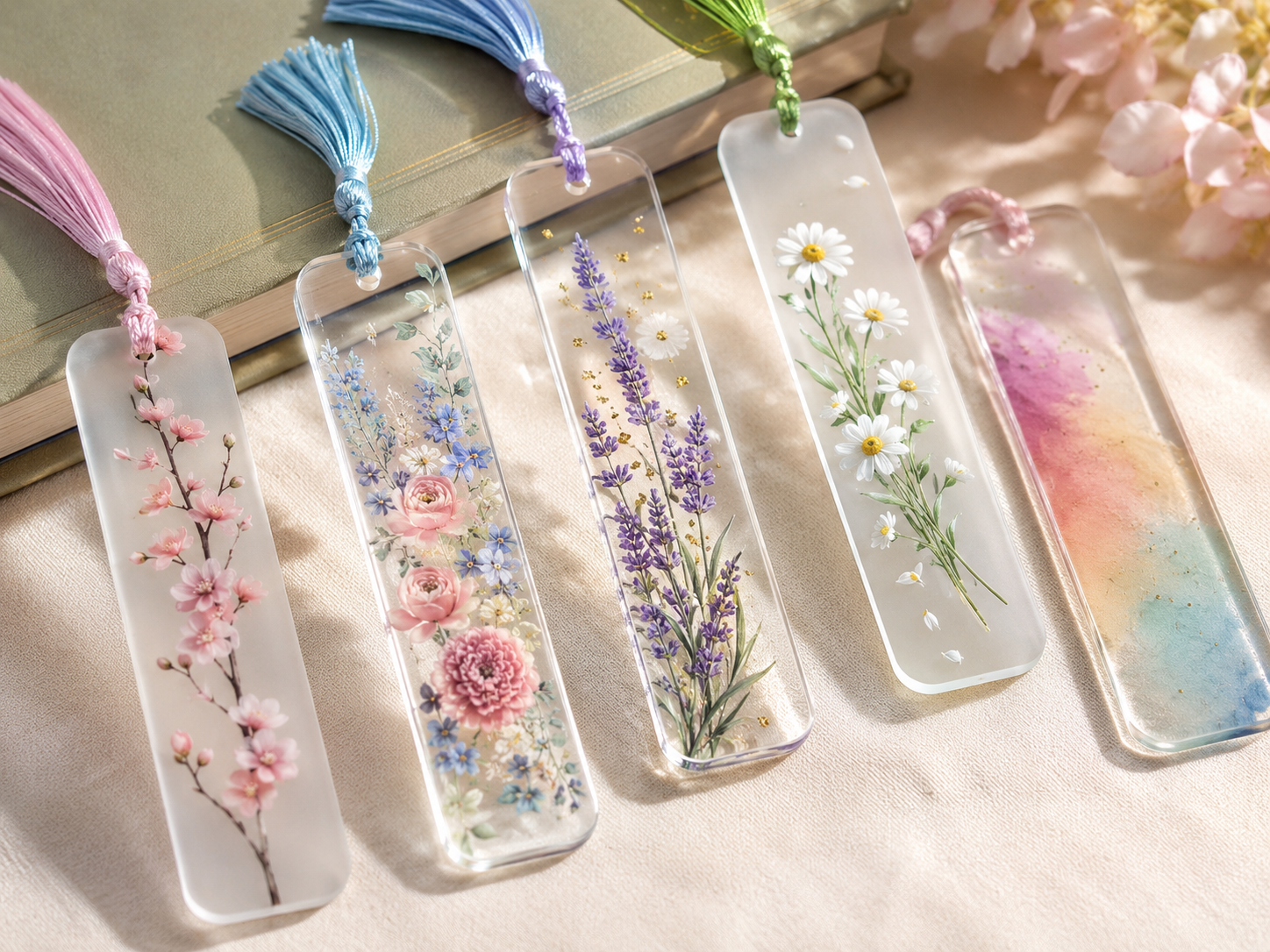
What Bookmark Size Should Buyers Choose?
Bookmark size depends on the material, use case, packaging, and target market. There is no single perfect bookmark size for every order.
For paper bookmarks, common sizes are around 2 x 6 inches, 2 x 7 inches, or similar long rectangular formats. For children’s bookmarks, smaller sizes may be easier to use. For museum souvenirs or gift sets, longer and thicker bookmarks may feel more premium. For magnetic bookmarks, buyers need to confirm both folded size and unfolded size. For metal and wooden bookmarks, thickness and weight matter as much as length and width.
When buyers compare bookmarks, bookmark size should not be treated as a small detail. A bookmark that is too wide may not fit comfortably inside a book. A bookmark that is too thin may bend easily. A bookmark that is too heavy may damage thin pages. A bookmark that is too small may not show artwork or text clearly.
Before mass production, buyers should confirm:
Key Size Details to Confirm
The final product size
The material thickness
The printing area
The bleed area for artwork
The hole position for tassels or chains
The folded size for magnetic bookmarks
The packaging size
The carton size and shipping weight
This is especially important for custom made bookmarks sold online, because inaccurate size descriptions can lead to customer complaints and returns.
What Problems Do Buyers Often Face When Customizing Bookmarks?
Custom bookmarks may seem easy, but real production can bring many problems. These problems are usually not obvious until the buyer receives samples or finished goods.
Factories May Not Accept Small Orders
Many overseas buyers want to start with a small batch first. A bookstore may only need 300 pieces for a local event. An author may need 500 custom made bookmarks for a book launch. A museum gift shop may want to test five designs before placing a larger order.
But many factories prefer larger orders because small orders still require design checking, machine setup, printing adjustment, cutting, packing, and communication time. For metal, PVC, acrylic, and leather bookmarks, small orders may be even harder because the factory needs molds, tools, or special setup.
A buyer searching alone may receive replies like “MOQ 3,000 pieces” or “We do not accept this small quantity.” UCSOURCING can help buyers look for factories that are more flexible with small-batch custom bookmarks, especially when the buyer is testing a new product or market.
The Design May Be Copied or Shared Too Widely
Design protection is a real concern for custom bookmarks. Many buyers use original artwork, museum images, character illustrations, brand logos, author signatures, or limited-edition designs. If the design file is sent to too many factories without control, the risk increases.
A common situation is that a buyer contacts many suppliers at the same time, sends the full design file to all of them, and later finds similar products appearing online. It may be difficult to prove who copied it, especially when communication was informal and no written protection was used.
UCSOURCING helps reduce this risk through controlled supplier screening, limited file sharing, written confirmation, NDA-style agreements when needed, and clear records of design ownership. This does not mean any sourcing agent can magically remove all legal risk, but a professional process can protect the buyer much better than sending design files randomly to unknown factories.
Language Differences Cause Production Mistakes
Many production problems come from small misunderstandings. For example, a buyer may say “matte finish,” but the factory uses normal coated paper. A buyer may request “gold edge,” but the supplier understands it as gold foil logo. A buyer may ask for “soft leather feel,” but the factory quotes basic PU leather.
For custom bookmarks, these details matter. Color, size, coating, corner shape, tassel color, magnet strength, packaging, and printing position should all be confirmed clearly.
As a sourcing supplier, UCSOURCING helps translate buyer requirements into factory-ready production instructions. This reduces misunderstandings and helps the factory quote more accurately.
Sample Looks Good, But Mass Production Is Different
nother common problem is sample quality inconsistency. A factory may make a beautiful sample, but mass production may have color difference, rough edges, weak magnets, poor cutting, scratches, or packaging defects.
This is why buyers should not rely only on photos. They should check physical samples when possible and confirm inspection standards before mass production. For bookmarks, inspection may include print clarity, size tolerance, color accuracy, edge smoothness, tassel attachment, magnet alignment, coating quality, surface scratches, and packing quantity.
For buyers who are learning how to import from China, this step is often missed. A professional china sourcing agent can follow up production and arrange quality inspection before shipment.
A Small Bookstore Wants 500 Custom Paper Bookmarks
A small bookstore planned a reading campaign and wanted 500 custom bookmarks with its logo, store address, QR code, and seasonal artwork. The buyer contacted several suppliers directly, but most factories quoted higher prices because the order was too small.
The main challenge was not the product itself. It was the setup cost. The factory still needed to check artwork, print samples, cut the bookmarks, laminate the surface, and pack them properly.
A better solution was to find a factory that already handled small promotional paper products. By adjusting the bookmark size to a standard cutting format and choosing matte lamination instead of a more expensive special coating, the buyer could keep the order practical without losing quality.
This type of small-batch project is where UCSOURCING can help buyers find suitable factories instead of forcing them into unrealistic MOQs.
Customization Services:https://ucsourcing.com/contact-us/
A Museum Needs Metal Bookmarks With Original Artwork
A museum gift shop wanted metal bookmarks based on a historical pattern from its collection. The buyer needed the product to look premium, but also worried about design protection.
The problem was that not every metal factory could handle fine line details. Some suppliers suggested simple printing, while others recommended laser cutting or etching. If the design was sent to too many factories, the museum’s original artwork could be exposed.
In this situation, the best approach was to screen a small number of qualified suppliers first, confirm technical feasibility, use written design ownership terms, and only share the necessary production files after the supplier was selected.
For custom made bookmarks with original artwork, design protection and supplier control are just as important as price.
A Brand Wants PVC Bookmarks With a 3D Effect
A brand wanted colorful PVC bookmarks with raised cartoon details. The design looked simple on screen, but production required a mold. The buyer hoped to start with a small test order, but the factory wanted a higher MOQ because mold setup and color matching took time.
The practical solution was to create a 3D sample or digital mold preview first, then decide whether to open the actual production mold. If the buyer planned to reorder later, the mold cost could be more reasonable. If it was only a one-time small event, paper, acrylic, or magnetic bookmarks might be more cost-effective.
This is why buyers should not choose material only by appearance. The right material depends on order quantity, budget, selling price, and long-term plan.
How Can UCSOURCING Help With Custom Bookmark Orders?
UCSOURCING helps international buyers manage sourcing in China with a practical, step-by-step process. For custom bookmarks, the goal is not only to find a cheap supplier. The real goal is to find the right factory, protect the buyer’s design, reduce mistakes, and make sure the finished goods match the approved sample.
Our service can include supplier screening, quotation comparison, material advice, sample coordination, artwork communication, MOQ negotiation, production follow-up, quality inspection, packaging confirmation, and shipping support.
For buyers who already have their own supplier, UCSOURCING can also help with quality control, factory communication, and shipment coordination. This is useful when the buyer has found a factory but still needs local support in China.
Whether you need paper bookmarks, magnetic bookmarks, metal bookmarks, leather bookmarks, wooden bookmarks, acrylic bookmarks, or PVC bookmarks, the sourcing process should be clear before production begins.
What Should Buyers Prepare Before Requesting a Quote?
A clear RFQ can save time and reduce wrong quotations. Before asking for prices, buyers should prepare the following details.
Custom Bookmark RFQ Checklist
Product type: paper, magnetic, metal, leather, wood, acrylic, PVC, or mixed material
Bookmark size: length, width, thickness, folded size if magnetic
Design file: AI, PDF, PSD, SVG, or high-resolution image
Printing method: full-color printing, UV printing, engraving, embossing, foil stamping, laser cutting, enamel, or molding
Surface finish: matte, glossy, soft-touch, waterproof coating, anti-scratch film, plating, edge painting
Accessories: tassel, ribbon, chain, charm, magnet, sleeve, backing card
Packaging: OPP bag, paper sleeve, backing card, gift box, retail display box
Quantity: test order quantity and expected reorder quantity
Target market: USA, Europe, Middle East, South America, or other markets
Use case: bookstore, school, museum, gift shop, event, author promotion, retail sale
Quality requirements: color accuracy, edge smoothness, magnet strength, material thickness
Shipping method: air, sea, express, DDP, FOB, or other terms
The more specific the RFQ is, the more accurate the quotation will be.
When Should Buyers Use a China Sourcing Agent?
A buyer may not need a sourcing agent china for every simple order. If the design is basic, the quantity is large, and the buyer already has a trusted factory, direct purchasing may work.
But for custom bookmarks, a china sourcing agent becomes valuable when:
The order quantity is small but customization is detailed
The buyer needs several material options compared
The design needs protection
The factory communication is difficult
The buyer needs help checking samples
The product involves mold opening or 3D sample confirmation
The buyer wants packaging and shipping support
The buyer is not familiar with how to import from China
The buyer wants quality inspection before shipment
In these situations, the cost of one mistake can be much higher than the cost of professional sourcing support.
How to Make Custom Bookmarks Safer and Easier to Source?
Custom bookmarks are small products, but good sourcing still requires careful decisions. Material, bookmark size, printing quality, finishing, packaging, MOQ, design protection, and supplier reliability all affect the final result.
For buyers, the key is not to rush into the cheapest quotation. A low price may hide thin material, poor printing, weak magnets, rough edges, wrong packaging, or unclear production terms. A professional sourcing process should help the buyer compare options honestly and choose the most suitable solution.
If you are planning custom made bookmarks for bookstores, schools, museums, authors, gift shops, or promotional events, UCSOURCING can help you source the right supplier in China, manage small-batch customization, protect your design files, follow production, inspect quality, and arrange shipping.
A bookmark may be small, but your brand image is not. The right sourcing partner helps make sure your custom bookmarks look professional, feel reliable, and arrive ready for your market.
Contact UCSOURCING
If you need to source from China, our team can assist you with everything from supplier selection to final delivery.
Website Links:https://ucsourcing.com/
WhatsApp: +86-18026272594 name:Jenny
Email: [email protected]
[email protected]
We help global buyers source smarter, reduce risks, and build stable supply chains in China.