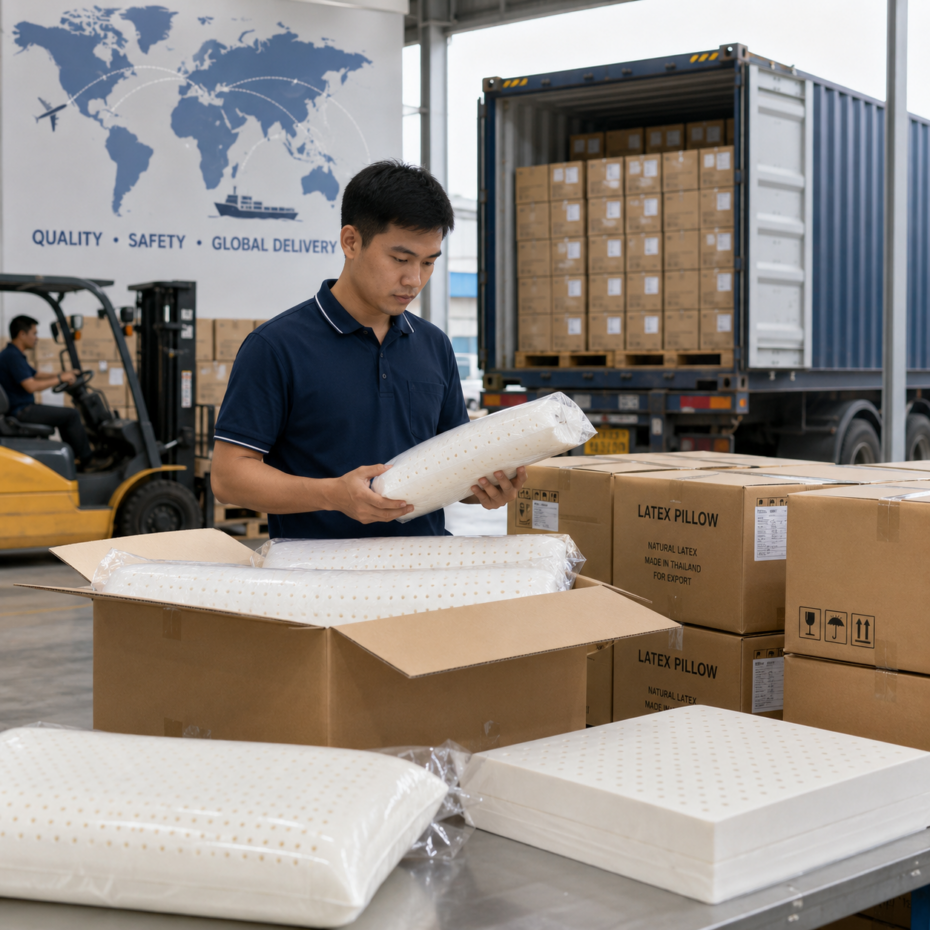
Latex products are used in more industries than many buyers realize. When people search for product in latex, product latex options, or latex products for wholesale, they may be looking for pillows, mattresses, condoms, balloons, gloves, medical parts, baby items, elastic bands, resistance bands, or industrial rubber components.
The challenge is that “latex” does not always mean the same thing.
Some products are made from natural rubber latex, which comes from rubber tree sap. Some are made from synthetic latex, usually developed from petrochemical-based materials. Some are blended latex products, combining natural and synthetic materials to reduce cost or adjust performance. For global buyers, the real question is not only “Is this latex?” The better question is: what type of latex is it, what standard does it meet, and is it suitable for my market?
For importers, online sellers, bedding brands, medical distributors, party supply wholesalers, and private-label buyers, sourcing latex products requires careful supplier screening, material verification, testing, packaging control, and compliance review. This is where a professional china sourcing agent like UCSOURCING can help buyers reduce risk before placing a large order.
What Are Latex Products?
Latex products are items made from latex-based materials. In commercial sourcing, latex usually refers to either natural rubber latex or synthetic latex. Natural rubber latex comes from the sap of the rubber tree, while synthetic latex is man-made and developed through chemical processes. For bedding, medical, party, household, and industrial products, the material choice affects comfort, elasticity, safety, durability, odor, cost, and compliance.
Common latex products include:
- Latex pillows
- Latex mattresses
- Latex mattress toppers
- Latex cushions
- Latex gloves
- Latex condoms
- Latex balloons
- Latex finger cots
- Latex tubing
- Latex resistance bands
- Latex elastic bands
- Latex baby nipples or pacifier-related components
- Latex shoe soles
- Latex medical parts
- Latex rubber toys
- Latex coatings and adhesives
- Latex household cleaning gloves
- Latex industrial protective items
Not every latex product is suitable for every market. A latex mattress and a latex condom are both latex products, but the sourcing standards are completely different. A pillow buyer may care about GOLS, GOTS, OEKO-TEX, comfort, breathability, smell, and compression recovery. A medical distributor needs to care about ASTM, ISO, FDA registration, biocompatibility, leakage testing, shelf life, and packaging traceability.
That is why sourcing in China should not start with price only. It should start with product classification.
What Is the Difference Between Natural, Organic, Synthetic, and Blended Latex?
Natural Latex
Natural latex is made from rubber tree sap. It is known for elasticity, resilience, breathability, and long-term support. In bedding products such as pillows, mattresses, and toppers, natural latex is often preferred by customers who want a more responsive feel than memory foam.
Natural latex is not automatically organic. A product can be natural but not certified organic. Buyers should not accept “100% natural” claims without documents, test reports, and supplier verification.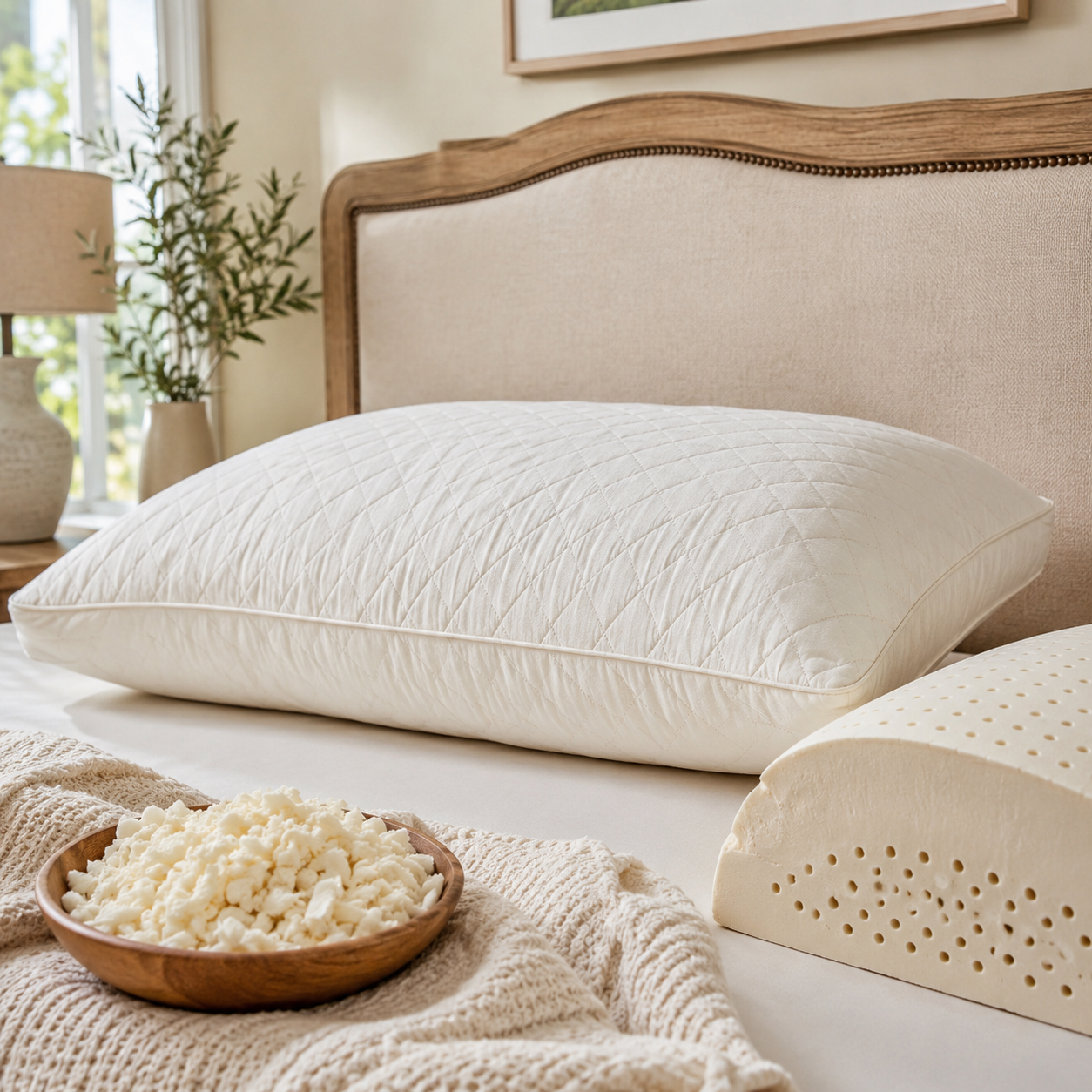
Organic Latex
Organic latex usually means the natural latex has been certified under an organic latex standard such as GOLS. For bedding products, GOLS is one of the strongest signals because it focuses specifically on products made with organically grown natural rubber latex. The official GOLS scope includes products such as mattresses, bedding products, gloves, bands, shoe soles, rubber toys, condoms, and other latex products made from organically grown natural rubber latex.
For a buyer building a premium bedding brand, organic latex can support better positioning, stronger product storytelling, and higher customer trust. But the certificate must be real, current, and traceable.
Synthetic Latex
Synthetic latex is man-made. It is often cheaper and easier to control in mass production, but it does not carry the same natural-material value as organic or natural latex. In some product categories, synthetic latex may be acceptable. In premium bedding, however, customers often compare it with natural latex and may see it as less desirable.
Synthetic latex is not always “bad.” It depends on the product use. For industrial or cost-sensitive products, it may be practical. For premium pillows and mattresses, the material story matters more.
Blended Latex
Blended latex combines natural and synthetic latex. It can reduce cost while keeping some latex elasticity. However, buyers need to ask for the actual formula ratio, not just accept “natural latex” in the product title.
A common sourcing problem is that suppliers may use attractive words such as “natural,” “eco,” or “organic feel” without real certification. Before importing, buyers should confirm the material composition, certificate scope, lab testing, and whether the claim can legally appear on packaging in the destination market.
What Latex Products Can Buyers Source?
Latex Bedding Products
Latex bedding includes latex pillows, latex mattresses, latex toppers, neck pillows, seat cushions, baby mattresses, and ergonomic support products. These products are popular because latex can offer bounce, support, airflow, and shape recovery.
For latex pillows, buyers should check:
- Solid latex or shredded latex
- Natural, organic, synthetic, or blended latex
- Density and firmness
- Pillow height and size
- Adjustable filling or fixed core
- Ventilation holes
- Cotton cover quality
- Smell level after unpacking
- Compression recovery
- Packaging method
- Mold, dust mite, and moisture control claims
- Certificates such as GOLS, GOTS, OEKO-TEX, or other local requirements
For latex mattresses, buyers also need to check construction. A mattress may use latex foam only, latex plus springs, latex plus coconut fiber, latex plus memory foam, or latex plus other comfort layers. For the U.S. market, mattress importers should pay close attention to flammability requirements under 16 CFR Part 1632 and Part 1633.
learn more:https://ucsourcing.com/how-to-choose-latex-pillows-mattresses-toppers-and-cushions/
Latex Condoms
Latex condoms are medical and personal health products, not ordinary consumer goods. Buyers must be strict with factory qualification, shelf-life testing, packaging integrity, lubricant compatibility, electronic testing, leakage testing, and destination-country registration.
For male natural rubber latex condoms, ISO 4074 specifies requirements and test methods. In the U.S., ASTM D3492 is also recognized for rubber contraceptives.
This category should never be sourced only by comparing unit price. A small quality problem can become a serious legal, health, and brand-risk issue.
Get More Details:https://ucsourcing.com/how-to-choose-latex-condoms-for-safe-sourcing/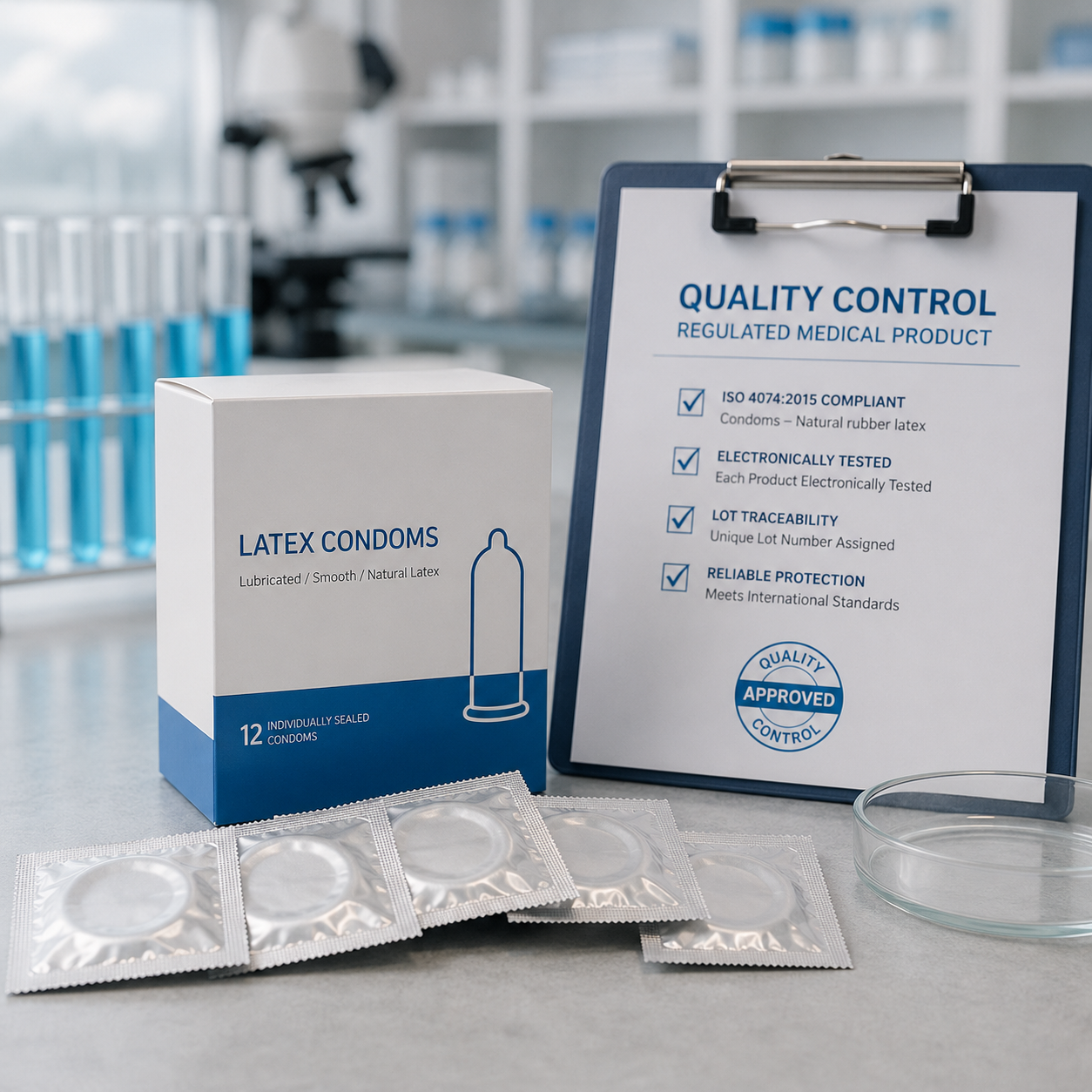
Latex Gloves
Latex gloves include medical examination gloves, surgical gloves, household gloves, cleaning gloves, industrial gloves, and food-service gloves. For medical gloves, the U.S. FDA regulates them as medical devices and reviews performance criteria such as leak resistance, physical properties, and biocompatibility.
For rubber medical examination gloves, ISO 11193-1 specifies requirements for packaged sterile or bulk non-sterile rubber gloves used in medical examinations and diagnostic or therapeutic procedures.
Important checks include AQL level, pinhole testing, tensile strength, elongation, powder-free processing, protein level, packaging, shelf life, and whether the product contains natural rubber latex allergen warnings.
Latex Balloons
Latex balloons are used for parties, events, retail packaging, promotional campaigns, and seasonal decoration. They may look simple, but buyers must check thickness, size consistency, color fastness, odor, inflation performance, packaging, shelf life, and safety labeling.
For the U.S. market, latex balloons require strong child-safety attention. CPSC warns that children under eight can choke or suffocate on uninflated or broken balloons, and adult supervision is required.
If buyers sell balloons to supermarkets, party stores, Amazon, or large retailers, packaging warnings and compliance documents should be confirmed before mass production.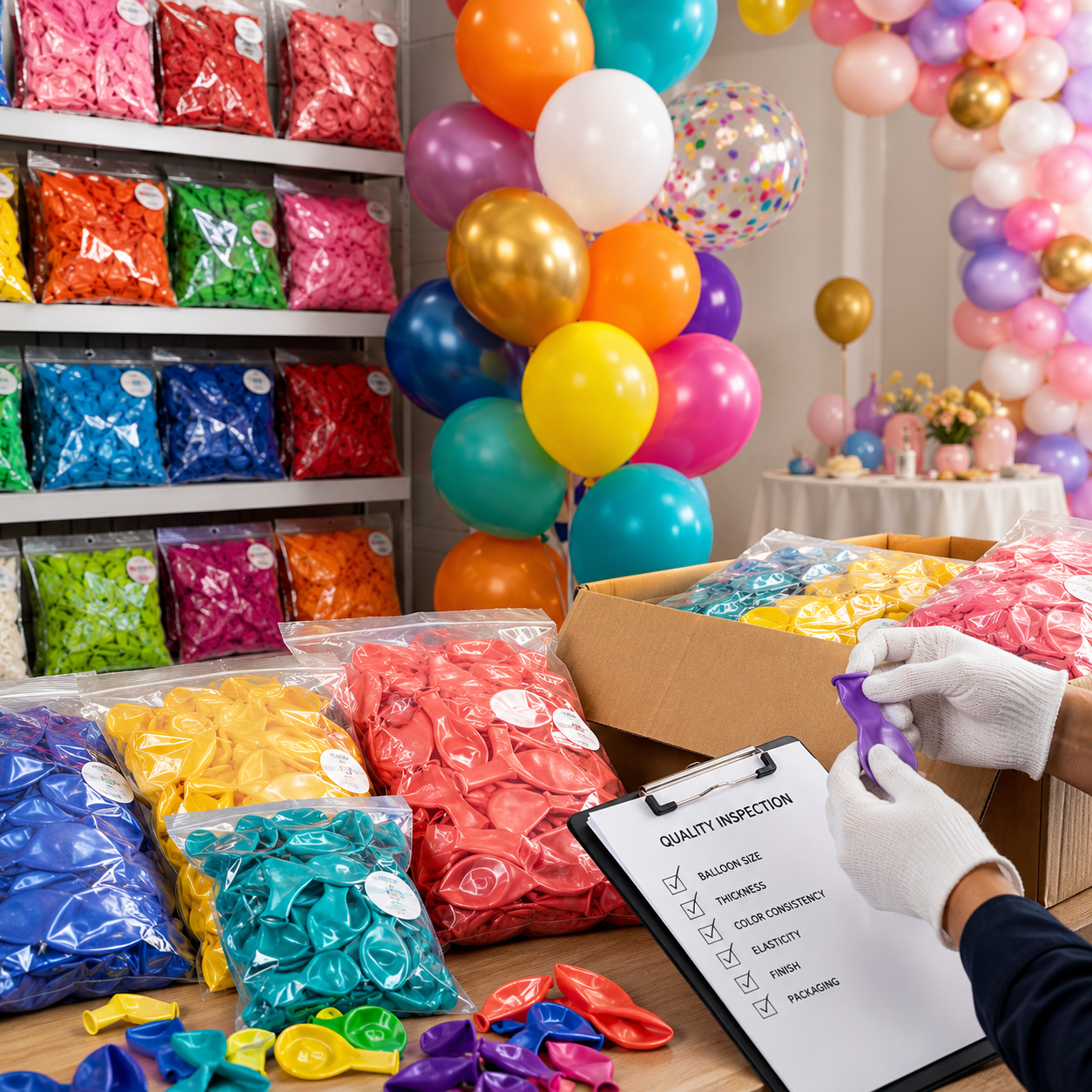
Latex Medical and Industrial Products
Other latex products include finger cots, tourniquets, medical tubing, catheter-related components, elastic tubing, resistance bands, rubber sheets, rubber bands, protective sleeves, and coated products.
These categories should be sourced based on application. A resistance band needs tensile strength and elongation testing. A medical tube may need biocompatibility and clean production control. A rubber band may focus on elasticity, aging resistance, and packaging count accuracy.
The same material name does not mean the same sourcing standard.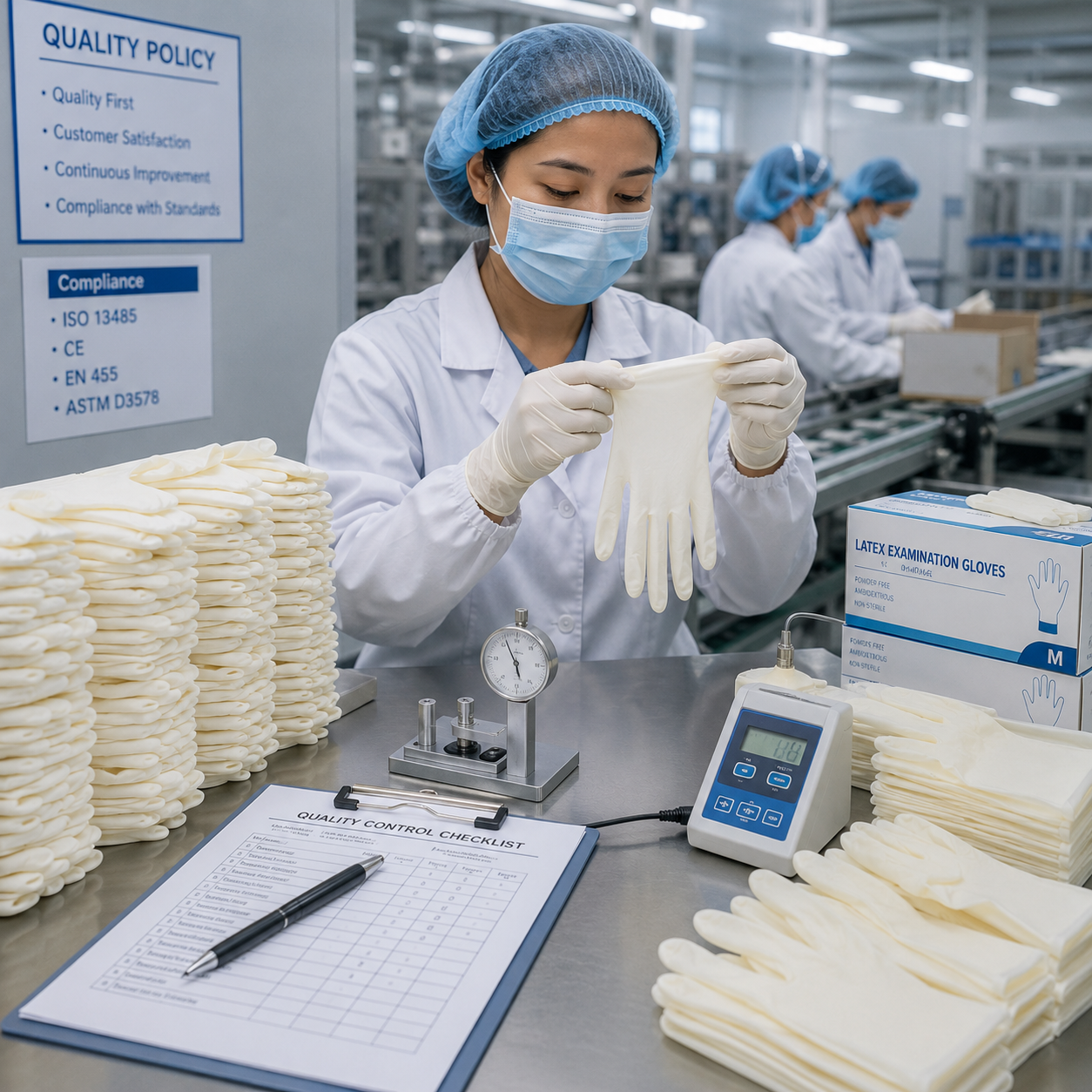
What Industry Standards Should Latex Buyers Check?
Different latex products need different standards. Buyers should never ask one factory to provide “all certificates” without knowing what is actually needed.
Bedding Standards
For latex pillows, mattresses, and toppers, buyers commonly check:
- GOLS for organic latex
- GOTS for organic cotton covers
- OEKO-TEX STANDARD 100 for harmful substance testing
- 16 CFR Part 1632 and Part 1633 for U.S. mattress flammability
- Destination-country labeling rules
- Packaging and care-label requirements
OEKO-TEX STANDARD 100 is useful for textile safety because it tests for harmful substances, but it does not prove the latex is organic.
Medical and Personal Care Standards
For latex condoms, buyers should check ISO 4074, ASTM D3492, local medical-device registration, shelf-life testing, and packaging integrity.
For latex medical gloves, buyers should check ASTM D3578, ISO 11193-1, FDA requirements for the U.S. market, EN 455 for many European medical glove cases, and product-specific testing.
Toy and Balloon Standards
For latex balloons and rubber toys, buyers should check:
- CPSIA / CPSC warning rules for the U.S.
- ASTM F963 if the product is treated as a toy
- EN 71 for many EU toy markets
- REACH chemical requirements for the EU
- Packaging warning labels
- Age grading
- Color and odor testing
Industrial Latex Standards
Industrial latex products should be tested based on use. Buyers may need tensile strength, elongation, tear resistance, aging resistance, chemical resistance, compression set, hardness, and dimensional tolerance testing.
For sourcing supplier comparison, test data is often more useful than marketing claims.
How Can Buyers Identify Good Latex Products?
Check the Material Claim
A reliable supplier should clearly explain whether the product is natural latex, organic latex, synthetic latex, or blended latex. If a supplier only says “high quality latex” but cannot provide composition, that is a warning sign.
Smell Is Not the Only Test
Many buyers try to judge latex by smell. This is not enough. Natural latex may have a light rubber smell, especially after packaging. Strong chemical odor, however, may indicate poor washing, poor curing, low-grade additives, or packaging problems.
The better approach is to check material documents, production process, test reports, and sample aging performance.
Check Rebound and Compression Recovery
Good latex bedding should recover shape after pressure. For pillows and mattresses, poor recovery can cause flattening, uneven support, and customer complaints.
Cut the Sample If Needed
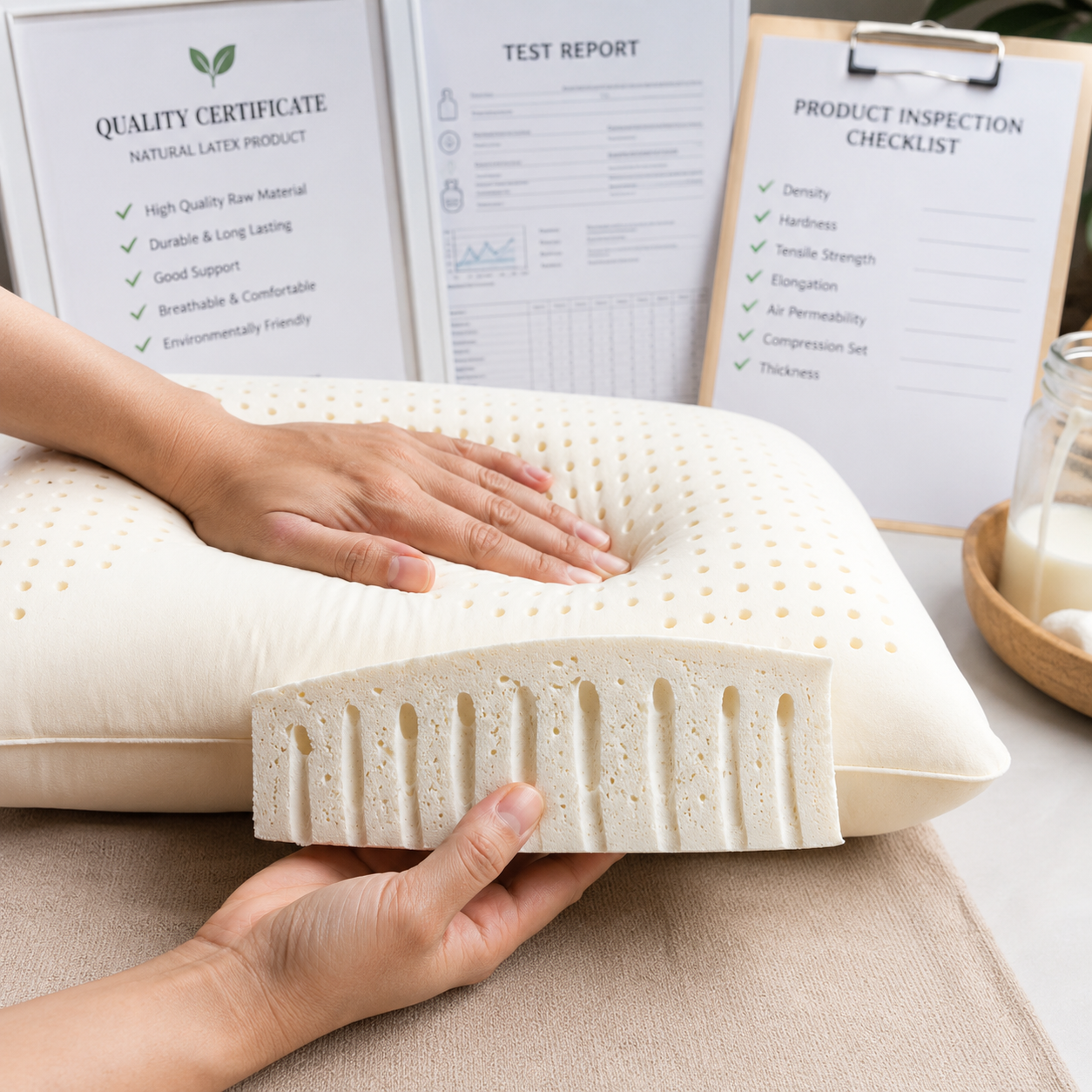
For serious orders, buyers may ask for a sample cross-section. This helps check color consistency, filler level, air holes, foam structure, and whether the product matches the supplier’s claim.
Verify Certificates
Certificates should match the factory, product, material, and validity period. Buyers should check certificate numbers when possible. A GOLS certificate for one product does not automatically cover every latex product from the same supplier.
Test Before Mass Production
For private-label buyers, do not wait until production is finished. Confirm formula, size, firmness, color, label, packaging, carton strength, and warning text during the sampling stage.
This is where working with a sourcing agent china team can help. UCSOURCING can help buyers communicate with factories, compare samples, verify documents, follow production, inspect quality, and arrange shipping based on the buyer’s market requirements.
Classic Organic Latex Pillow Product Info and Reviews
A good way to understand premium latex product positioning is to look at public information from Classic Organic Latex Pillow products in the market.
One example is the Obasan Classic Organic Latex Pillow. Public product information describes it as a pillow filled with GOLS-certified organic shredded latex and covered with GOTS-certified organic cotton. It is designed for multiple sleep styles, with adjustable filling so users can change loft and firmness. The product page also highlights breathability, moisture regulation, long-term shape retention, and no petroleum-based foams or chemical flame retardants.
Another public example is the Snoozel Green Classic Organic Latex Pillow. Its product page describes a solid GOLS-certified organic latex pillow with a GOTS-certified organic cotton cover, medium-firm support, perforated latex for airflow, and a classic elliptical shape. The page includes a real review quote from a customer who said the latex pillows felt comfortable and cool.
From a buyer’s point of view, these reviews and product details show what customers actually care about:
- Comfort that feels supportive, not hard
- Cooler sleep compared with heat-trapping foam
- Neck and shoulder support
- Natural and organic material claims
- Clear certifications
- Breathable cotton cover
- Long-term shape retention
- Adjustable loft when available
- Transparent product information
This is a useful sourcing lesson. Buyers should not only ask factories, “Can you make a latex pillow?” They should ask:
Can you make the exact comfort level my customers expect?
Can you provide real certification documents?
Can you control odor and packaging?
Can you make different sizes for the U.S., EU, or Canada?
Can you support private label packaging?
Can you help us avoid false organic claims?
A good latex pillow is not just a piece of foam. It is a combination of material, structure, smell control, comfort design, cover fabric, packaging, certificates, and customer trust.
How to Import Latex Products from China?
If buyers want to know how to import from China, the process should be more structured than simply finding a cheap supplier online.
Step 1: Define the Product Category
Start by identifying whether the product is bedding, medical, personal care, toy, party supply, baby product, or industrial part. Each category has different compliance risks.
Step 2: Confirm the Material Requirement
Decide whether you need natural latex, organic latex, synthetic latex, or blended latex. For premium bedding, organic or natural latex may support better branding. For industrial use, performance testing may matter more than organic claims.
Step 3: Screen Suppliers
A sourcing supplier should not be selected only by price. Check factory experience, production photos, machine capability, export markets, certificates, sample quality, communication quality, and whether they understand your product category.
Step 4: Request Samples
For latex products, samples are essential. Buyers should test smell, elasticity, size, weight, surface finish, comfort, packaging, and aging after a few days of unpacking.
Step 5: Confirm Compliance
Before mass production, confirm destination-market standards. A latex pillow, latex condom, latex glove, and latex balloon will not follow the same compliance path.
Step 6: Inspect Before Shipment
Inspection should include quantity, size, weight, odor, color, appearance, packaging, labels, carton marks, product function, and random sample testing where needed.
Step 7: Arrange Shipping
Latex products should be stored away from high heat, direct sunlight, moisture, and sharp objects. Condoms, gloves, and balloons may have stricter shelf-life and storage requirements. Bedding products need compression-packaging control to avoid deformation.
UCSOURCING helps buyers manage sourcing in China with supplier screening, quotation comparison, sample coordination, quality inspection, packaging review, and shipping support. For buyers who are new to latex products, this reduces guesswork and helps avoid expensive mistakes before the order leaves the factory.
Talk to a Sourcing Expert:https://ucsourcing.com/contact-us/
What Should Buyers Be Careful About?
Latex Allergy
Natural rubber latex can cause allergic reactions in some people. This is especially important for gloves, medical products, condoms, baby products, and items that touch skin. Buyers should use proper warning labels and avoid unsafe claims such as “hypoallergenic” unless the claim is legally supported in the target market.
False Organic Claims
“Organic” is not just a marketing word. If the product is sold as organic latex, buyers should ask for valid certification and confirm the product is covered by the certificate.
Cheap Fillers
Some low-cost latex products may contain fillers that reduce elasticity, durability, and comfort. For pillows and mattresses, too much filler can lead to poor rebound and faster flattening.
Wrong Packaging
Latex can be damaged by heat, moisture, sunlight, and long-term compression. Poor packaging may cause odor buildup, deformation, or mold risk.
Mixing Product Categories
A factory good at balloons may not be good at mattresses. A bedding factory may not understand medical gloves. A sourcing supplier should match the product category, not just the word “latex.”
Where Can UCSOURCING Help?
Latex sourcing is not only about finding a factory. It is about choosing the right material, checking the right standard, controlling the right sample, and protecting your brand before shipment.
UCSOURCING helps international buyers source latex products from China with a practical, step-by-step process:
- Supplier search and screening
- Factory communication
- Quotation comparison
- Sample development
- Private label and packaging coordination
- Certificate and document checking
- Pre-shipment quality inspection
- Shipping arrangement
- DDP, FOB, EXW, and other logistics support depending on the project
For buyers who need latex pillows, latex mattresses, latex balloons, latex gloves, latex condoms, or other latex products, UCSOURCING can help you find a more suitable supplier and avoid common sourcing mistakes.
If you are planning a latex product order and are not sure which material, standard, or factory type is right for your market, contact UCSOURCING to start with a safer sourcing plan.
Send us your product details, and we will help you find a more reliable way to source from China.
Talk to a Sourcing Expert:https://ucsourcing.com/contact-us/