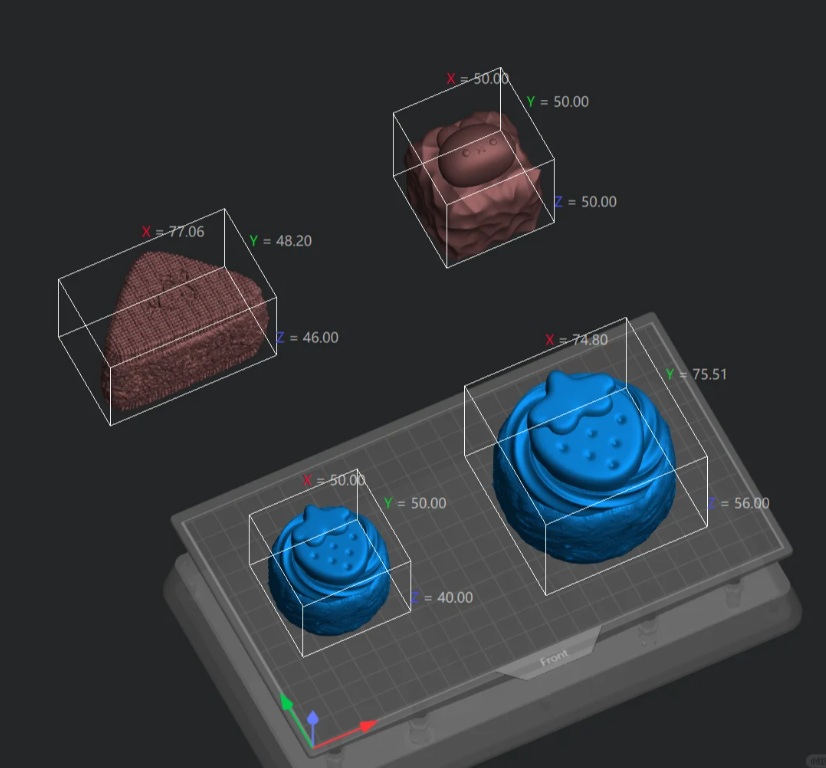
Most e-commerce sellers do not fail because they have no product ideas. They fail because they do not know how to turn a good idea into a real product safely, correctly, and at a cost that still makes sense after production, packaging, and shipping.
You may already have a product concept that feels different from what is currently on the market. Maybe it is a better shape, a smarter function, a cleaner design, or a product bundle that solves a real customer problem. But the moment you start looking for a factory in China, the process becomes more complicated than expected. You need to know who can make the mold, who can protect your design, who can control the sample, and who can make sure the mass production matches what you approved.
This is why custom mold manufacturing in China is both a huge opportunity and a serious risk. China has some of the strongest mold manufacturing regions in the world, including Taizhou Huangyan, Yiwu, Dongguan, Shenzhen, Shunde, Guangzhou, Ningbo, and other mature industrial areas. These regions can support everything from plastic injection molds and silicone molds to precision electronic parts, automotive components, home appliance parts, and small consumer products for e-commerce brands.
But choosing a mold supplier is not just about finding a factory that says, “Yes, we can make it.” For global e-commerce sellers, Amazon sellers, Shopify brands, private label businesses, retail importers, and product startups, the real question is more important: how can you find the right factory, protect your idea, control the development process, and turn the product into something that can actually sell?
That is where a China sourcing agent like التعهيد الجامعي can make the process safer, clearer, and more efficient.
What Is Custom Mold Manufacturing in China?

Custom mold manufacturing means creating a mold or tool that allows a factory to produce your product in a repeatable and consistent way. For plastic products, this usually means injection molds, blow molds, extrusion molds, or silicone molds. For metal products, it may involve die-casting molds, stamping molds, or CNC-related tooling.
In simple terms, the mold is what turns your idea into a real product. Without a mold, you may only have a sketch, a sample, a 3D drawing, or a rough concept. With the right mold, the product can be produced again and again with stable size, shape, function, and appearance.
For e-commerce brands, custom mold manufacturing in China is especially valuable because it helps you move away from selling the same public products as everyone else. Many sellers start by buying ready-made items from Alibaba, 1688, or wholesale markets. That can work in the beginning, but once more sellers enter the same category, the product becomes easy to compare. Customers look at the same photos, similar functions, and almost identical prices. At that point, your only way to compete is often by lowering your price.
A custom mold gives you a chance to build something different. It can help you improve the product structure, create a unique appearance, upgrade the user experience, design better packaging, and build a stronger private label product. Instead of selling a common item, you start building your own product line.The brand of drift is a very successful case you can check. Their website:www.drift.co
Why E-commerce Brands Eventually Need Custom Molds
Most online sellers do not need a custom mold on day one. It is normal to start with ready-made products because they are faster, cheaper, and easier to test. But once you understand your market and find a product with real demand, the next challenge is differentiation.
When a product starts selling well, competitors appear quickly. They copy the listing, use similar photos, lower the price, and compete for the same customers. This is especially common on Amazon, TikTok Shop, Shopify, eBay, Walmart Marketplace, and other online channels. If your product is exactly the same as everyone else’s, your brand has very little protection.
Custom mold manufacturing helps solve this problem. A brand can use a custom mold to improve the product shape, add a better function, change the user experience, improve the material structure, or create a more premium appearance. It can also help create a product bundle that feels more complete and more valuable to the customer.
For example, a car air freshener brand may start with a simple existing model, but if the brand wants a special shape, a stronger clip, a better fragrance system, or packaging that feels more premium, a custom mold may be necessary. The same logic applies to beauty tools, pet products, home organizers, kitchen gadgets, phone accessories, toys, small electronics, and seasonal consumer products.
A custom mold is not only about making a new shape. It is about giving your brand something that customers cannot easily find from another seller.
Why You Should Not Randomly Use Alibaba to Develop Your New Product Idea
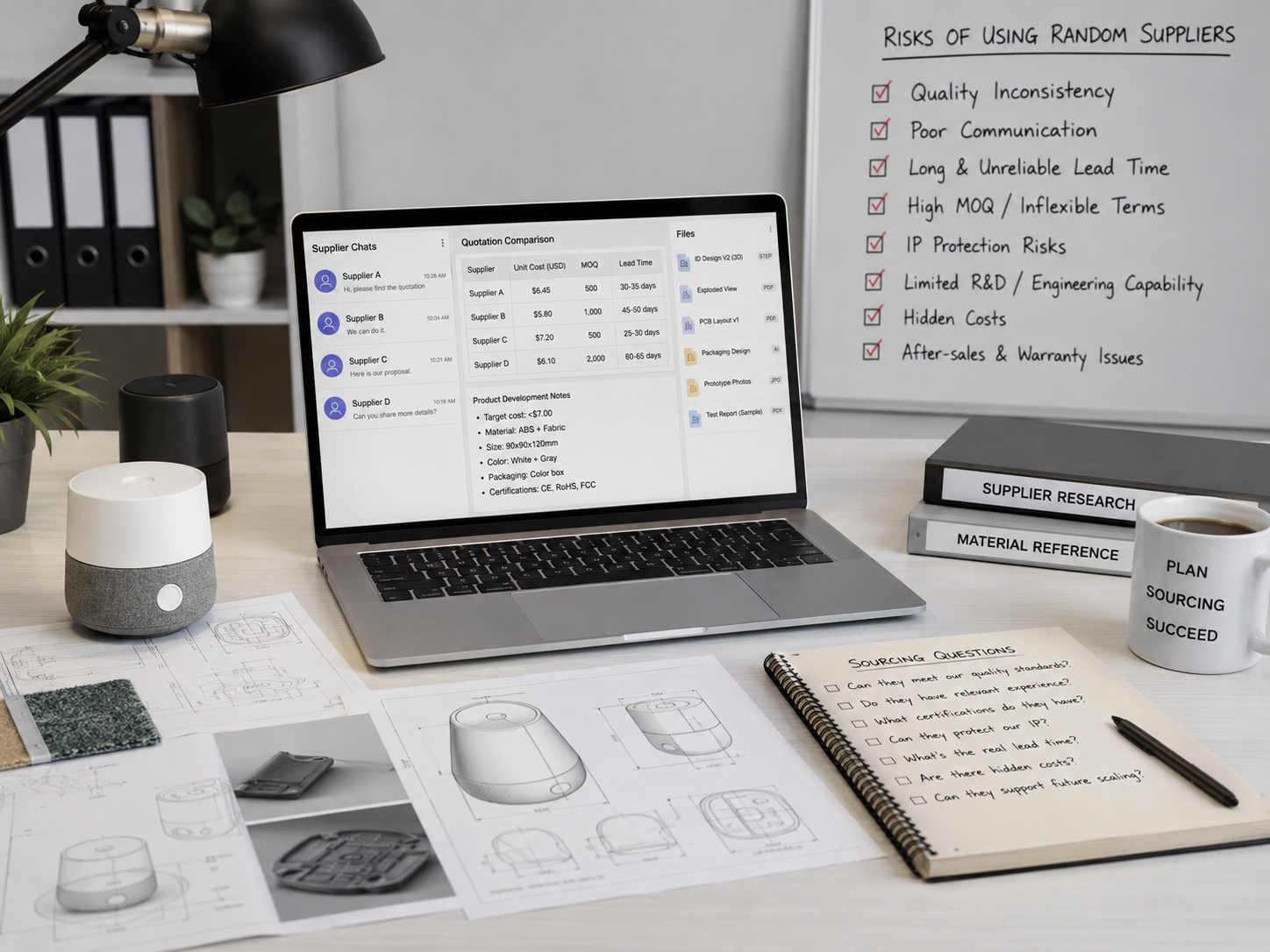
Alibaba is useful when you want to source common products, compare basic supplier prices, or find existing items. But when you have a real product idea, a custom design, or a mold project, randomly choosing a supplier on Alibaba can create serious risks.
You probably do not want to send your original idea, drawings, 3D files, or product concept to a random supplier and simply hope everything goes well. Custom product development is different from buying stock products. If the first sample is wrong, you lose time. If the mold is made incorrectly, you lose money. If the factory does not understand your product structure, you may go through several rounds of changes without getting the result you want. If mass production is different from the approved sample, you may miss your selling season or receive goods that cannot be sold.
Some buyers think the solution is to contact more suppliers. On the surface, that sounds smart because you get more quotes. But in reality, it often creates more confusion. You spend a lot of time explaining the same idea to different suppliers, comparing unclear quotations, chasing sample updates, checking whether each supplier is a real factory or a middleman, and trying to understand why prices are so different. At the same time, your product idea may be exposed to too many people before you have any real protection.
This is where using a sourcing agent in China becomes valuable. A local sourcing agent like التعهيد الجامعي understands the local factory market, supplier qualifications, regional production strengths, and common risks in mold development. Instead of sending your idea to many unknown suppliers, ucsourcing helps screen suitable factories first, then selects the supplier that best matches your product, budget, MOQ, material, timeline, and quality requirements.
This is not only about finding a cheaper factory. It is about finding the right factory faster and reducing the cost of trial and error.
Why Supplier Selection Matters More Than the Mold Price
Many buyers focus too much on the mold price at the beginning. That is understandable because mold development can be expensive, especially for startups and small e-commerce brands. But the cheapest mold is not always the best choice.
A low mold price may hide many problems. The mold steel may not be strong enough, the mold life may be short, the surface finish may be poor, the production cycle may be slow, or the defect rate may be high. In some cases, the factory may quote a low price first and add extra costs later when revisions, sampling, packaging, or production problems appear.
A good mold supplier should not only know how to machine a mold. They should understand your product category, material requirements, structure, production process, and final market. A simple plastic storage product, a silicone baby product, an electronic shell, and a car accessory all require different supplier capabilities.
That is why ucsourcing does not suggest choosing a supplier only by the lowest quote. The better approach is to look at the full project. Can this factory actually make your product correctly? Can they protect your design? Can they make the sample close to your target? Can they revise the mold if needed? Can they support mass production after the mold is finished? Can they handle packaging, assembly, inspection, and shipping?
A good supplier saves money by reducing mistakes. A cheap but wrong supplier often becomes expensive later.

Where Are the Best Mold Manufacturing Regions in China?
China has several major mold manufacturing regions, and each region has its own strengths. The best choice depends on the product you want to develop.
Taizhou, especially Huangyan District, is one of China’s most famous mold manufacturing bases. Huangyan is widely known for plastic molds, automotive molds, motorcycle molds, home appliance molds, daily-use plastic product molds, and precision mold processing. If your product depends heavily on plastic structure, mold life, durability, and stable mass production, Taizhou Huangyan can be a strong option.
Yiwu is different. Yiwu is better known for small commodities, fast product updates, flexible customization, and market-driven consumer goods. Yiwu Mold City supports many small product manufacturers, e-commerce sellers, and trading companies. It is especially suitable for small plastic products, promotional gifts, party supplies, beauty accessories, stationery, toy accessories, simple silicone products, and small-batch product testing. For e-commerce sellers who want speed, flexibility, and lower starting risk, Yiwu can be a very practical choice.
Guangdong is stronger in precision manufacturing, electronics, home appliances, smart products, and higher-end product development. Dongguan is strong in precision molds and hardware molds. Shenzhen is strong in electronics, smart hardware, and fast product iteration. Shunde is strong in home appliance supply chains. Guangzhou has a broader consumer product and market-based manufacturing environment. If your product includes electronic components, sensors, charging functions, motors, buttons, lights, tight assembly, or high-end surface requirements, Guangdong may be more suitable.
There is no single best region for every product. A plastic home product may be better in Taizhou. A small e-commerce gift item may be better in Yiwu. A smart beauty device may be better in Shenzhen or Dongguan. In many real projects, different parts of the product may even come from different regions. That is why coordination matters.
A sourcing agent like ucsourcing can help compare regional advantages and choose the most suitable supplier instead of forcing every product into one supply chain.
How to Protect Your Product Idea Before Opening a Mold
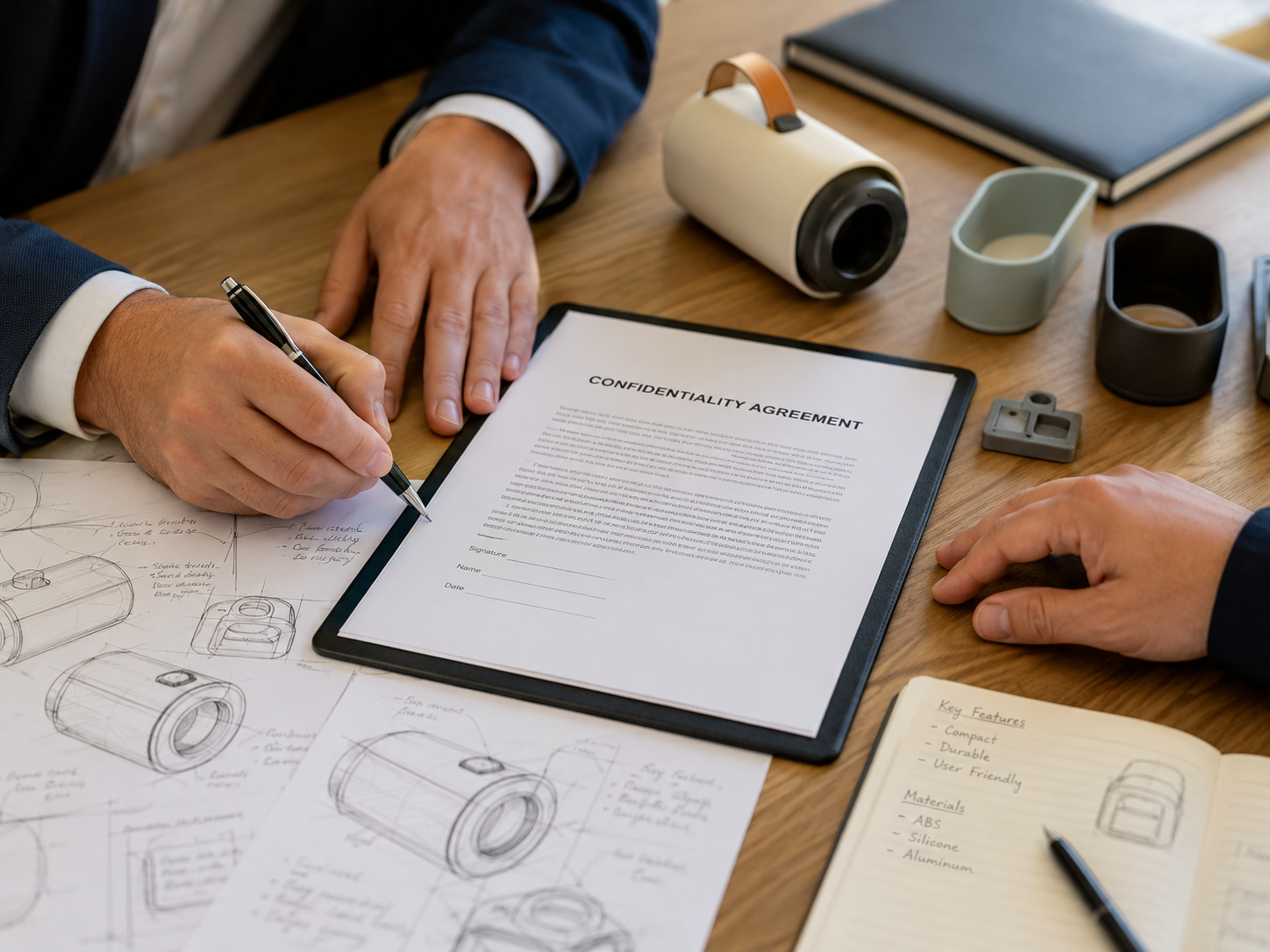
If your product idea has value, you should not share it too casually. Many buyers make the mistake of sending drawings, 3D files, product samples, and detailed concepts to too many suppliers before any protection is in place. Once the idea spreads, it is very difficult to control.
Before custom mold manufacturing begins, the first step should be confidentiality. You can sign a confidentiality agreement with your sourcing agent first. After that, the sourcing agent can require selected suppliers to follow confidentiality terms before receiving sensitive information. In China sourcing, some buyers also use NNN-style agreements, which are designed to prevent non-disclosure, non-use, and non-circumvention.
This does not replace professional legal advice, but it gives your project a stronger and more controlled starting point. ucsourcing can first sign a confidentiality agreement with you, then help control which suppliers receive your product information and how much information they can see.
You also do not need to share full files at the very beginning. In the early stage, it is often enough to share the general product category, target material, approximate size, basic function, target market, estimated order quantity, and packaging requirements. After the supplier has been screened, more detailed drawings or samples can be shared with selected factories only.
Another important point is mold ownership. Before paying for the mold, you should clearly confirm who owns the mold, whether the factory can use it for other customers, whether the mold can be moved to another factory, who keeps the drawings, who maintains the mold, and what happens if cooperation ends. For private label brands, mold ownership is not a small detail. It is part of your product protection.
How the Custom Mold Development Process Works in China
A good mold project should follow a clear process. Skipping steps may look faster, but it often creates bigger problems later.
The process usually starts with a product idea review. Before contacting factories, you need to define what problem the product solves, who the target customer is, what makes it different, what material should be used, what size it should be, and what retail price you need. This matters because the mold should match your real business model. A product for Amazon FBA may need different packaging from a product for a retail chain. A product for the European market may need different compliance from a product for South America. A premium product may also need a better surface finish than a low-cost promotional item.
After the idea is clear, the next step is preparing reference materials. This may include photos, sketches, a physical sample, 2D drawings, 3D files, size requirements, material requirements, logo position, packaging references, or a simple written description of the function. If you only have an idea, that is still a valid starting point. Many product development projects begin with a simple improvement, such as making a handle stronger, changing a clip, improving the shape, reducing the size, or turning a single item into a complete set.
Then comes supplier screening. This is one of the most important steps. A mold supplier should be checked by product category experience, mold type experience, engineering ability, equipment level, sample quality, communication speed, willingness to protect confidentiality, and ability to support mass production after the mold is completed. This is where a sourcing agent China service provides real value. Instead of wasting time with unsuitable suppliers, ucsourcing helps narrow the list and focus only on factories that fit your product.
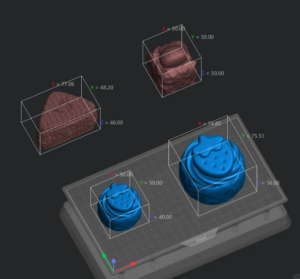
After the supplier is selected, the product should go through a manufacturing review. In mold development, this is often called DFM, or Design for Manufacturing. A product may look good in a drawing, but still be difficult to produce. The factory needs to review wall thickness, shrinkage, draft angle, gate position, parting line, surface finish, assembly structure, strength points, mold structure, and production cycle. This step helps prevent expensive mold mistakes before machining begins.
Once the design is confirmed, the supplier provides a mold quotation. A professional mold quotation should include more than one number. It should explain mold material, product material, mold cavity number, mold life, lead time, sample time, product unit price, payment terms, revision policy, mold ownership, packaging cost, MOQ, and expected production time. If a supplier only gives a low number without clear details, the buyer should be careful.
For many products, it is also better to make a prototype before opening a mold. A 3D printed sample or rough prototype can help check product size, shape, grip, user experience, assembly, packaging fit, and overall appearance. It may not be exactly the same as the final injection-molded product, but it can catch design problems early. Changing a prototype is much cheaper than changing a mold.
After the design and quotation are approved, the mold-making process begins. The factory may use CNC machining, EDM, wire cutting, polishing, texture processing, mold fitting, and mold assembly. During this stage, follow-up is important. Buyers should not simply pay the mold fee and wait blindly. ucsourcing helps track progress, request updates, check delays, and keep communication moving.
The first mold trial is usually called T0 or T1. The first trial is rarely perfect, and that is normal. The purpose is to find problems such as shrinkage, flash, warping, sink marks, poor surface finish, assembly gaps, color issues, logo problems, or function failures. A good project expects revisions. What matters is whether the factory can find the cause and fix the problem correctly.
After mold adjustment, the factory should provide a final pre-production sample. This sample becomes the standard for mass production. It should confirm the final material, color, size, function, surface finish, logo, assembly, and packaging. For important products, it is usually safer to approve a physical sample instead of approving mass production only from photos.
Once mass production starts, the project still needs follow-up. A good sample does not guarantee good mass production. The buyer or sourcing agent should check whether the correct material is used, whether the color is stable, whether the logo is correct, whether the assembly is smooth, whether defective parts are removed, and whether the goods match the approved sample.
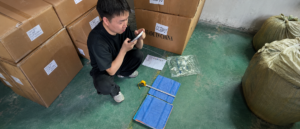
Before shipping, quality inspection is necessary. For custom molded products, inspection should include product appearance, measurement, function, assembly, surface finish, logo placement, packaging, carton marks, quantity, and comparison with the approved sample. This is especially important for e-commerce sellers because even a small defect rate can create bad reviews, returns, and customer complaints.
Why Packaging and Assembly Matter as Much as the Product
A good product can still fail because of poor packaging. For e-commerce brands, packaging is not only protection. It is part of the customer experience.
If the packaging looks cheap, arrives damaged, or does not match the brand position, customers may feel disappointed even if the product itself works. For Amazon sellers, Shopify brands, gift retailers, and private label businesses, packaging can affect reviews, return rates, and repeat purchases.
Custom product projects often require color boxes, instruction manuals, barcode labels, FNSKU labels, carton marks, insert cards, protective bags, foam inserts, gift packaging, product bundles, and master cartons. Some products also require parts from different suppliers. For example, one factory may make the plastic shell, another may produce metal accessories, another may print packaging, and another may handle final assembly.
Without coordination, this process can become messy. ucsourcing can help collect parts, check product quality, arrange assembly, manage custom packaging, inspect finished goods, and prepare the shipment. This is how a product idea becomes a finished product that is ready to sell.
When Should You Use an Existing Mold Instead of a New Mold?
Not every product needs a new mold. Sometimes using an existing mold is the smarter choice, especially when you are still testing the market.
If your budget is limited, your timeline is tight, or you are not sure whether the product will sell, an existing mold can reduce risk. You can customize the product through color, logo, packaging, material upgrade, accessories, or product bundling. This allows you to test customer demand before spending money on a full custom mold.
A new mold makes more sense when the product shape is important, the function is unique, the existing product has problems, or you want stronger long-term brand differentiation. If your goal is to build a private label product that competitors cannot easily copy, a custom mold may be worth the investment.
Many successful e-commerce brands start with an existing mold, test the market, then open a custom mold after sales become stable. This is often the safest path for small and medium-sized brands.
ucsourcing can help you decide whether to use an existing mold, modify a public mold, or develop a fully custom mold based on your budget, timeline, product category, and sales plan.
How Much Does Custom Mold Manufacturing in China Cost?
There is no fixed price for custom mold manufacturing in China. The cost depends on product size, structure, mold material, number of cavities, surface finish, precision requirements, mold life, product material, complexity, sample revisions, assembly needs, certification requirements, and packaging.
A simple small mold may be relatively affordable, while a large automotive mold, precision electronic mold, or complex multi-part mold can cost much more. But buyers should not judge only by the mold price. A cheap mold may have a shorter life, weaker performance, slower production speed, poor finish, or a higher defect rate. A better mold may cost more at the beginning, but it can save money later through stable production and fewer quality problems.
The real question is not how cheap the mold is. The real question is whether the mold can help you produce a stable product at the quality and cost your market requires.
What Products Are Good for Custom Mold Development?
Custom molds are useful for many product categories, especially products where small improvements can create stronger customer value. Home and kitchen products are common examples, including storage boxes, kitchen tools, cleaning tools, organizers, drinkware accessories, and small countertop items.
Beauty and personal care products are also strong categories for custom mold development. Many beauty tools, skincare applicators, compact cases, massage tools, hair accessories, and travel bottles can become more competitive through better shape, better material, and stronger packaging.
Pet products, automotive accessories, toys, kids’ products, phone accessories, electronics shells, promotional gifts, outdoor products, and small sports accessories are also suitable for custom molds. The best products usually solve a simple problem in a better way. That improvement may look small, but it can become the reason customers choose your brand instead of a cheaper alternative.
Why Product Development Needs More Than a Mold Factory
A mold factory can make a mold, but a product launch needs much more than that.
You may need supplier sourcing, material selection, cost comparison, product structure review, prototype sampling, mold ownership agreement, packaging design, logo printing, assembly, inspection, export documents, shipping, and after-sales support.
A factory usually focuses on its own production. A sourcing agent focuses on the whole project. That is why many global buyers choose a sourcing agent China service instead of working directly with one random supplier.
ucsourcing helps connect the full process from product idea to finished shipment. The goal is not only to open a mold. The goal is to help you create a product that can actually be sold, shipped, reviewed well, and reordered.
How ucsourcing Helps Develop and Protect Your Product Idea
If you have a product idea and want to develop it in China, ucsourcing can help from the early planning stage.
First, we can help protect the idea by starting with a confidentiality agreement before sensitive product details are shared with suppliers. Then we screen suitable factories based on the product category, region, mold type, order size, budget, and quality requirements. We do not send your idea to every supplier. We help choose the right direction first.
For example, Taizhou may be suitable for plastic mold strength, Yiwu may be suitable for small commodity innovation, and Guangdong may be suitable for precision molds and electronics. The right choice depends on your product, not on which factory replies fastest.
ucsourcing can also help review whether your product is better suited for an existing mold, a modified mold, or a fully custom mold. This matters because not every idea needs a new mold from the beginning. Sometimes a smarter starting plan can save thousands of dollars and months of development time.
During the sample and mold development process, ucsourcing helps follow communication, review samples, collect photos and videos, confirm revision points, and push the supplier to solve problems before mass production. After the product is ready, we can also help with packaging, assembly, quality inspection, warehouse consolidation, and shipping.
This gives overseas buyers more control even when they cannot visit Chinese factories in person.
A Practical Example: Turning a Product Idea into a Brand
Imagine you want to create a new car air freshener brand. You do not want to sell the same low-cost air freshener that everyone else sells. You want a better shape, a stronger clip, better fragrance control, cleaner packaging, and a design that customers can remember.
If you send this idea to several random Alibaba suppliers, some may quote quickly, some may not understand the structure, some may outsource the mold, and some may not protect your idea properly. If the first sample is wrong, you lose time. If the mold is wrong, you lose money. If production is poor, you may miss the market window.
A better process is to start with controlled sourcing. You share the idea with ucsourcing under confidentiality terms. We help check whether the product needs a new mold or can start from an existing mold. We screen suitable suppliers, compare mold cost, product cost, sample cost, MOQ, packaging cost, and production ability. Then we follow the prototype, mold trial, sample revision, packaging, inspection, and shipment.
This is how an idea becomes a product. It does not happen by sending files everywhere. It happens by managing the process step by step.
Common Mistakes Buyers Make When Opening Molds in China
One common mistake is choosing the cheapest mold quote without understanding what is included. A low quote may look attractive, but it can lead to poor mold steel, unstable production, weak surface finish, short mold life, and higher defect rates.
Another mistake is sharing full design files too early. If you send your idea to too many suppliers before any confidentiality protection, you increase the risk of exposure. Once your product concept spreads, it is difficult to control.
Buyers also often forget to clarify mold ownership. If you pay for the mold, you need to know whether the factory can use it for other customers, whether you can move it, who keeps the files, and who maintains it.
Skipping prototype testing is another expensive mistake. If the design is not fully confirmed, it is better to test through a prototype first. Changing a prototype is much cheaper than changing a mold.
Many buyers also ignore packaging until the end. This is risky because packaging affects shipping damage, customer experience, brand value, and online reviews. For e-commerce brands, packaging should be planned early, not after production is finished.
Finally, some buyers try to manage too many suppliers by themselves without local knowledge. This may seem like a way to compare more options, but it often wastes time and exposes the idea too widely. A sourcing agent helps narrow the supplier list and choose suitable factories faster.
What Should Buyers Prepare Before Contacting ucsourcing?
You do not need to have everything ready before starting. However, the more information you provide, the faster the project can move.
It is helpful to prepare your product idea, reference photos, target market, estimated selling price, expected order quantity, preferred material, size requirements, function requirements, logo and packaging needs, budget range, timeline, compliance requirements, and shipping destination. If you already have a physical sample, 3D file, or drawing, that will make the process easier.
If you only have an idea, that is also fine. ucsourcing can help review the idea, suggest a practical development path, and decide whether you should start with an existing mold, a modified mold, a prototype, or a full custom mold.
How to Decide If Your Product Idea Is Worth Opening a Mold
Before opening a mold, you should ask whether the product solves a real problem and whether customers will care about the difference. A custom mold should create value. If the change is only cosmetic and customers do not notice it, the mold may not be worth the cost.
You should also consider whether the product can sell at a better margin. Custom products should help you avoid pure price competition. If the market still forces you to sell at a very low price, you need to calculate carefully.
Another important question is whether the product can become a long-term item. Mold development makes more sense when the product has repeat sales potential. If the product is only a short-term trend, it may be safer to start with an existing mold or a small test order.
Your design should also be stable before opening a mold. If you are still changing the size, function, structure, or appearance, it may be too early to invest in tooling. A prototype or sample test is usually better at that stage.
Why Custom Mold Products Help Build Stronger Private Label Brands
Private label is not only putting a logo on a public product. Real private label means the customer remembers your product because it feels different.
Custom mold manufacturing helps you control the product shape, function, material, texture, color, accessories, packaging, user experience, and brand story. This is important because online markets are crowded and competitors copy quickly. If your product is easy to compare, customers choose by price. If your product feels different and solves a problem better, customers choose by value.
For global e-commerce brands, this difference matters. It can improve reviews, increase repeat purchases, support better pricing, and make your brand harder to replace.
Final Thoughts: Do Not Let the Wrong Supplier Kill a Good Idea
China is one of the best places in the world for custom mold manufacturing, but the opportunity comes with risk. If you choose the wrong supplier, share your idea too early, skip confidentiality protection, or open a mold without proper review, the project can become expensive very quickly.
Taizhou Huangyan, Yiwu, and Guangdong all have strong mold resources, but they serve different needs. Taizhou is strong in plastic molds and larger mold projects. Yiwu is strong in small commodities, fast development, and flexible customization. Guangdong is strong in precision molds, electronics, appliances, and advanced product development.
The best choice depends on your product, your budget, your timeline, and your market.
For global e-commerce sellers and private label brands, ucsourcing helps make the process safer and easier. We help protect your idea, screen suitable suppliers, compare mold quotations, manage samples, follow mold development, customize packaging, inspect goods, and arrange shipping.
If you have a product idea and want to turn it into a real brand, do not start by sending your files to random factories. Start with a controlled sourcing plan.
That is how your idea becomes a product.
And that is how your product becomes a brand.
FAQ: Custom Mold Manufacturing in China
What is the best place for custom mold manufacturing in China?
The best place depends on your product. Taizhou Huangyan is strong in plastic molds and larger mold projects. Yiwu is better for small commodities, fast development, and flexible customization. Guangdong is better for precision molds, electronics, appliances, and high-end product development.
Should I use an existing mold or open a new mold?
If you are testing the market, an existing mold is usually safer because it lowers the starting cost and shortens the timeline. If you need a unique shape, special function, or stronger brand differentiation, a new mold may be worth the investment.
Why should I not randomly choose a supplier on Alibaba for a custom mold project?
A custom mold project involves your product idea, drawings, mold ownership, sample revisions, and mass production risk. If the supplier is not suitable, you may waste a lot of time and money. A sourcing agent like ucsourcing helps screen factories first and reduces unnecessary exposure.
How can I protect my product idea in China?
You should start with a confidentiality agreement or NNN-style agreement, avoid sending full files to many suppliers, and work with a sourcing agent who can screen factories before sharing sensitive details.
Can ucsourcing help with mold development?
Yes. ucsourcing can help with supplier screening, confidentiality agreements, feasibility checks, sample development, mold follow-up, trial sample review, packaging, inspection, assembly, and shipping.
Is custom mold manufacturing only for large companies?
No. Many small and medium e-commerce brands use custom molds, but they usually start carefully. Some begin with an existing mold or modified mold, test the market, and then invest in a full custom mold after sales become stable.
What is the biggest risk when opening a mold in China?
The biggest risks are choosing the wrong supplier, unclear mold ownership, weak confidentiality protection, poor sample checking, and poor production control. These problems can be reduced with better planning and a reliable sourcing agent.