For many importers, the hardest part of sourcing from China is no longer just finding a supplier.
It is shipping.
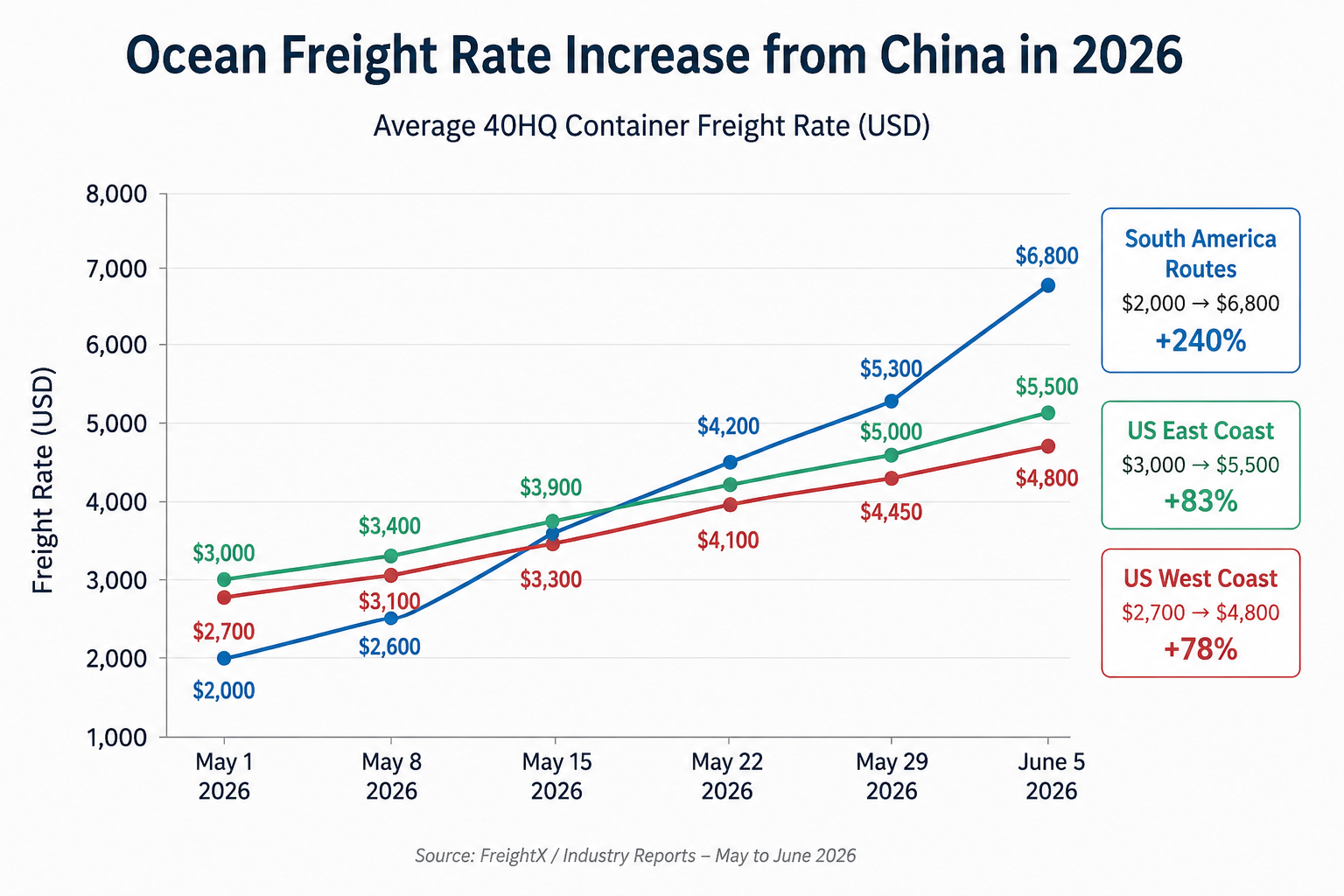
A product may have a good factory price, a strong retail margin, and solid market demand. But once the cost of a shipping container jumps from around $2,000 to nearly $7,000 on some routes, the whole buying plan changes.
This is especially painful for small and medium-sized businesses. Large importers can spread freight cost across huge volumes. Small buyers cannot. One expensive container can eat most of the profit before the goods even arrive.
That is why importers are now asking different questions:
How do I estimate shipping cost before placing an order?
Should I still ship now or wait?
Should I reduce single-product inventory?
Can I mix several products in one container?
Do I need a China sourcing agent to consolidate goods?
Is there a smarter way to use a shipping cost calculator?
And most importantly: how do I protect profit when ocean freight is unstable?
This guide explains what is really driving the cost of a shipping container higher, why routes to South America can become especially expensive, and what importers should do next.
Why Is the Cost of a Shipping Container So High Right Now?
Ocean freight does not rise for one single reason.
It usually rises when several problems hit the market at the same time: stronger demand, limited space, port delays, higher fuel cost, carrier surcharges, and buyers rushing to ship before prices go even higher.
In June 2026, Drewry reported that its World Container Index jumped 23% in one week to $3,433 per 40ft container, with Shanghai to Los Angeles rising 31% to $4,565 and Shanghai to New York rising 20% to $5,505. Drewry also noted that peak season started earlier than usual, supported by tariff-related frontloading, World Cup-related demand, and major mid-year sales events.
That is exactly why many importers feel the market changed too fast.
In normal years, many buyers expect peak season to build from July to September. But when buyers start shipping earlier, space gets tight earlier. Once space gets tight, carriers raise rates, apply peak season surcharges, and sometimes prioritize higher-paying bookings.
What Does the “Cost of a Shipping Container” Really Include?
Many buyers think the cost of a shipping container means only the ocean freight price.
That is a mistake.
The real cost includes much more than the port-to-port rate. When you estimate shipping cost, you need to look at the full landed cost, not just the number a freight forwarder gives you at first.
| Cost Item | What It Means | Why It Matters |
|---|---|---|
| Ocean freight | Main container shipping rate | This is the biggest visible cost |
| Origin charges | China port, documents, booking, trucking | Often not included in cheap quotes |
| Destination charges | Port handling, customs, local fees | Can surprise new importers |
| Trucking | Factory to port, port to warehouse | Inland cost can be high |
| Surcharges | PSS, fuel, congestion, emergency fees | Can change quickly |
| Customs duty | Based on HS code and country | Affects landed cost |
| Storage or demurrage | Fees if goods sit too long | Very costly during delays |
| Inspection and consolidation | QC, repacking, mixed loading | Helps reduce bigger losses |
So when a buyer searches “cost of shipping container,” the better question is:
What is the total cost from factory door in China to my warehouse?
This is where many small importers lose money. They compare only the cheapest freight quote, but they do not compare total shipping risk.
At ucsourcing, we always suggest buyers calculate the full landed cost before placing the order. A product with a cheap factory price may still be a bad buy if it takes too much container space, ships slowly, or requires expensive handling.
How Can You Estimate Shipping Cost Before Placing an Order?
The best time to estimate shipping cost is before you confirm the supplier.
Not after production.
Before placing an order, buyers should ask for:
- Product carton size
- Gross weight
- Net weight
- Carton quantity
- Total CBM
- Loading port
- Destination port or warehouse address
- Shipping method: FCL, LCL, air, express, or DDP
- Whether the goods contain batteries, magnets, liquid, powder, or oversized parts
A shipping cost calculator can give a basic estimate, but it cannot always see real-time problems like space shortage, port congestion, peak season surcharges, or sudden carrier rate increases.
That is why a calculator is useful, but not enough.
Use a shipping cost calculator for rough planning. Use a real freight quote before making a final decision.
What Is the Main Reason Shipping Costs Rise So Fast?
The main reason is simple: cargo volume grows faster than available space.
When importers in the U.S., Europe, and Latin America all start booking at the same time, there are not enough containers, vessel slots, trucks, and warehouse appointments for everyone.
Several things can trigger this:
1. Buyers Ship Earlier Because of Tariff Pressure
When importers expect tariffs to change, they often ship earlier to avoid higher duty later.
This creates a rush.
Even if the tariff policy is not final, buyers do not want to wait and risk paying more. So they book space early, pull orders forward, and put pressure on shipping lanes.
Drewry’s June 2026 update directly linked stronger demand to shippers bringing forward bookings ahead of possible U.S. tariff changes.
2. Peak Season Starts Earlier
Traditional peak season used to be more predictable.
Now it can move earlier because of Amazon sellers, retail promotions, back-to-school goods, holiday products, and fast-changing e-commerce trends.
If everyone waits until July or August, space may already be gone.
3. Carriers Control Capacity
Shipping lines can reduce available space through blank sailings, service changes, or tighter allocation.
Drewry reported 39 blank sailings expected across major East-West trades for the five weeks from June 8 to July 12, 2026.
When carriers control capacity and demand rises at the same time, rates can move up quickly.
4. Port Congestion and Equipment Pressure
Even if ocean space is available, ports and inland delivery can still become bottlenecks.
If containers wait longer at ports, vessel schedules become less reliable. If trucks and warehouses are full, delivery cost goes up.
5. Middle East and Red Sea Disruptions
Geopolitical problems can push vessels to longer routes, increase fuel costs, and create uncertainty in global shipping.
A June 2026 Captain report, citing Xeneta, said average spot rates from the Far East to the U.S. West Coast rose 20% in one week to $3,933 per FEU, with higher rates also seen on Far East to U.S. East Coast, North Europe, and Mediterranean routes. The report connected the increases to Middle East disruption, port delays, and peak season demand.
Even if your cargo is not going through the Red Sea, global shipping networks are connected. A disruption in one major route can reduce available capacity elsewhere.
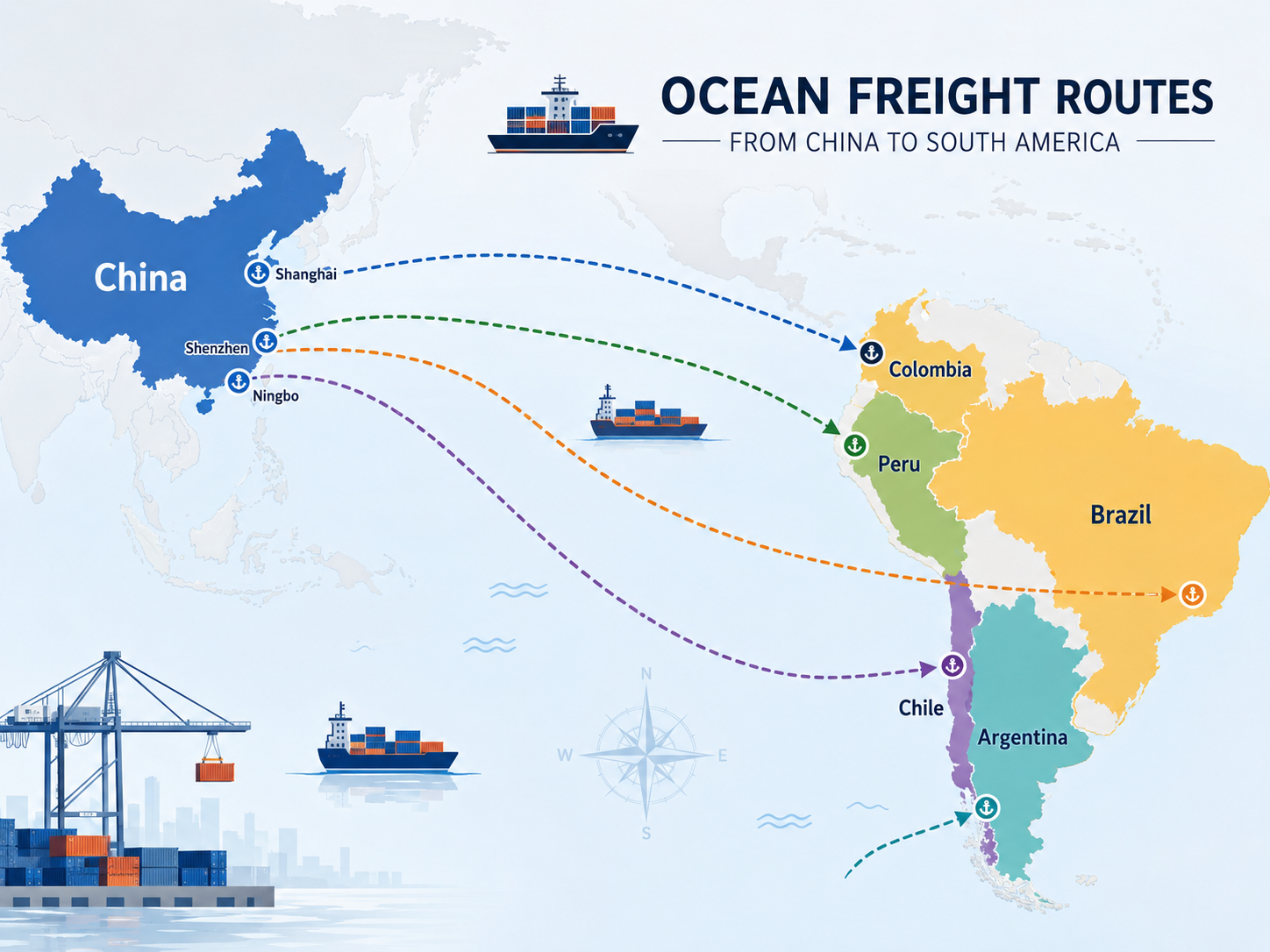
Why Is Shipping from China to South America So Expensive?
South America is often more sensitive to ocean freight changes than buyers expect.
When rates rise globally, South American importers can feel the pressure faster because many routes are longer, schedules can be less frequent, and some ports have fewer direct service options compared with major U.S. or European lanes.
For example, when a China-to-South America 40ft container quote moves from around $2,000 to nearly $7,000, the buyer is not only paying more for freight. The buyer is also taking more inventory risk, more cash-flow pressure, and more pricing pressure in the local market.
South America Has Long Transit Times
Longer distance means more vessel time, more fuel exposure, and more schedule risk.
If a route becomes congested, buyers cannot easily fix the problem by switching to a faster ocean service.
Fewer Fast Alternatives
For many consumer goods, air freight to South America is too expensive.
This means importers depend heavily on sea freight. When ocean freight rises, there may be no cheap backup option.
Port and Inland Logistics Can Add Cost
South America is not one single logistics market.
Brazil, Chile, Peru, Colombia, Argentina, Ecuador, and other countries all have different port conditions, customs processes, inland trucking costs, and documentation requirements.
Maersk’s May 2026 Latin America update said Latin American supply chains need both agility and efficiency because the region faces global dynamics and structural constraints; it also noted localized delays and operational pressure in some port corridors.
That means buyers need to plan beyond the ocean freight number.
Container Imbalance Can Affect Price
If more containers move into one region than return out, container balance becomes a problem.
This can affect equipment availability and increase repositioning cost.
Demand Can Change Quickly
South American importers often buy seasonal products, promotional goods, construction items, electronics, home goods, holiday items, and fast-moving consumer products.
When many buyers order similar categories at the same time, freight space tightens.
What Should Importers Do When Ocean Freight Keeps Rising?
The worst strategy is to panic and ship everything blindly.
The second-worst strategy is to wait without a plan.
When freight rises, small and medium-sized importers need to change the way they buy.
1. Reduce Inventory Per Style, Not Total Product Opportunity
When freight is high, many buyers make this mistake:
They cancel orders completely.
But sometimes the smarter move is not to stop buying. It is to reduce the quantity per style and test more carefully.
For example, instead of buying 3,000 pieces of one product, a buyer may buy:
- 600 pieces of Product A
- 600 pieces of Product B
- 500 pieces of Product C
- 500 pieces of Product D
- 800 pieces of fast-moving items
This spreads risk.
If one product sells slowly, it does not trap all your cash. If one product sells fast, you can reorder quickly.
This is especially useful for:
- E-commerce sellers
- Small retailers
- Importers in South America
- Gift shops
- Seasonal product sellers
- New private label brands
- Amazon and marketplace sellers
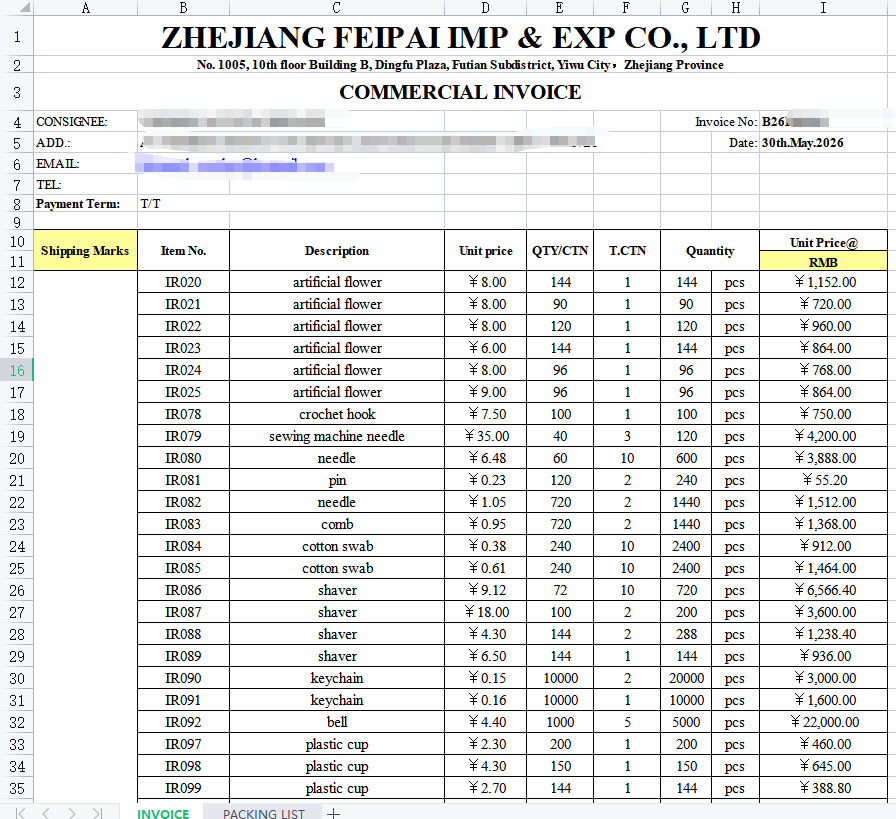
2. Mix Multiple Products in One Container
When the cost of a shipping container is high, every cubic meter matters.
If you ship only one product and it does not fill the container efficiently, your freight cost per unit may become too high.
A better solution is container consolidation.
This means buying from several suppliers, sending all goods to one warehouse in China, checking the products, repacking if needed, and loading them into one container together.
This is one of the strongest reasons to work with a China sourcing agent like ucsourcing.
Most factories only care about their own goods. They do not want to collect products from other suppliers, check packaging, balance carton sizes, or create a mixed loading plan.
ucsourcing can help buyers consolidate products from different suppliers, reduce empty space, and make one container carry more sellable value.
3. Choose Fast-Moving Products, Not Just Cheap Products
When freight is cheap, buyers can afford more mistakes.
When freight is expensive, slow-moving inventory becomes dangerous.
A cheap product is not always a good product. If it sits in your warehouse for 8 months, it is not cheap anymore.
When ocean freight rises, importers should focus on products with faster turnover.
Good products during high freight periods usually have:
- Strong local demand
- Small packaging volume
- Higher value per CBM
- Easy repeat purchase
- Stable retail price
- Low return risk
- Simple customs requirements
- Flexible use across seasons
Bad products during high freight periods usually have:
- Large volume but low value
- Weak demand
- High breakage risk
- Too many color or size variations
- Slow sales cycle
- Heavy packaging
- Low profit after freight
This is why ucsourcing often helps clients compare not only supplier prices, but also product volume, packing size, market use, and shipping efficiency.
The question is not only “How much is the product?”
The better question is:
How much profit can this product carry per cubic meter?
4. Use a Shipping Cost Calculator, But Do Not Trust It Blindly
A shipping cost calculator can help you estimate shipping cost quickly.
It is useful when you are comparing products before ordering samples.
For example, you can compare:
| Product | Unit Cost | Carton Size | CBM | Freight Impact |
|---|---|---|---|---|
| Foldable storage box | Medium | Compact | Low | Good |
| Large plastic chair | Low | Bulky | High | Risky |
| الأجهزة الإلكترونية الصغيرة | أعلى | Compact | Low | Good |
| Low-price foam toy | Low | Very bulky | High | Risky |
But a calculator cannot always include:
- Real-time peak season surcharge
- Carrier rate increase
- Port congestion
- Customs exam risk
- Destination warehouse appointment cost
- Special cargo handling
- Battery or dangerous goods documents
- Sudden blank sailing
- Trucking shortage
So use the calculator to filter products early.
Then confirm real freight with a sourcing agent or forwarder before production starts.
5. Repack Products to Reduce CBM
Many importers lose money because of bad packaging.
The product itself may be small, but the packaging is too large. Sometimes factories use oversized cartons because it is easier for them, not because it is better for the buyer.
When shipping costs rise, packaging design becomes a profit issue.
You should check:
- Can the carton size be reduced?
- Can inner boxes be packed tighter?
- Can air space be removed?
- Can products be nested or folded?
- Can retail packaging and shipping cartons be separated?
- Can fragile items be protected without oversized foam?
- Can carton strength improve without increasing CBM too much?
For South American buyers, this matters even more because long transit and port handling can damage weak packaging.
ucsourcing can help check packaging before shipment, take photos, measure cartons, and suggest better loading plans.
A small packaging improvement can save a meaningful amount when freight is high.
6. Store Goods in China and Ship When Rates Drop
Not every product must ship immediately.
If the goods are not urgent, one smart strategy is to finish production, inspect the goods, store them in China, and wait for a better shipping window.
This is especially useful when:
- The product is not seasonal
- The buyer does not need immediate stock
- Freight is at a temporary peak
- The supplier can hold goods safely
- The sourcing agent has warehouse space
- The buyer wants to ship once rates drop
For example, if ocean freight is too high in June, a buyer may choose to store goods with the supplier or with ucsourcing, then ship when the rate becomes more reasonable.
The key is not just waiting.
The key is being ready.
When the rate drops, the cargo should already be packed, inspected, labeled, and ready to move.
This allows the buyer to catch the shipping window quickly instead of starting production too late.
7. Book Earlier, But Do Not Book Blindly
During high freight periods, last-minute booking is risky.
You may face:
- No space
- Rolled containers
- Higher spot rate
- Extra surcharges
- Delayed vessel schedule
- Missed sales window
But booking early does not mean accepting any price.
A good booking plan should compare:
- Full container vs LCL
- Different loading ports
- Different destination ports
- Direct route vs transshipment
- Fast service vs cheaper service
- DDP vs port-to-port
- Current rate vs expected rate trend
- Urgency of the product
For time-sensitive goods, shipping earlier may be cheaper than missing the sales season.
For non-urgent goods, waiting may make more sense.
8. Ship High-Value Goods First and Low-Urgency Goods Later
When freight rates are high, not every product deserves the same priority.
Importers should divide goods into three groups:
Group A: Ship Now
These products are urgent or highly profitable.
أمثلة:
- Best sellers
- Seasonal products with fixed selling windows
- Paid pre-orders
- Promotional items
- Products with strong margin
- Goods needed to avoid stockout
Group B: Ship Later
These products are useful but not urgent.
أمثلة:
- Backup inventory
- Slow-moving SKUs
- General stock replenishment
- Products with stable demand but no deadline
Group C: Do Not Ship Yet
These products may not be worth shipping at high freight rates.
أمثلة:
- Bulky low-margin items
- Unproven new products
- Products with unclear demand
- Items with high return risk
- Goods that need better packaging first
This method helps buyers protect cash flow.
What Should E-commerce Sellers Do When Freight Is High?
E-commerce sellers need to move faster than traditional importers.
If they wait too long, competitors may list similar products, copy the offer, lower the price, or take the sales traffic.
For online sellers, the best strategy is usually not to buy a huge amount of one product.
It is to test faster, restock faster, and avoid dead inventory.
A good e-commerce buying plan during high freight periods may look like this:
- Use market data to choose several products
- Ask ucsourcing to check suppliers and MOQ
- Estimate shipping cost by CBM before ordering
- Buy smaller test quantities
- Consolidate goods into one shipment
- Inspect quality before shipping
- Ship the fastest-moving items first
- Store slower items in China if freight is too high
- Reorder winners quickly
This gives online sellers more flexibility.
It also reduces the risk of filling one expensive container with the wrong product.
How Can South American Buyers Reduce Shipping Cost from China?
For buyers in Brazil, Chile, Peru, Colombia, Argentina, Ecuador, and other South American markets, the goal is not only to find cheaper freight.
The goal is to make each container more valuable.
Here are practical ways to reduce cost.
Choose Products with Better CBM Value
A product that sells for $20 and takes little space is usually better than a $5 product that fills cartons too quickly.
Always calculate:
Product value ÷ CBM
This tells you whether the product deserves container space.
Avoid Too Many Low-Value Bulky Items
Bulky products can still work, but only when the margin is strong enough.
If the product is large, cheap, and slow-moving, rising freight can destroy profit.
Consolidate from Multiple Factories
Many South American buyers source from Yiwu, Guangzhou, Shenzhen, Ningbo, and other China supply hubs.
The problem is that suppliers are scattered.
ucsourcing can collect goods from different suppliers, check them, and combine them into one shipment.
Use DDP Carefully
DDP can be useful because buyers get a clearer door-to-door cost.
But not all DDP quotes are equal.
Buyers should confirm what is included:
- Pickup in China
- Export documents
- Ocean freight
- التخليص الجمركي
- Duty and tax handling
- Local delivery
- Insurance
- Destination fees
Cheap DDP quotes can become expensive if the details are unclear.
Plan Around Local Sales Seasons
South America has different sales cycles from the U.S. and Europe.
Buyers should plan for:
- Back-to-school seasons
- Local holidays
- Summer and winter product timing
- Christmas and New Year goods
- Carnival-related demand
- Soccer and sports events
- Retail promotion periods
If a product misses the season, cheap shipping later may not save the business.
Should Buyers Wait Until Freight Rates Drop?
Sometimes yes.
Sometimes no.
The right answer depends on the product.
| Situation | Better Decision |
|---|---|
| Product is seasonal | Ship earlier |
| Product is already sold or pre-ordered | Ship now |
| Product has strong margin | Ship now if space is available |
| Product is not urgent | Store in China and wait |
| Product is bulky and low-margin | Recalculate or delay |
| Freight rate is at a short-term peak | Prepare cargo and wait for a drop |
| Competitors are moving fast | Ship smaller quantity first |
| Product demand is untested | Buy less and consolidate |
The worst thing is to make the decision only based on freight.
You need to compare freight cost, sales timing, inventory risk, and cash flow together.
How Does ucsourcing Help When Shipping Costs Are High?
When ocean freight is stable, buyers can sometimes manage everything by themselves.
When freight is unstable, the value of a sourcing agent becomes much clearer.
ucsourcing helps importers reduce risk in several ways.
Supplier Matching
We help buyers find suppliers that fit the order size, product type, quality level, and MOQ requirement.
This matters because not every factory is suitable for small and medium importers.
Price Comparison
We compare suppliers not only by unit price, but also by packaging, quality, MOQ, lead time, and shipping efficiency.
A lower product price is not always the lowest total cost.
Sample Checking
Before mass production, samples can be checked for material, function, size, logo, packaging, and market suitability.
This helps prevent mistakes before the buyer spends more money.
Production Follow-Up
We follow the order during production, not only at the end.
This is important because many quality problems are easier to fix during production than after goods are packed.
فحص الجودة
Before shipment, ucsourcing can check product quantity, packaging, appearance, function, carton marks, and loading condition.
This reduces the risk of receiving bad goods after paying high freight.
توحيد
For buyers purchasing from multiple factories, ucsourcing can collect goods into one warehouse and arrange mixed loading.
This is one of the best ways to reduce cost when container freight is high.
Warehouse Storage
If shipping rates are too high, buyers can store goods temporarily in China and ship when the market becomes better.
Shipping Coordination
We help buyers compare shipping options, estimate shipping cost, and choose a better plan based on time, budget, and product urgency.
[IMAGE 7 HERE]
Image type: ucsourcing warehouse team checking cartons and preparing mixed container loading
ALT: ucsourcing consolidation warehouse for shipping from China
What Should Buyers Ask Before Confirming a Shipping Quote?
Before accepting a quote, ask these questions:
- Is this quote for 20ft, 40ft, or 40HQ?
- Is it port-to-port, door-to-door, or DDP?
- Are origin charges included?
- Are destination charges included?
- Are customs clearance and duty included?
- Are peak season surcharges included?
- Is the rate valid this week only?
- What is the estimated sailing date?
- Is the space guaranteed?
- What happens if the container is rolled?
- Is insurance included?
- Are there extra charges for batteries, oversized goods, or special cargo?
A low quote without details is not a real quote.
It is just a number.
How Can Buyers Build a Better Shipping Plan?
A better shipping plan starts before production.
Here is a simple process:
Step 1: Choose Products by Margin and CBM
Do not only look at factory price.
Check carton size and product value per CBM.
Step 2: Estimate Shipping Cost Early
Use a shipping cost calculator for rough planning, then ask for a real quote.
Step 3: Confirm Packaging Before Production
Ask suppliers for carton size and packing method.
If packaging is too large, adjust it early.
Step 4: Consolidate Multiple Suppliers
If you are buying from different suppliers, arrange warehouse consolidation.
Step 5: Inspect Before Shipping
Do not pay expensive freight to ship defective goods.
Step 6: Decide Ship Now or Store
If the product is urgent, ship. If not, store and wait for better freight.
Step 7: Watch Rate Windows
When freight drops, move quickly.
Prepared cargo can ship faster than cargo that is still in production.
What Products Are Better During High Freight Periods?
During high freight periods, buyers should prefer products with higher value density.
Good categories often include:
- Small home goods
- إكسسوارات الموضة
- Small electronics accessories
- أدوات التجميل
- Pet accessories
- Jewelry packaging
- Gift items
- الأدوات المكتبية
- Small seasonal decorations
- Lightweight private label products
- Products with repeat purchase potential
Riskier categories include:
- Very large plastic products
- Low-value bulky toys
- Cheap foam items
- Low-margin furniture
- Oversized storage products
- Fragile goods with heavy packaging
- Products with unclear demand
This does not mean bulky products cannot be imported.
It means the margin must be strong enough to carry the freight.
Why a Cheap Product Can Become Expensive After Shipping
Here is a simple example.
A buyer finds a product for $1.20 per piece.
It looks cheap.
But each carton is large, and only 8,000 pieces fit into a 40HQ container. If the cost of a shipping container is $7,000, the freight alone adds $0.875 per piece before duty, local trucking, warehouse cost, and other fees.
Now the real cost is not $1.20.
It may be over $2.20 landed.
If the local market sells the product for $3.00, the margin may not be worth the risk.
This is why buyers need to estimate shipping cost before confirming the order.
How Can Buyers Protect Profit When Freight Is Unstable?
Use this simple rule:
Do not buy products only because they are cheap in China. Buy products that still make sense after shipping.
That means checking:
- Factory price
- CBM
- Gross weight
- التعبئة والتغليف
- الحد الأدنى للطلب
- Defect risk
- Customs duty
- Local retail price
- Sales speed
- Reorder potential
- Shipping method
- Storage cost
ucsourcing helps buyers review these points before they commit to production.
This is especially important for small businesses that cannot afford one bad container.
What Is the Best Strategy for 2026 Importers?
The best strategy is flexibility.
Do not depend on one supplier, one product, one shipping method, or one shipping window.
A flexible importer can:
- Mix products in one container
- Reduce quantity per style
- Buy more fast-moving items
- Store goods in China when rates are high
- Ship urgently needed goods first
- Wait on slow-moving goods
- Compare several freight options
- Repack goods to reduce CBM
- Use a sourcing agent to coordinate suppliers
- Move quickly when freight drops
This is how small businesses survive high freight cycles.
Final Thoughts: Freight Is Expensive, But Bad Planning Costs More
The rising cost of a shipping container is a real problem for importers in the U.S., Europe, and South America.
But freight cost alone does not decide whether a business wins or loses.
Planning does.
When ocean freight is high, buyers need to be more careful with product selection, packaging, CBM, supplier choice, shipping timing, and inventory strategy.
For small and medium-sized importers, the smartest move is often not to ship one product blindly. It is to consolidate multiple products, reduce single-SKU risk, focus on fast-moving items, and keep goods ready in China until the right shipping window appears.
ucsourcing helps buyers source products from China, compare suppliers, manage small MOQ orders, inspect quality, consolidate goods, estimate shipping cost, and arrange shipping based on real business needs.
If shipping costs are rising, do not only ask, “How much is the freight?”
Ask a better question:
How can I make this container worth more?
That is where better sourcing, better consolidation, and better timing make the difference.
Suggested FAQ Section
What is the cost of a shipping container from China?
The cost of a shipping container from China depends on the route, container size, season, cargo type, fuel surcharges, port conditions, and destination charges. A 40ft container can change by thousands of dollars within a short period during peak season.
How can I estimate shipping cost before ordering?
You need product carton size, total CBM, gross weight, loading port, destination address, and shipping method. A shipping cost calculator can give a rough estimate, but a real-time freight quote is needed before production.
Why is shipping from China to South America expensive?
South America routes often have longer transit times, fewer direct services, port and inland logistics complexity, and stronger exposure to container space changes. When global freight rises, South American buyers may see sharp increases.
Should I ship now or wait?
Ship now if the product is urgent, seasonal, pre-sold, or high-margin. Wait if the product is not urgent, freight is at a short-term peak, and you can safely store the goods in China.
How can التعهيد الجامعي help reduce shipping cost?
ucsourcing helps buyers source from multiple suppliers, check packaging, consolidate goods, inspect quality, estimate shipping cost, store cargo in China, and arrange shipping when the timing is better.