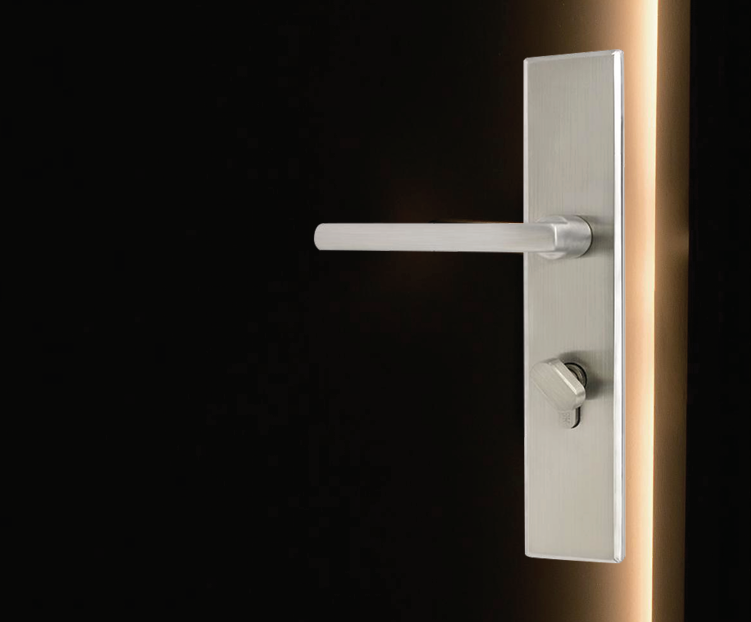
How to Choose Door Handles for Homes, Projects, and Modern Security Needs?
Door handles may look like small hardware, but they affect how a door feels, how a home looks, and how secure an entry point can be. For homeowners, contractors, retailers, and importers, choosing the right door handles is not only about style. It is also about material, finish, durability, installation, safety, and long-term use.
Today, the market offers many types of doors door handles, from classic mechanical handles to smart door handle systems with fingerprint access, mobile app control, face recognition, keyless entry, and remote unlocking. At the same time, traditional finishes such as black door handles and antique brass door handles remain popular because they are easy to match with different interior styles.
A good door handle should feel solid in the hand, match the door design, resist daily wear, and fit the security level required for the space. For residential projects, buyers may care more about design and comfort. For hotels, apartments, offices, and commercial buildings, buyers usually pay more attention to durability, standards, fire safety, and after-sales stability.
As a China sourcing partner, UCSOURCING helps buyers compare door handles by material, finish, structure, lock function, packing quality, supplier capability, and compliance requirements. Instead of only looking at product photos or low prices, buyers should understand what makes one door handle more suitable than another.
Need help choosing or sourcing door handles? Click the image to get in touch:

What Should Buyers Consider Before Choosing Door Handles?
Before choosing door handles, the first question is simple: where will the handle be used?
A bedroom door handle does not need the same security level as a front door handle. A bathroom door handle may need privacy locking. A hotel door handle may need electronic card access. A villa entrance may need a smart lock system with fingerprint, keypad, app control, or face recognition.
For interior doors, buyers usually focus on comfort, color matching, smooth operation, and cost control. For exterior doors, the priority should include security, weather resistance, lock structure, cylinder quality, and installation strength.
In the U.S. market, many buyers also pay attention to ANSI/BHMA standards. The ANSI/BHMA A156 series covers many types of builders hardware, including locks, latches, hinges, exit devices, and access control products. These standards help buyers understand durability, strength, finish performance, and security expectations for different door hardware products.
For public spaces and accessible buildings, door hardware may also need to meet ADA requirements. According to the U.S. Access Board, operable parts should be usable with one hand and should not require tight grasping, pinching, twisting of the wrist, or more than 5 pounds of force to operate. This is one reason lever-style door handles are often preferred over round knobs in accessible environments.
How Do Different Door Handle Materials Compare?
The material of a door handle affects its weight, price, durability, corrosion resistance, and market positioning. There is no single “best” material for every project. The right choice depends on the door type, budget, target market, and expected usage.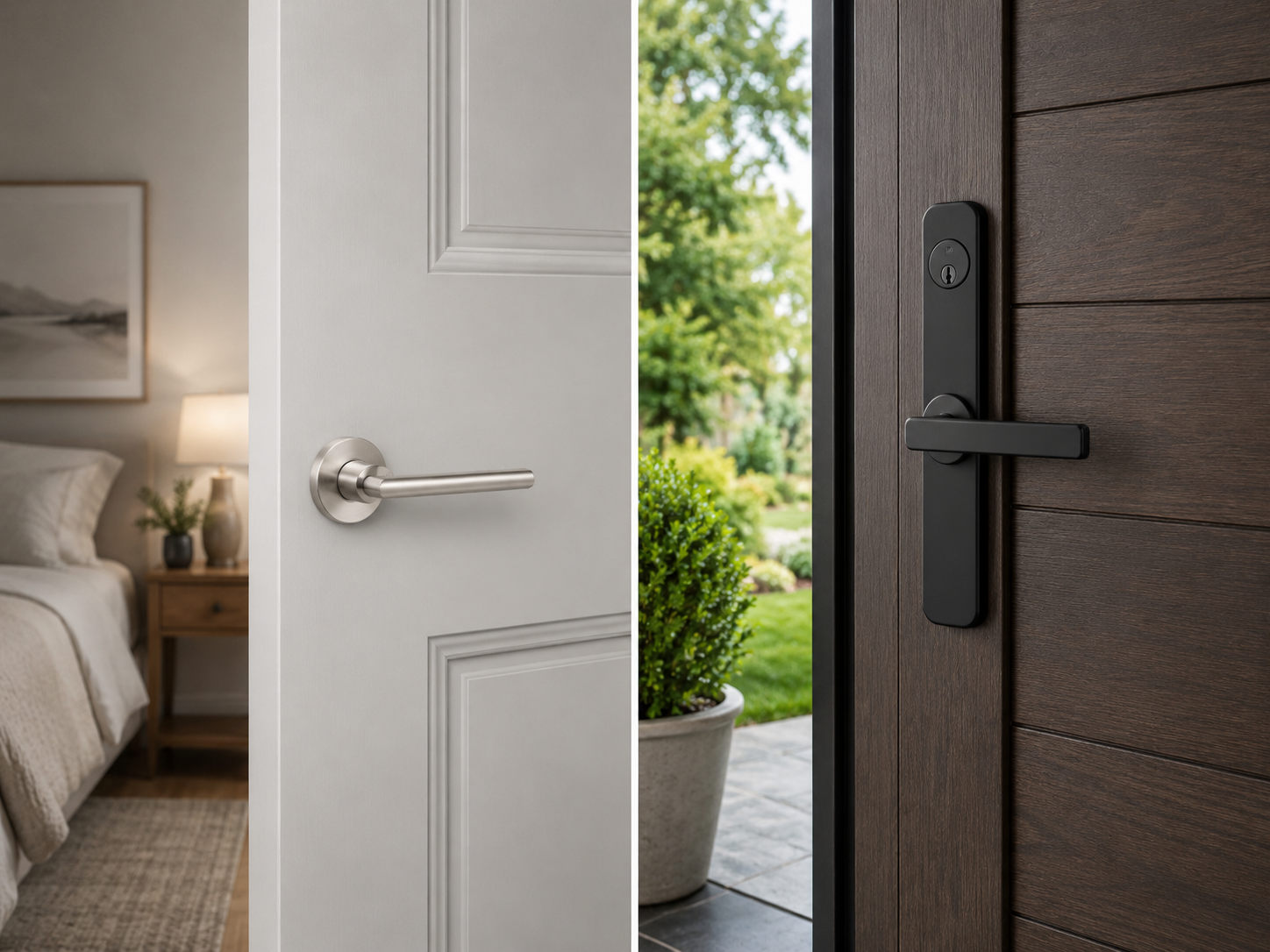
Stainless Steel Door Handles
Stainless steel door handles are widely used in modern homes, offices, apartments, hospitals, schools, and commercial spaces. They are known for clean appearance, good corrosion resistance, and long service life.
For buyers who want a modern and practical product, stainless steel is often a safe choice. It works well with minimalist interiors, glass doors, metal doors, wooden doors, and commercial doors. Brushed stainless steel also hides fingerprints and small scratches better than highly polished finishes.
However, not all stainless steel is the same. Buyers should confirm the grade, thickness, surface treatment, internal structure, and salt spray test requirements. For coastal markets, humid areas, or outdoor use, corrosion resistance becomes more important.
Example: A hotel project near the coast may prefer higher-grade stainless steel door handles with better anti-rust performance, while a standard apartment project may use more cost-effective stainless steel handles for interior doors.
Zinc Alloy Door Handles
Zinc alloy door handles are very common in residential and decorative hardware markets. They are easier to shape, which makes them suitable for modern, vintage, European-style, and decorative designs.
The advantage of zinc alloy is design flexibility. It can be made into many different shapes and finishes, including matte black, satin nickel, chrome, gold, antique brass, bronze, and coffee colors. For buyers who need attractive styles at a competitive price, zinc alloy is often a strong option.
The limitation is that zinc alloy usually depends heavily on surface treatment quality. If plating, painting, or coating is not well controlled, the finish may peel, fade, or corrode faster. That is why buyers should not only ask for product photos. They should also check sample quality, coating thickness, salt spray performance, carton protection, and supplier production control.
Example: For e-commerce sellers selling black door handles, zinc alloy can offer good design variety and price advantage. But packaging and finish protection must be checked carefully because scratches on matte black surfaces are easy for consumers to notice.
Brass Door Handles
Brass door handles are often used in higher-end homes, villas, boutique hotels, luxury apartments, and traditional-style interiors. Brass has a warm tone, solid hand feel, and premium visual effect.
Brass can be polished, brushed, lacquered, aged, or finished into antique brass door handles. Compared with some lower-cost materials, brass usually gives buyers a stronger sense of value. It is often selected by customers who care about design details, architectural style, and long-term appearance.
The cost is usually higher than zinc alloy or common stainless steel. Buyers should confirm whether the handle is solid brass, brass-plated, or brass-color coated, because these are very different in cost and performance.
Example: A luxury villa project may choose solid brass door handles for main interior doors, while a retail product line may choose brass-color zinc alloy handles to balance price and appearance.
Aluminum Door Handles
Aluminum door handles are lightweight, corrosion-resistant, and suitable for many modern applications. They are commonly used on aluminum doors, sliding doors, balcony doors, office partitions, and some interior doors.
Aluminum is easier to process and can be anodized or powder-coated in different colors. It is a good option when buyers want a lightweight product with a modern look. However, aluminum may not feel as heavy or premium as brass or stainless steel, so it is usually selected based on application rather than luxury positioning.
Example: For sliding doors, glass doors, and aluminum frame doors, aluminum door handles can be a practical choice because they match the door system well.
Iron and Steel Door Handles
Iron or steel door handles are often used when strength and cost are important. They may be found in industrial-style interiors, warehouse doors, gates, security doors, and some decorative designs.
The key issue is surface protection. Without proper coating, iron and some steel products may rust more easily, especially in humid or outdoor environments. Powder coating, electroplating, galvanizing, or other anti-rust treatments should be confirmed before ordering.
Example: A farmhouse-style project may choose black iron-style door handles for visual effect, while an industrial project may care more about thickness, welding quality, and anti-rust coating.
What Door Handle Colors Are Popular in the Market?
Door handle color is not only a design choice. It also affects how easily the product sells in different markets. Many colors are available, but some finishes are easier for buyers to choose because they match more doors and interior styles.
Why Are Black Door Handles a Classic Choice?
Black door handles are one of the easiest choices for modern buyers. They look clean, simple, and strong. They can match white doors, wooden doors, gray doors, glass doors, and modern farmhouse-style interiors.
Black is also a “safe” color because it does not look too traditional or too flashy. For many consumers, black door handles feel modern without being risky. This is why matte black and satin black finishes are popular in home renovation, apartment projects, office interiors, and e-commerce hardware sales.
Black door handles work especially well with:
White interior doors in modern homes
Light oak or walnut wooden doors
Black-framed glass doors
Farmhouse and industrial-style interiors
Modern apartments and rental properties
For online sellers, black door handles are often easier to promote because product photos look sharp and high-contrast. However, black finishes must be protected well during packing and shipping. Scratches, dents, or uneven coating are very visible on black surfaces.
Who Usually Chooses Antique Brass Door Handles?
Antique brass door handles have a warmer and more traditional feeling. This color is often preferred by customers who like vintage, classic, European, farmhouse, cottage, colonial, or boutique hotel styles.
Compared with bright gold, antique brass feels softer and more mature. It does not look overly shiny. It works well with dark wood doors, white paneled doors, cream walls, vintage furniture, and traditional interiors.
Antique brass door handles may appeal more to buyers in markets where classic home design is popular, such as the United States, the United Kingdom, Canada, Australia, and parts of Europe. The target customers are often homeowners, designers, boutique hotel buyers, furniture retailers, and renovation contractors who want a warm, aged, and timeless appearance.
Example: A U.S. farmhouse-style home may use antique brass door handles with white shaker doors. A boutique hotel in Europe may use antique brass handles with dark wood doors to create a more classic atmosphere.
What Other Door Handle Finishes Should Buyers Know?
Besides black and antique brass, the market also offers satin nickel, polished chrome, brushed gold, oil-rubbed bronze, bronze, champagne, gunmetal, copper, and custom colors.
Satin nickel is practical and widely accepted in North America. Chrome is common in bathrooms, hotels, and modern commercial spaces. Brushed gold is popular for luxury interiors, but buyers should control the tone carefully because gold colors can vary a lot between suppliers. Oil-rubbed bronze fits traditional and rustic styles. Gunmetal is often used in modern premium interiors.
For importers, color consistency is very important. The same product line should not have obvious color differences between batches. UCSOURCING usually suggests confirming color samples, finish codes, production samples, and packaging protection before mass production.
How Have Door Handles Improved with New Technology?
Modern door handles are no longer only mechanical hardware. Smart access technology has changed how people open and manage doors.
Today, many door handle systems include fingerprint unlocking, keypad access, mobile app control, IC card access, Bluetooth, Wi-Fi, face recognition, temporary passwords, remote unlocking, alarm functions, and keyless entry.
Smart locks are especially popular for apartments, short-term rental homes, offices, villas, and high-end residential projects. A landlord can give a temporary code to a guest. A homeowner can unlock the door with a phone. A family can use fingerprint access instead of carrying keys. Some systems can also send access records or alerts to the user.
However, smart door handles should not be selected only because they look advanced. Buyers should check mechanical lock strength, emergency key access, battery life, low-battery warning, waterproof rating, app stability, data security, and local market compliance.
For connected smart products in the U.S., cybersecurity is becoming more important. The FCC has introduced the U.S. Cyber Trust Mark program for qualifying consumer smart products that meet cybersecurity standards. This shows that smart device security is becoming part of consumer purchasing decisions, not only a technical issue.
Smart home compatibility is also improving. Matter, developed by the Connectivity Standards Alliance, is an IP-based connectivity standard designed to help smart home devices work across different ecosystems more reliably. For smart door locks, this type of interoperability can make products more attractive to consumers who already use Apple Home, Google Home, Amazon Alexa, or other smart home systems.
What Makes a Front Door Handle Truly Safe?
For a family’s main entrance, safety does not only mean the door handle looks strong. A safe front door system includes the door slab, frame, hinges, lock body, cylinder, strike plate, screws, installation quality, and user habits.
A beautiful door handle cannot protect a home if the lock cylinder is weak, the strike plate is poorly installed, or the door frame is not strong enough. Security should be understood as a full system.
For keyed locks, UL 437 covers requirements for key locks, including door locks and locking cylinders. This type of standard is often referenced when buyers compare higher-security locking components.
For residential buyers, ANSI/BHMA residential standards also matter. ANSI/BHMA A156.39 covers residential locksets and latches, including durability, security, and finish performance. ANSI has also noted that BHMA residential locksets and deadbolts may receive Good, Better, or Best ratings in testing categories.
In real use, a safer front door handle system should include:
A strong lock body
A reliable cylinder
A reinforced strike plate
Long screws into the door frame
Good door and frame alignment
Emergency unlocking method
Stable installation
Weather-resistant finish
Anti-tamper design for smart locks
For smart door handles, buyers should also consider what happens when the battery dies, when the Wi-Fi is down, or when the app fails. A good smart lock should have backup access options, such as emergency keys, USB emergency power, keypad entry, or mechanical override.
When Should Buyers Choose Mechanical Door Handles Instead of Smart Door Handles?
Mechanical door handles are still the best choice for many projects. They are simple, reliable, easy to install, easy to maintain, and usually more cost-effective.
For interior doors, bathrooms, bedrooms, storage rooms, and standard apartment doors, mechanical handles are often enough. They are also suitable for markets where consumers do not want to depend on batteries, apps, or Wi-Fi.
Smart door handles are more suitable when convenience and access control are important. They work well for Airbnb-style rentals, offices, villas, apartments, schools, hotels, and property management projects.
The best choice depends on the user’s real need. A family that wants simple daily use may prefer a traditional door handle with a good deadbolt. A rental property owner may prefer keypad or app access. A hotel may need card access or centralized management. A high-end villa may choose face recognition or fingerprint entry.
Where Are Different Door Handles Usually Used?
Different door handles should be matched with different spaces.
For bedrooms, privacy function and quiet operation are important. For bathrooms, privacy locking and moisture-resistant finishes matter. For kitchens, simple cleaning and durability are useful. For offices, commercial-grade durability may be more important than decorative design. For hotels, card access and long-term maintenance are key concerns. For front doors, security should always come first.
For retail buyers and e-commerce sellers, product selection should also match the target customer. Black door handles may be suitable for modern home renovation buyers. Antique brass door handles may be better for vintage and farmhouse-style customers. Stainless steel handles may be suitable for commercial projects. Zinc alloy handles may be better for decorative product lines with more design options.
UCSOURCING helps buyers match door handles with real market needs instead of only choosing what looks good in a catalog. This can reduce product mismatch, quality complaints, and slow-moving inventory.
See How We Can Help:https://ucsourcing.com/about/
How Can Importers Source Door Handles from China More Safely?
When sourcing door handles from China, buyers should check more than price. A very low price may mean thinner material, weak spring structure, poor surface treatment, light packaging, or unstable quality control.
Before placing an order, buyers should confirm:
Material and grade
Handle weight and thickness
Lock body type
Cylinder type
Surface finish
Color sample
Salt spray test requirement
Door thickness compatibility
Installation accessories
Screw quality
Carton packing
Label and barcode requirements
Compliance documents
Inspection standard
For European markets, EN 1906 is commonly used for lever handles and knobs. It specifies requirements and test methods related to spindle and fastening elements, operating torque, free play, safety, durability, strength, and corrosion resistance.
For U.S. and North American markets, buyers may need to consider ANSI/BHMA standards, ADA accessibility requirements, UL-related standards for locks, and local building codes depending on the product and project. Requirements may vary by application, so importers should confirm the target market before mass production.
This is where UCSOURCING can support buyers. We help compare suppliers, check samples, confirm materials, follow production, inspect packaging, and arrange shipping. For door handles, small details matter. A handle may look fine in photos but feel loose in real use. A finish may look good before shipment but scratch easily during transportation. A lock may look modern but fail to meet the buyer’s security expectations.
What Questions Should Buyers Ask Before Ordering Door Handles?
Before ordering door handles, buyers can ask these practical questions:
Is the door handle for interior or exterior use?
What door thickness does it fit?
Is the handle left-handed, right-handed, or reversible?
What material is used?
Is it solid material or plated/coated material?
What finish test can the supplier provide?
What lock body and cylinder are included?
Is the product suitable for residential or commercial use?
Does it need ANSI/BHMA, EN, CE, UL, FCC, or other compliance support?
Is the packaging strong enough for international shipping?
Can the supplier keep color consistent in repeat orders?
Can spare parts be supplied later?
These questions help buyers avoid common problems before production begins.
How to Choose the Right Door Handle Without Overcomplicating It?
Choosing door handles does not have to be difficult. Start with the door type, usage scenario, target market, material, finish, security level, and required standards.
If the buyer wants a safe and modern color, black door handles are usually easy to match and easy to sell. If the buyer wants a warmer, more traditional, and higher-end look, antique brass door handles can be a strong choice. If durability and commercial use are important, stainless steel or tested commercial-grade hardware may be better. If decorative variety and price control matter, zinc alloy can be practical. If access convenience is the main selling point, smart door handles with fingerprint, keypad, app, or face recognition may be worth considering.
The most important point is balance. A good door handle should match the door, fit the user’s daily habits, meet the required security level, and perform well after installation.
For importers, retailers, contractors, and brand owners, UCSOURCING can help make the selection process easier. From supplier comparison to sample checking, from material confirmation to quality inspection, from packaging review to shipping arrangement, we help buyers source door handles with better control and lower risk.
Read More Sourcing Guides:https://ucsourcing.com/our-blog/
Contact UCSOURCING
If you need to source from China, our team can assist you with everything from supplier selection to final delivery.
Website Links:https://ucsourcing.com/
WhatsApp: +86-18026272594 name:Jenny
بريد إلكتروني: [email protected]
جينيلي@ucsourcing.com
We help global buyers source smarter, reduce risks, and build stable supply chains in China.