Latex bedding has become a serious category for buyers who want better comfort, stronger support, and longer product life. A latex pillow can help support the neck. Latex mattresses can offer a responsive, breathable sleep surface. Latex mattress toppers are often used to upgrade an existing bed without replacing the full mattress. Latex cushions are also popular for chairs, sofas, office seats, and travel use.
For importers, online sellers, furniture brands, and bedding retailers, the real question is not only “Which latex product looks good?” The better question is: What kind of latex is being used, what standards does it meet, and can the supplier prove it?
That is where careful sourcing matters. When buyers are sourcing in China, they should not only compare price. They need to check material composition, firmness, density, odor, certification, packaging, labeling, and market compliance. A low quote means very little if the product cannot pass customer expectations or import requirements.
UCSOURCING helps buyers review latex bedding products from a sourcing and quality-control angle, so the final order is not based only on factory promises.
Talk to a Sourcing Expert:https://ucsourcing.com/contact-us/
What Are Latex Bedding Products?
Latex bedding products usually include latex pillows, latex mattresses, latex mattress toppers, latex cushion products, seat pads, back cushions, and sofa support pads. These products are often chosen because latex has a naturally elastic feel. It pushes back faster than memory foam, so the user does not feel trapped in the material.
A latex pillow is usually designed for neck support and pressure relief. Different shapes can include contour pillows, traditional molded pillows, cervical pillows, children’s pillows, and travel pillows.
Latex mattresses are larger sleep systems. They may be made with full latex layers or combined with pocket springs, fabric covers, wool, cotton, or other comfort materials. Latex mattress toppers are thinner latex layers placed on top of an existing mattress to improve comfort, firmness, or pressure relief.
Latex cushions are used beyond the bedroom. They can be made for office chairs, car seats, wheelchair cushions, meditation pads, sofa cushions, or ergonomic support products. For B2B buyers, this gives latex a wider product range than just mattresses.
What Is Latex Made From?
Latex can come from natural rubber latex, synthetic latex, or a blend of both. Natural rubber latex comes from the sap of the rubber tree, Hevea brasiliensis. Latex allergy is related to proteins found in natural rubber latex, so buyers should be careful with labeling and consumer warnings in sensitive markets.
In bedding, natural latex is valued for elasticity, support, breathability, and durability. However, not every product advertised as “latex” is the same. Some suppliers use natural latex. Some use synthetic latex. Some use blended latex. Some products are not real latex at all but polyurethane foam with a “latex-like” feel.
This is why a professional sourcing supplier should ask for material details before quotation, not after the order is placed.
How Are Natural, Organic, Synthetic, and Artificial Latex Different?
Natural Latex
Natural latex is made mainly from rubber tree latex. It is often chosen by premium bedding brands because it has good rebound, natural elasticity, and a more breathable structure than many petroleum-based foams.
For buyers, natural latex is usually positioned as a mid-to-premium material. It works well for latex pillows, latex mattresses, latex mattress toppers, and latex cushion products where comfort and long-term support are important.
Organic Latex
Organic latex is not just “natural latex.” It needs certification support. The Global Organic Latex Standard, or GOLS, covers natural rubber latex and agricultural ingredients from certified organic plantations, with requirements related to harmful substances, emissions, polymer and filler percentages, and supply-chain traceability.
According to the GOLS standard document, a product must contain at least 95% certified natural rubber latex of its polymer content, with limited processing chemicals or filler content.
For high-end markets, GOLS-certified latex can make a product easier to explain to customers. It is especially useful for brands that sell organic mattresses, premium toppers, baby bedding, or wellness-focused sleep products.
Synthetic Latex
Synthetic latex is commonly made from petroleum-based rubber materials, often SBR. It can be more cost-effective and consistent in production, but it is not the same as natural latex. For budget bedding products, synthetic latex may be acceptable if the buyer clearly understands the target price level and product positioning.
The problem happens when synthetic latex is sold as natural latex. That creates customer complaints, refund risks, and brand damage.
Blended Latex
Blended latex combines natural and synthetic latex. It can balance cost, performance, and consistency. For some buyers, blended latex is a practical choice, especially when the target market is not demanding full natural or organic claims.
However, the blend ratio must be clearly confirmed. Buyers should ask the supplier for the natural latex percentage and request test reports when needed.
Artificial Latex or “Latex-Like” Foam
Some suppliers use the word “latex” loosely. A product may feel soft and bouncy, but it may actually be ordinary foam with a latex-style surface or marketing name. This is risky for importers because customers may expect real latex performance.
A serious buyer should avoid vague descriptions such as “high-quality latex feel” or “latex style foam” unless the product is being sold honestly as foam, not latex.
When Should Buyers Choose Latex Pillows, Latex Mattresses, Latex Mattress Toppers, or Latex Cushions?
Choose Latex Pillows When Neck Support Is the Selling Point
Latex pillows are good for brands that want to sell comfort, support, and breathability. A contour latex pillow can appeal to side sleepers and back sleepers. A softer molded pillow may fit hotel, home bedding, or gift markets.
For latex pillows, buyers should check height, firmness, ventilation holes, cover fabric, odor level, compression recovery, and packaging method.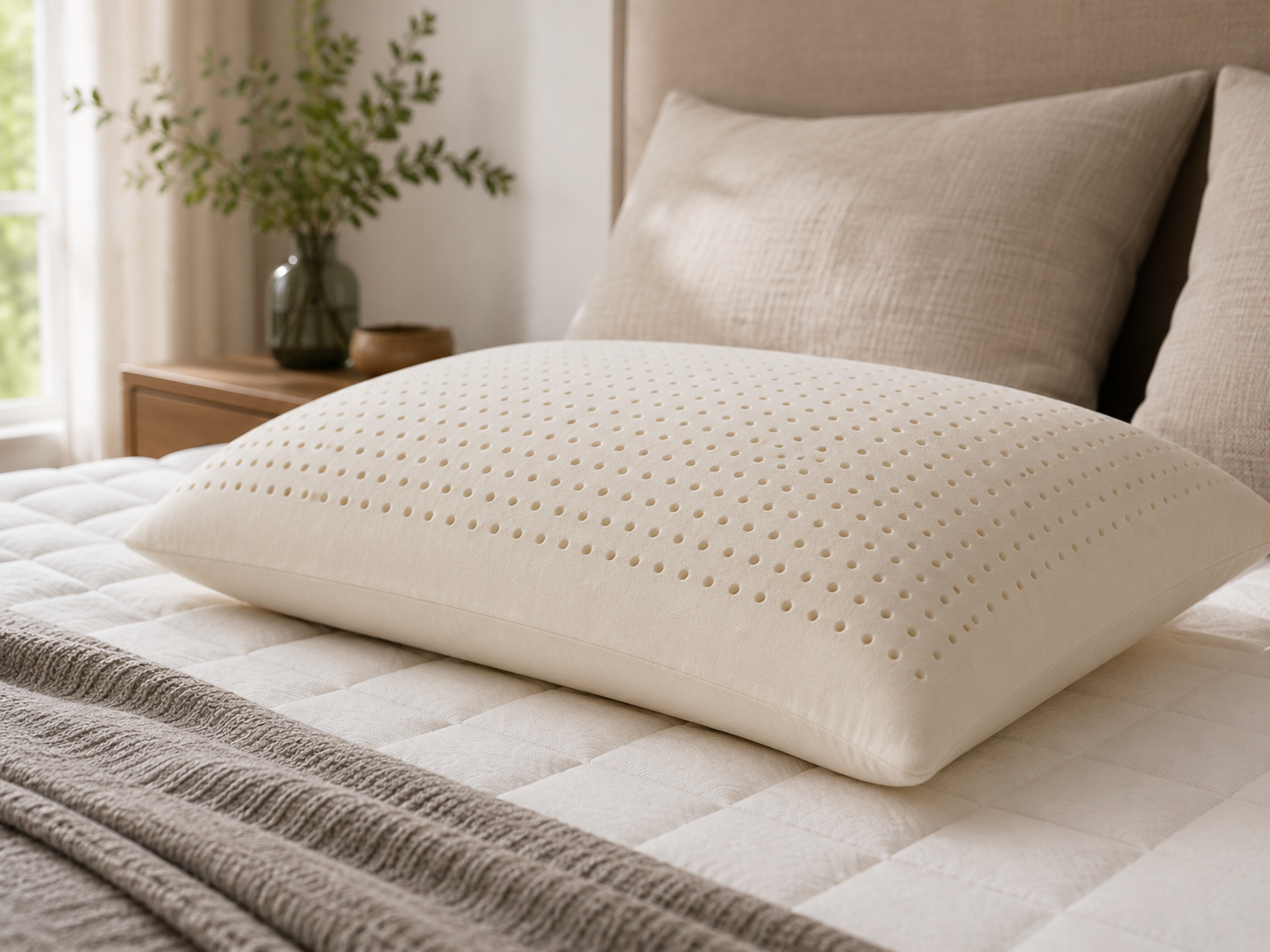
Choose Latex Mattresses When the Market Accepts Higher Value
Latex mattresses usually sit in a higher price range than basic foam mattresses. They are better for brands selling comfort, durability, and natural material stories.
A latex mattress can be all-latex, latex-over-spring, or latex combined with other comfort layers. For the U.S. market, mattress products must pay attention to federal flammability requirements. The CPSC explains that 16 CFR Part 1632 covers smoldering ignition for mattresses and mattress pads, while 16 CFR Part 1633 covers open-flame flammability for mattress sets during a 30-minute test.
Choose Latex Mattress Toppers When Customers Want an Upgrade
Latex mattress toppers are easier to ship than full mattresses and can be a smart product for e-commerce sellers. A topper can improve the feel of an existing mattress without asking the customer to buy a completely new bed.
Buyers should confirm thickness, density, firmness, perforation design, edge trimming, cover material, and roll-packing performance.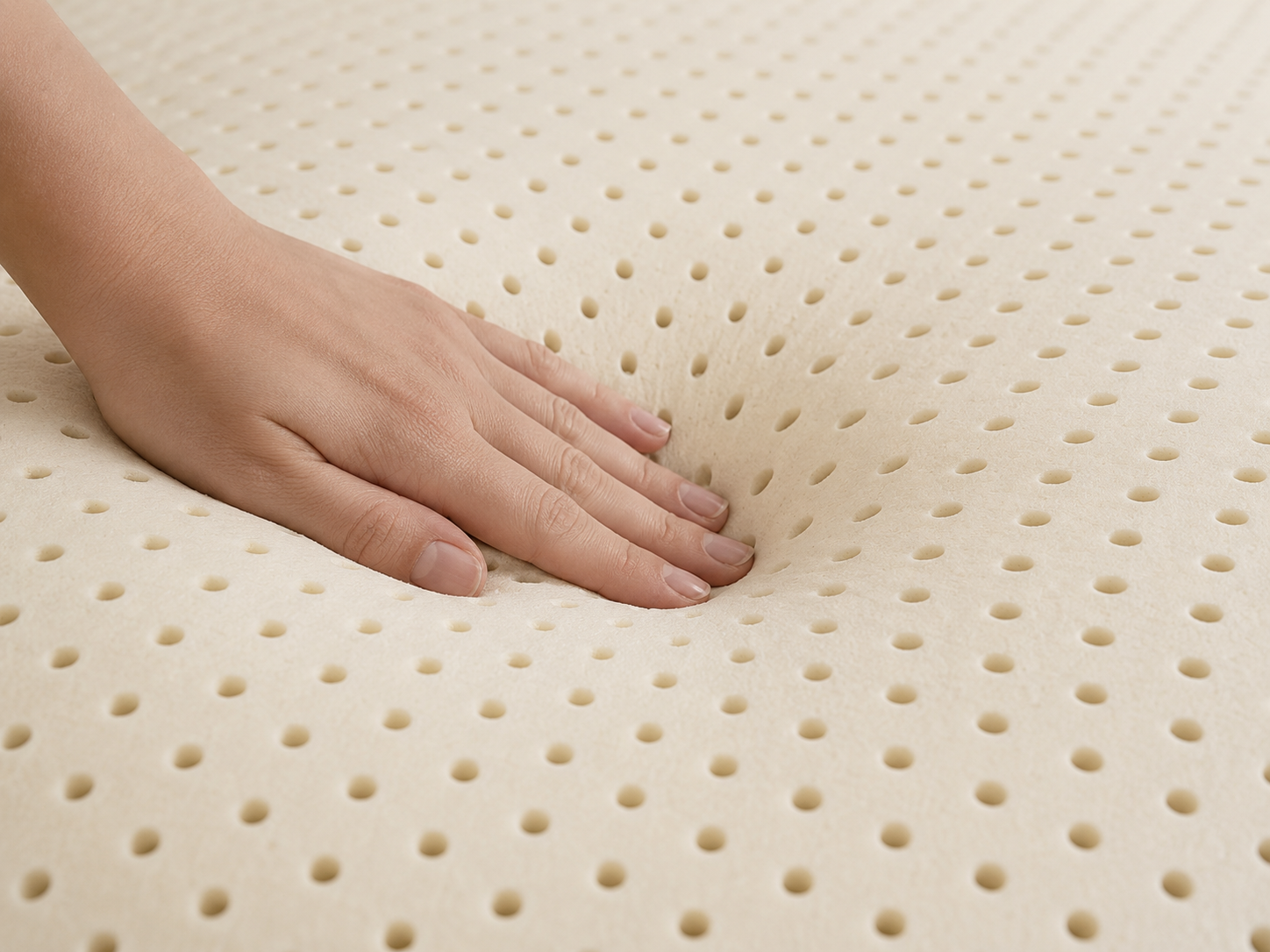
Choose Latex Cushions When You Want a Wider Product Line
Latex cushion products are useful for office seating, sofa support, floor seating, car seats, and ergonomic products. They can be sold as functional comfort items rather than only bedding products.
For latex cushion sourcing, shape control and firmness consistency are very important. A cushion that looks good in photos but collapses after short use will create poor reviews.
What Industry Standards Should Latex Bedding Buyers Check?
U.S. Mattress Flammability Standards
For the U.S. market, mattresses and mattress pads are regulated under federal flammability rules. 16 CFR Part 1632 covers resistance to smoldering ignition from a lighted cigarette, and 16 CFR Part 1633 covers open-flame performance for mattress sets.
This is important because a latex mattress is not only a comfort product. It is also a regulated consumer product when sold in certain markets.
OEKO-TEX STANDARD 100
OEKO-TEX STANDARD 100 is widely used in textiles and bedding. It means the certified article has been tested for harmful substances. This can apply to materials such as fabric covers, zippers, yarns, and finished textile products.
For latex bedding buyers, OEKO-TEX can help support a safer product story, especially when the product touches the skin.
GOLS for Organic Latex
GOLS is one of the most relevant standards for organic latex bedding. It addresses organic raw material, harmful substance limits, emissions, polymer and filler percentages, and traceability from plantation to final retailer.
If a supplier claims “organic latex,” buyers should not accept only a product photo or sales brochure. They should ask for a valid certificate and confirm whether the certificate covers the actual product, factory, and supply chain.
GOTS for Organic Textile Covers
Latex bedding often uses cotton, wool, knitted fabric, or other textile covers. GOTS applies to organic textiles. A textile product needs at least 70% certified organic fibers for the “made with organic” label grade, while the “organic” label grade requires at least 95% certified organic fibers.
This matters when a latex mattress or latex pillow is advertised with an organic cotton cover.
EU REACH and Textile Labeling
For Europe, buyers should pay attention to chemical restrictions under REACH. The European Commission explains that REACH gives consumers the right to know whether products contain harmful chemicals.
EU textile products also need proper fiber composition labeling when marketed in the EU. Mattress coverings are included in textile labeling requirements when they meet the textile fiber definition.
How Can Buyers Identify Good Latex Bedding Quality?
Check the Material Claim
Do not stop at the word “latex.” Ask whether the product is natural latex, organic latex, synthetic latex, blended latex, or latex-like foam. Ask for the percentage and proof.
Check Density and Firmness
Density and firmness affect comfort, support, and durability. A latex pillow that is too soft may not support the neck. A latex mattress topper that is too firm may feel uncomfortable for side sleepers. A latex cushion that is too low-density may lose support quickly.
Check Odor and Ventilation
Latex can have a natural smell, especially when newly produced. However, a strong chemical odor may indicate poor formulation, poor curing, or poor storage. Ventilation hole design can also affect airflow and comfort.
Check Compression Recovery
A good latex product should recover after pressure. Buyers should test samples by pressing, folding carefully, and observing rebound. For bulk orders, random inspection should compare sample quality with mass production quality.
Check Surface and Cutting Quality
Latex bedding should not have large cracks, sticky surfaces, uneven holes, heavy deformation, or dirty marks. For pillows and toppers, trimming and cover fit also affect customer perception.
Check Packaging
Latex products can be bulky. Vacuum compression and roll packing are common, especially for latex mattress toppers. However, over-compression or long storage under compression may affect recovery. Buyers should confirm how long the product can stay packed before use.
What Should Importers Confirm Before Placing an Order?
Before placing an order, buyers should confirm product type, material percentage, size tolerance, density, firmness, cover fabric, zipper quality, packaging method, carton strength, label content, compliance requirements, and inspection standard.
For a latex mattress, the buyer should also confirm flammability testing requirements for the target market. For a latex pillow or latex cushion, the buyer should confirm fabric testing, odor control, packaging, and labeling.
This is also where many importers ask how to import from China without making expensive mistakes. The answer is not only finding a cheaper factory. It is building a clear sourcing process before money is paid.
Where Can a China Sourcing Agent Help?
A professional china sourcing agent can help buyers compare factories, verify supplier claims, check certificates, arrange samples, follow production, inspect quality, and coordinate shipping.
When people search “sourcing agent china,” they are usually not only looking for someone to translate messages. They need someone who understands factory behavior, material differences, quality risks, and export workflow.
UCSOURCING can help buyers source latex pillows, latex mattresses, latex mattress toppers, latex cushion products, and related bedding items from China. The goal is not to push one factory. The goal is to help the buyer choose a suitable supplier, confirm product details, control quality, and reduce sourcing risk.
For bedding brands, Amazon sellers, importers, hotels, and retailers, this can make the whole order easier to manage.
Latex bedding can be a strong product category, but only when the buyer understands what is inside the product. Natural latex, organic latex, synthetic latex, blended latex, and artificial latex-like foam are not the same. They have different costs, different selling points, and different risks.
A good latex pillow should support the neck. A good latex mattress should balance comfort, durability, and compliance. A good latex mattress topper should improve sleep comfort without creating packaging or recovery problems. A good latex cushion should keep its shape and support after repeated use.
For importers, the safest approach is to ask clear questions before placing an order: What material is used? What percentage is natural latex? What certificates are available? What standards apply to the target market? How will quality be inspected before shipment?
With the right sourcing supplier and a careful quality-control process, latex bedding can become a reliable product line instead of a risky purchase.
UCSOURCING helps buyers manage this process from supplier search to sample checking, production follow-up, inspection, and shipping support. If you are planning to source latex bedding products from China, the best time to solve quality problems is before production starts.
If you are planning a latex product order and are not sure which material, standard, or factory type is right for your market, contact UCSOURCING to start with a safer sourcing plan.
Send us your product details, and we will help you find a more reliable way to source from China.
Read More Sourcing Guides:https://ucsourcing.com/our-blog/