Latex gloves are used in medical care, dental clinics, laboratories, cleaning, food handling, household work, and industrial protection. For buyers, however, choosing the right glove is not just about price. A latex glove may look simple, but the material, thickness, AQL level, powder-free processing, tensile strength, packaging, shelf life, and destination-market compliance can all affect safety, customer satisfaction, and import risk.
This is especially important for medical examination gloves and latex gloves surgical products. In the United States, medical gloves are regulated as medical devices. The FDA classifies non-powdered patient examination gloves under 21 CFR 880.6250 and non-powdered surgeon’s gloves under 21 CFR 878.4460. The FDA also banned powdered surgeon’s gloves and powdered patient examination gloves because of health risks linked to glove powder exposure.
For importers, distributors, hospitals, food-service suppliers, and online sellers, the best decision is not always “latex or no latex.” The real question is: What job does the glove need to do, what risks must it control, and what standards must it meet before shipment?
UCSOURCING helps buyers compare glove materials, screen real factories, review test reports, arrange samples, follow production, inspect quality, and manage shipping from China. For buyers sourcing in China, the goal is not only to find a low price. The goal is to find a sourcing supplier that can deliver the right glove for the right use.
Talk to a Sourcing Expert:https://ucsourcing.com/contact-us/
What Are Latex Gloves?
Latex gloves are usually made from natural rubber latex. They are known for good elasticity, comfortable fit, strong tactile sensitivity, and good flexibility. This is why gloves latex products have been widely used in medical, dental, laboratory, cleaning, and household applications for many years.
A standard latex glove can be thin and flexible for medical examination use, thicker for household cleaning, or specially made as a sterile surgical glove. Disposable latex gloves are often used where users need short-term protection, frequent glove changes, and better hand movement.
However, latex is not suitable for every buyer or every market. Natural rubber latex can cause allergic reactions in some users. For medical products that contain natural rubber latex, FDA labeling rules require a caution statement about possible allergic reactions.
That is why many buyers search for latex free gloves. In real sourcing, “latex free” usually means the glove is not made from natural rubber latex. Common alternatives include nitrile, vinyl, neoprene, polyisoprene, TPE, CPE, and PE gloves.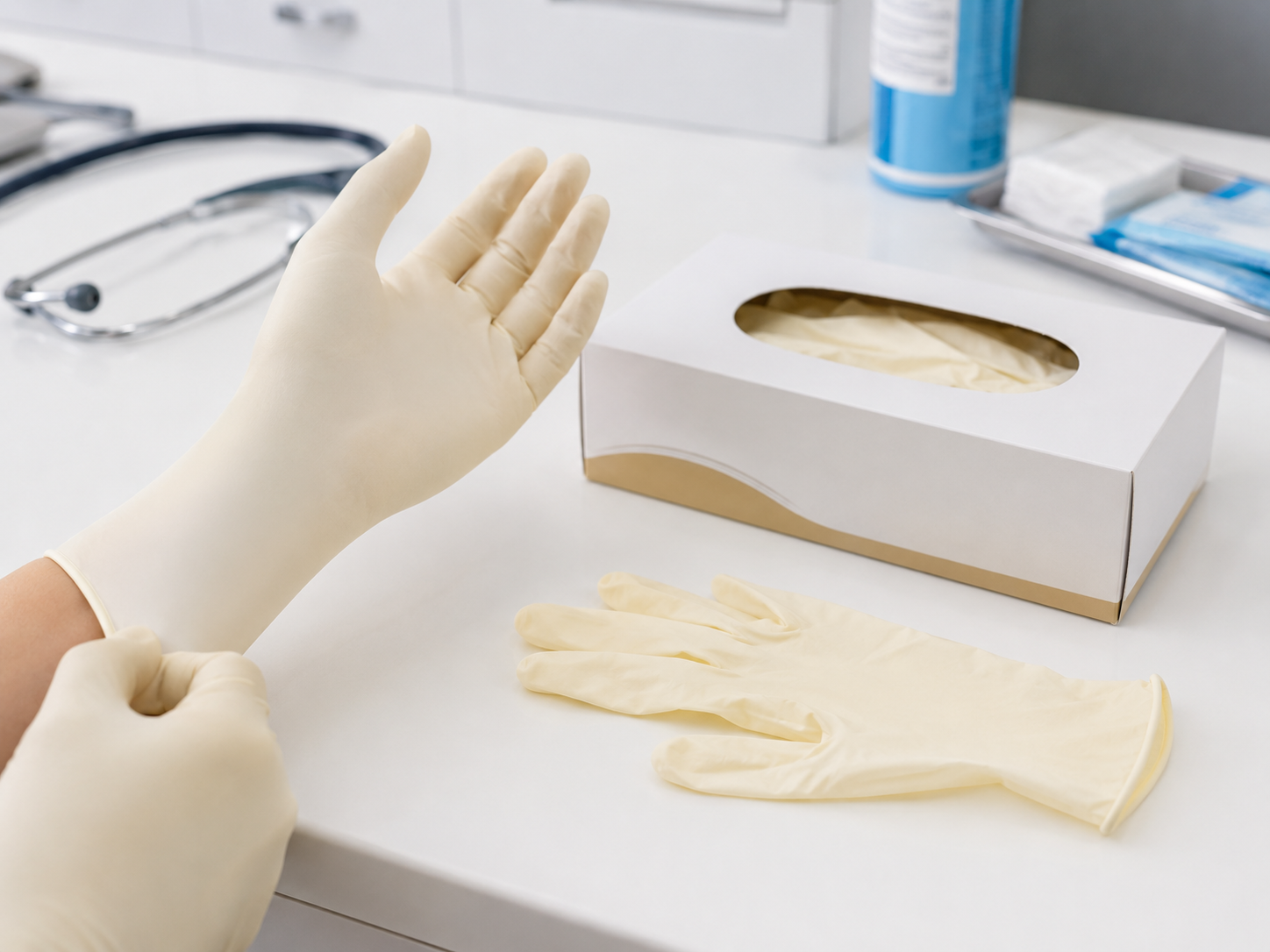
What Is the Difference Between Latex Gloves and Latex-Free Gloves?
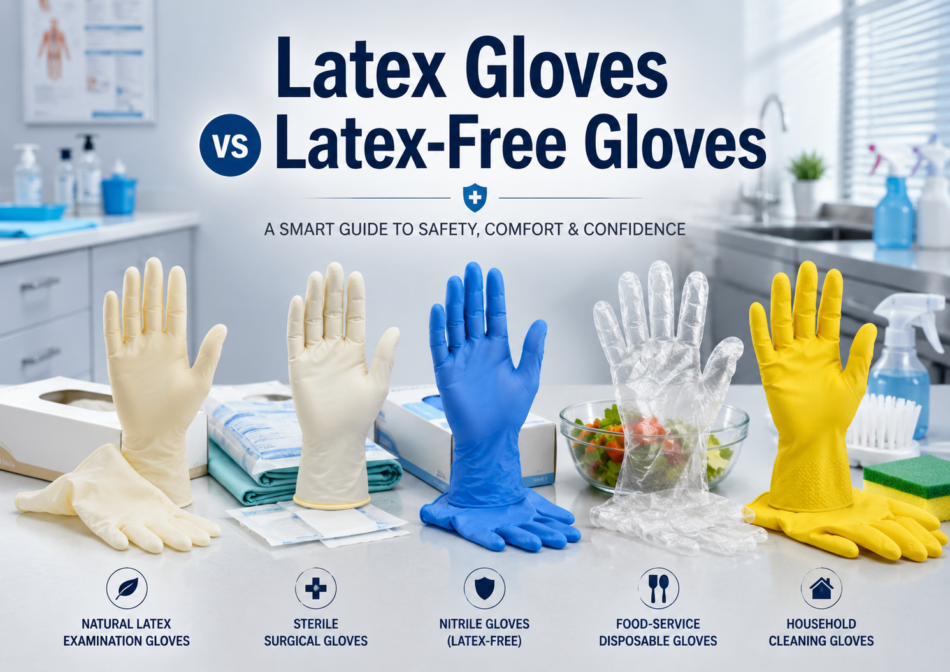
Latex gloves are made from natural rubber latex. Latex-free gloves are made from materials that do not use natural rubber latex, such as nitrile, vinyl, neoprene, or synthetic polyisoprene.
For search purposes, many buyers use the phrase “latex free gloves.” But for U.S. medical labeling, the FDA recommends more precise wording such as “not made with natural rubber latex,” because terms like “latex-free” may give users a false sense of complete safety if allergen absence cannot be fully assured.
Latex Gloves vs. Latex-Free Gloves
| Item | Latex Gloves | Latex-Free Gloves |
|---|---|---|
| Main material | Natural rubber latex | Nitrile, vinyl, neoprene, polyisoprene, TPE, CPE, PE |
| Fit and stretch | Excellent elasticity and comfort | Depends on material; nitrile and polyisoprene perform better than vinyl |
| Allergy concern | Natural rubber latex allergy risk | Lower latex allergy risk, but some chemicals may still irritate skin |
| Tactile sensitivity | Very good | Nitrile and polyisoprene are also good |
| Common use | Medical, dental, cleaning, household, light industrial | Medical, food service, labs, industrial, allergy-sensitive markets |
| Cost | Usually competitive | Vinyl and PE are lower cost; nitrile and polyisoprene are higher |
| Idéal pour | Comfort, flexibility, touch sensitivity | Latex-sensitive users, chemical resistance, food service, certain medical uses |
Latex gloves are still useful when comfort, grip, and elasticity matter. Latex-free gloves are better when the buyer wants to reduce latex allergy risk or sell to hospitals, clinics, restaurants, schools, and retail channels that prefer non-latex products.
What Types of Latex Gloves Are Common in the Market?
Medical Examination Latex Gloves
Medical examination gloves are used by doctors, nurses, dentists, caregivers, clinics, and laboratories. These latex gloves disposable products are usually ambidextrous, powder-free, non-sterile, and packed in dispenser boxes.
For medical use, buyers should check AQL level, pinhole testing, tensile strength, elongation, dimensions, powder residue, protein content, biocompatibility, shelf life, and package labeling. ISO 11193-1 specifies requirements for single-use medical examination gloves made from rubber latex or rubber solution.
Latex Surgical Gloves
Latex gloves surgical products are different from regular examination gloves. Surgical gloves are usually sterile, hand-specific, individually paired, and designed for better fit during surgery. They require stronger control over packaging, sterility, barrier performance, and physical properties.
ISO 10282:2023 specifies requirements for packaged sterile rubber surgical gloves used in surgical procedures to protect both patient and user from cross-contamination.
Household and Cleaning Latex Gloves
Household latex gloves are usually thicker than disposable medical gloves. They may be flock-lined, longer at the cuff, and designed for dishwashing, bathroom cleaning, janitorial use, and household chemicals. These products do not automatically meet medical standards, even if they look strong.
Industrial Latex Gloves
Industrial latex gloves are used in light manufacturing, maintenance, assembly, cleaning, and general handling. For chemical exposure, buyers should not rely only on “latex” as a material name. They need to match the glove with the actual chemical, oil, solvent, or cleaning agent used in the workplace.
Food Service Gloves
Food service gloves are often made from vinyl, nitrile, TPE, CPE, or PE, but some markets still use latex. For restaurants, food factories, supermarkets, and catering businesses, buyers should confirm food-contact suitability, powder-free processing, odor, thickness, packaging, and local regulations.
What Glove Materials Are Available Besides Latex?
Latex is only one option. A professional buyer should compare all common glove materials before placing an order.
Nitrile Gloves
Nitrile is one of the most popular latex-free glove materials. It offers good puncture resistance, better chemical resistance than latex in many applications, and is widely used in medical, dental, laboratory, food service, tattoo, beauty, and industrial markets.
ASTM D6319 covers performance and safety evaluation for nitrile rubber examination gloves used in medical examinations and diagnostic or therapeutic procedures.
Vinyl Gloves
Vinyl gloves are made from PVC. They are usually more affordable than nitrile and latex, but they have lower elasticity and weaker fit. They are commonly used for food service, cleaning, beauty, and low-risk tasks.
ASTM D5250 covers polyvinyl chloride gloves for medical application, including medical examinations and handling contaminated medical materials.
TPE, CPE, and PE Gloves
TPE, CPE, and PE gloves are commonly used in food service, supermarkets, light cleaning, and short-time handling. They are usually cost-effective, lightweight, and easy to put on, but they are not suitable for high-risk medical or chemical protection unless properly tested and approved for the intended use.
Neoprene / Chloroprene Gloves
Neoprene gloves are latex-free and often used where buyers need good flexibility, chemical resistance, and comfort. Some surgical and medical gloves use synthetic materials such as neoprene or polyisoprene.
Polyisoprene Gloves
Polyisoprene is a synthetic rubber designed to feel close to natural latex while avoiding natural rubber latex proteins. It is often used for higher-end surgical gloves, especially when buyers want latex-like comfort but need a latex-free option.
Butyl, Viton, PVA, HPPE, Aramid, Leather, and Coated Fabric Gloves
These materials are usually not substitutes for disposable medical gloves. They are used for chemical handling, cut resistance, heat resistance, mechanical work, welding, and industrial protection. Buyers should choose them based on the exact hazard, not only the material name.
What Standards Should Buyers Check Before Ordering Latex Gloves?
United States: FDA and ASTM
For the U.S. market, medical gloves must be treated as medical devices, not ordinary consumer goods. Buyers should confirm whether the product is an examination glove, surgical glove, or non-medical glove before requesting documents.
Important U.S.-related standards and checks may include:
- 21 CFR 880.6250 for patient examination gloves
- 21 CFR 878.4460 for surgeon’s gloves
- 21 CFR 800.20 for sample plans and leakage defect testing
- ASTM D3578 for rubber examination gloves
- ASTM D3577 for rubber surgical gloves
- ASTM D6319 for nitrile examination gloves
- ASTM D5250 for vinyl examination gloves
FDA’s leakage defect testing uses visual inspection and a water leak test with 1,000 ml of water. FDA enforcement criteria reference AQL levels of 1.5 for surgeon’s gloves and 2.5 for patient examination gloves.
ISO Standards
For international buyers, ISO standards are often used as a common reference. ISO 11193-1 applies to single-use medical examination gloves made from rubber latex or rubber solution. ISO 11193-2 applies to single-use medical examination gloves made from PVC. ISO 10282 applies to single-use sterile rubber surgical gloves.
European Market: EN 455
For Europe, buyers often check the EN 455 series for single-use medical gloves. EN 455 covers freedom from holes, physical properties, biological evaluation, and shelf-life determination.
If the glove is also sold as protective equipment against chemicals or microorganisms, buyers may also need to review PPE-related standards such as EN ISO 374, depending on the claim and application.
How to Inspect Latex Gloves Before Shipment?
A good glove order should be checked before mass production, during production, and before shipment.
First, buyers should confirm the intended use. A glove for dishwashing is not the same as a glove for medical examination. A food service glove is not the same as a surgical glove. The supplier must understand the target market and product claim before quoting.
Second, buyers should request complete specifications. These include material, size, thickness, weight, length, color, surface texture, powder-free treatment, cuff type, packaging, shelf life, sterilization status, and applicable standards.
Third, samples should be tested by real users. Comfort, odor, donning feel, grip, elasticity, and tearing risk can be checked quickly during sample review. For medical or regulated use, buyers should also review third-party test reports and registration documents.
Fourth, pre-shipment inspection should include carton count, packaging, labeling, box printing, glove size, color, appearance, odor, powder residue, visual defects, and water leak testing based on the agreed AQL level.
This is where many buyers lose money. They only compare unit price, but they do not compare AQL level, thickness, shelf life, packaging quality, or whether the factory can provide valid documents for the destination market.
Choosing Between Latex and Nitrile Gloves
A buyer planned to import disposable gloves for dental clinics and small medical distributors. At first, the buyer only asked for latex glove prices because latex was cheaper and comfortable.
After reviewing the target customers, UCSOURCING separated the order into two product options. The first option was powder-free latex examination gloves for customers who preferred flexibility and touch sensitivity. The second option was nitrile examination gloves for clinics that wanted latex-free products because of allergy concerns.
Instead of asking factories for “cheap gloves,” UCSOURCING helped the buyer compare material, AQL level, test reports, box labeling, shelf life, carton strength, and shipping cost. Samples were checked before mass production, and packaging warnings were reviewed before printing.
This approach gave the buyer a safer product line: latex gloves for buyers who wanted comfort and nitrile gloves for buyers who needed latex-free alternatives. It also made the sales conversation easier because the buyer could explain the difference clearly to end customers.
Read More Sourcing Guides:https://ucsourcing.com/our-blog/
How Can UCSOURCING Help with Glove Sourcing in China?
Glove sourcing in China can be simple when the product is low-risk, but medical and protective gloves need more control. A supplier may offer a very low price, but that does not mean the glove meets your market requirements.
UCSOURCING helps buyers with:
- Factory screening and supplier comparison
- Product specification confirmation
- Sample collection and review
- Test report and certificate checking
- Packaging and labeling coordination
- AQL-based pre-shipment inspection
- Production follow-up
- Shipping and export coordination
For buyers asking how to import from China, the first step is not shipping. The first step is product classification. You need to know whether the gloves are medical, food service, household, cleaning, or industrial products. Then you can decide what documents, standards, labels, and inspections are required.
A good china sourcing agent should not simply forward supplier prices. A reliable sourcing agent China buyers can trust should help reduce mistakes before production starts.
Réflexions finales
Latex gloves are still valued for comfort, stretch, and touch sensitivity. Latex-free gloves are preferred when buyers want to reduce natural rubber latex allergy risk or serve markets that prefer nitrile, vinyl, neoprene, or other synthetic materials.
The right choice depends on the use case. Medical examination gloves, surgical gloves, household gloves, cleaning gloves, food service gloves, and industrial gloves all have different standards and risks.
Before placing an order, buyers should check the material, AQL level, pinhole test, tensile strength, elongation, powder-free status, protein content, packaging, shelf life, labeling, and destination-market compliance.
If you are sourcing latex gloves disposable products, latex gloves surgical products, or latex free gloves from China, UCSOURCING can help you compare suppliers, control quality, and manage the process from sample to shipment.
If you are looking to source products but are unsure which materials, standards, or factory types are suitable for your market, please contact UCSOURCING to develop a more secure sourcing plan.
Send us your product details, and we will help you find a more reliable way to source from China.
Talk to a Sourcing Expert:https://ucsourcing.com/contact-us/