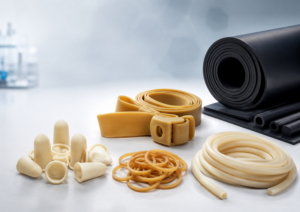
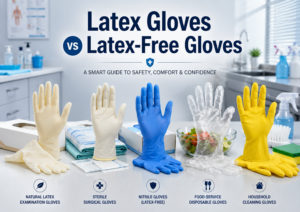
Latex is used in more products than many buyers realize. It is not only used for gloves, balloons, or condoms. In medical and industrial sourcing, latex can also be found in finger cots, tourniquets, elastic tubing, resistance bands, rubber sheets, catheter-related components, protective sleeves, coated products, and latex rubber bands.
But here is the part many buyers miss: the same material name does not mean the same sourcing standard.
A latex finger cot used in electronics assembly is not purchased the same way as a latex tourniquet used in a clinic. A latex rubber band used for packaging is not evaluated the same way as a resistance band used for fitness training. A medical component that contacts skin or the patient’s body requires a much stricter review than a general industrial elastic product.
For importers, distributors, healthcare suppliers, online sellers, and industrial buyers, choosing latex products should never be only about price. The real question is whether the product matches the intended use, target market, performance requirement, packaging method, and compliance risk.
UCSOURCING helps buyers source latex medical and industrial products from China by checking suppliers, comparing materials, reviewing samples, arranging quality inspection, and helping buyers avoid low-quality or mismatched products before mass production.
What Are Latex Medical and Industrial Products?
Latex medical and industrial products are elastic rubber-based products made from natural rubber latex or related synthetic elastomers. These products are valued for flexibility, stretch recovery, grip, softness, and cost efficiency.
Common categories include:
- latex finger cots
- latex tourniquet products
- latex rubber bands
- elastic tubes
- resistance bands
- rubber sheets
- protective sleeves
- coated latex products
- catheter-related rubber or elastomer components
- industrial covers and protective parts
Some of these products are simple industrial supplies. Others may fall under medical device requirements depending on the intended use, labeling, body-contact type, and destination market. In the United States, medical device manufacturers are subject to FDA quality system requirements, and FDA’s Quality Management System Regulation began using the updated inspection process from February 2, 2026. ISO 13485 is also widely recognized as the quality management system standard for medical devices.
That is why buyers should always define the application first. Is the product for medical use, cleanroom use, electronic assembly, fitness, packaging, laboratory use, or general industrial protection? The answer changes the supplier standard immediately.
Why Does Application Matter More Than Material Name?
Latex is only the starting point. The final sourcing requirement depends on how the product will be used.
For example, latex finger cots for electronic assembly may need low powder, clean packaging, anti-static performance, and low contamination. Some cleanroom finger cots are packaged for ISO 5 / Class 100 environments and may also be designed for ESD-sensitive work.
A latex tourniquet used for blood draw or medical care must focus on skin contact, elasticity, safety, packaging hygiene, and traceability. If the product is sold as a medical device, the buyer needs to check the applicable regulatory path in the target market.
Latex rubber bands for packaging or office use are different again. The key points are elasticity, aging resistance, size accuracy, band count, color consistency, smell control, and carton protection during shipping.
So the buyer should not ask only, “Is it latex?” A better question is: “What performance and compliance level does this product need for my market?”
What Materials Are Available for Latex and Latex-Alternative Products?
Latex products can be made from several materials. Natural latex is common, but it is not always the right choice. Some buyers need latex-free options because of allergy concerns, medical restrictions, chemical resistance, or performance requirements.
| Material | Main Features | Common Uses | Buyer Notes |
|---|---|---|---|
| Natural rubber latex | Excellent elasticity, soft feel, good stretch recovery | finger cots, tourniquets, rubber bands, resistance bands, tubing | Strong elasticity, but may cause latex allergy concerns |
| Nitrile | Latex-free, better puncture and oil resistance | finger cots, gloves, industrial protective products | Good option when latex allergy is a concern |
| Neoprene | Good chemical and weather resistance | tubing, sleeves, industrial rubber parts | Usually higher cost than natural latex |
| Silicone | Biocompatible grades available, stable at high and low temperatures | medical tubing, seals, catheter-related parts | Often used when cleanliness, temperature resistance, or skin compatibility matters |
| TPE / TPR | Latex-free, soft, flexible, recyclable in some applications | tourniquets, fitness bands, soft grips, straps | Good for latex-free positioning, but formula quality varies |
| Polyisoprene | Synthetic material with latex-like elasticity | medical gloves, medical elastic products | Often used when buyers want latex-like performance with reduced natural latex protein risk |
| EPDM | Good weather, ozone, and aging resistance | outdoor rubber parts, seals, industrial products | Not usually chosen for high-stretch medical elastic products |
| SBR | Cost-effective synthetic rubber | general rubber sheets, low-cost industrial parts | Lower elasticity than natural latex in many applications |
| Butyl rubber | Low gas permeability | seals, stoppers, protective components | More specialized; not common for basic elastic bands |
| Polyurethane | Abrasion resistance, coating performance | coated products, protective sleeves, medical film components | Often used as coating or film material |
For medical products, material selection must be connected to biological evaluation, intended use, and contact duration. ISO 10993-1 is used to guide biological evaluation of medical devices based on the nature and duration of body contact, and FDA also provides guidance on using ISO 10993-1 in device submissions.
How to Choose Latex Finger Cots?
Latex finger cots are small protective covers worn over fingers. They are commonly used in electronics assembly, cleanroom handling, laboratory work, inspection, packaging, and some light medical or hygiene-related tasks.
When sourcing latex finger cots, buyers should check:
- material: natural latex, nitrile, or anti-static latex
- powder level: powdered, powder-free, or low-powder
- size range: S, M, L, XL, or custom size
- thickness and fingertip feel
- anti-static performance for electronics use
- cleanroom packaging if needed
- surface texture and grip
- color coding
- shelf life and storage conditions
- carton quantity and inner packaging
For electronics or cleanroom buyers, contamination control is often more important than price. Finger cots that leave powder, lint, sulfur residues, or oil marks can create serious problems during assembly.
A common buyer case is an electronics accessory supplier that originally purchased low-cost latex finger cots for assembly workers. The price looked good, but workers noticed powder residue on small parts. After switching to powder-free anti-static finger cots with cleaner packaging, the buyer reduced rework and improved product appearance before shipment.
For this type of product, the cheapest supplier is not always the best supplier. The better supplier is the one that can provide stable size, clean packaging, suitable surface resistance, and consistent batch quality.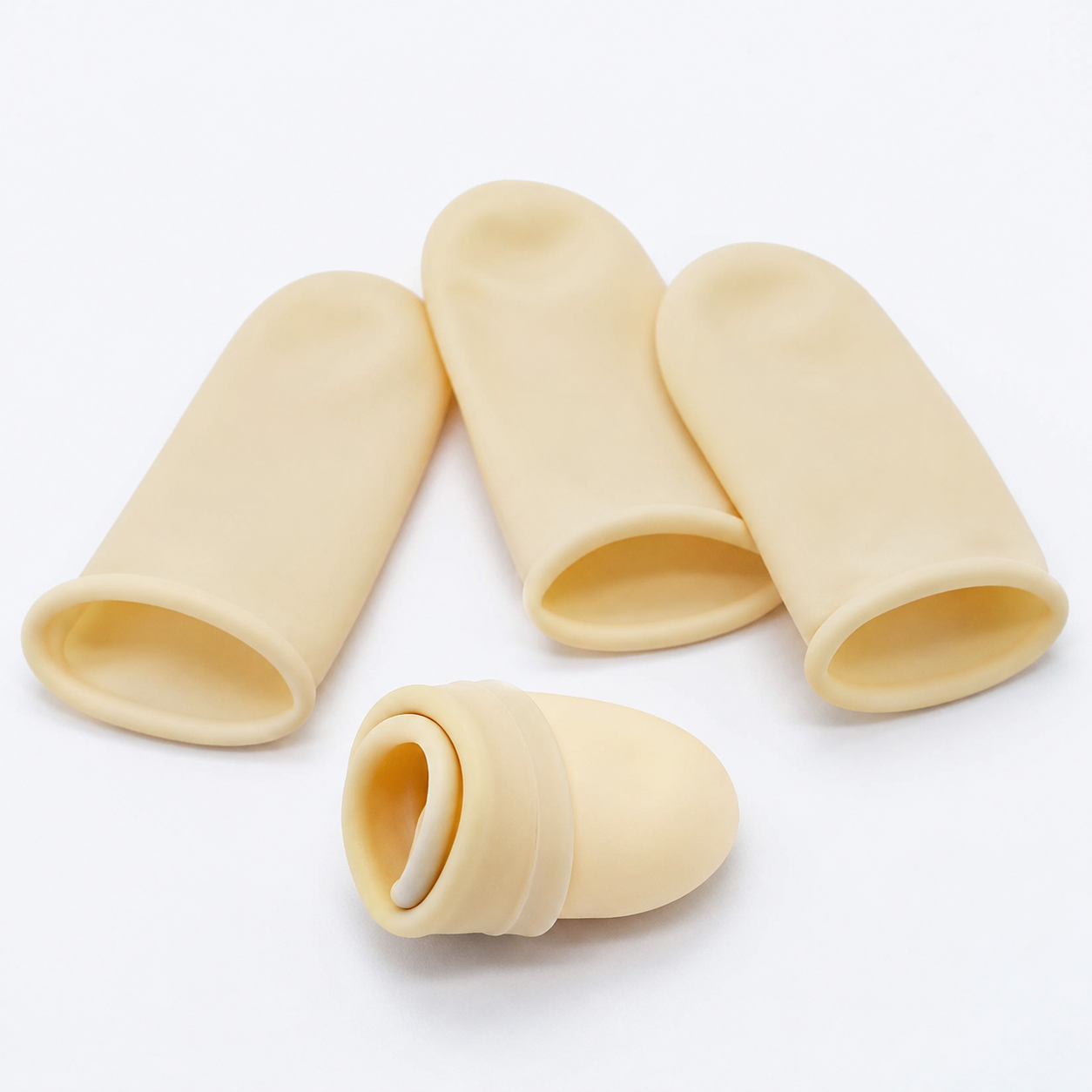
How to Choose a Latex Tourniquet?
A latex tourniquet is usually used to apply controlled pressure during medical procedures such as blood draws. Buyers may also see latex-free tourniquets made from TPE or synthetic materials.
When sourcing tourniquets, the main checks include:
- latex or latex-free material
- skin contact safety
- elasticity and recovery
- width and length
- single-use or reusable design
- textured or smooth surface
- individual packaging or roll packaging
- color options
- printing or private label packaging
- shelf life and storage condition
- destination market compliance
For many healthcare distributors, latex-free tourniquets are becoming more attractive because some users are sensitive to natural rubber latex. FDA notes that people allergic to natural rubber latex should choose medical gloves made from synthetic materials such as PVC, nitrile, or polyurethane; the same buyer logic often applies when choosing other skin-contact latex medical supplies.
A common procurement case is a clinic supplier comparing reusable latex tourniquets with single-use latex-free tourniquets. Reusable products may reduce unit cost, but they also require cleaning control and infection prevention procedures. Single-use products may cost more per piece, but they offer better hygiene control and easier inventory management for many clinical buyers.
The right choice depends on the market. A hospital buyer may care more about hygiene and traceability. A first-aid kit supplier may care more about compact packaging. A distributor may care about MOQ, private label options, and carton efficiency.
How to Choose Latex Rubber Bands?
Latex rubber bands look simple, but they can create real quality problems if the material or production process is unstable.
Buyers usually need to check:
- rubber content
- size and thickness
- tensile strength
- elongation
- recovery after stretch
- color consistency
- aging resistance
- odor level
- powder or surface treatment
- count accuracy per bag or per pound
- packaging strength
- storage temperature and shelf life
Latex rubber bands are used for office supplies, agriculture, food packaging, industrial bundling, stationery, product packaging, and retail packs. For retail products, count accuracy matters. If a package says 100 pieces, the buyer needs the supplier to control the actual count. For industrial packaging, breakage rate and aging resistance are more important.
ASTM D412 covers tensile testing for vulcanized rubber and thermoplastic elastomers, while ASTM D2240 is used for rubber hardness testing. ASTM D395 is used to measure compression set, which helps evaluate how well rubber retains elastic properties after prolonged compression.
A common case is a packaging buyer who purchases cheap latex rubber bands for warehouse bundling. The first batch works well, but after two months in storage, the bands become sticky and break easily. The issue is not only material. It may involve rubber formula, anti-aging additives, storage temperature, and packaging protection.
For latex rubber bands, buyers should always request samples and test them after stretch, storage, and repeated use. A rubber band that works on day one may not work after sitting in a hot warehouse.
What Standards Should Buyers Check?
There is no single standard that covers every latex medical and industrial product. The applicable standard depends on product category, market, and intended use.
For general rubber performance, buyers may review:
- ASTM D412 for tensile strength and elongation
- ASTM D2240 for Shore hardness
- ASTM D395 for compression set
- aging and heat resistance testing when long storage is expected
- visual inspection for cracks, bubbles, powder, stains, and deformation
For medical or body-contact products, buyers may need:
- ISO 13485 quality management system
- ISO 10993 biological evaluation
- clean production controls
- traceability records
- material safety documentation
- sterilization validation if the product is sold sterile
- destination market registration or regulatory review
For catheter-related products, the requirements can be much stricter. ISO 10555-1:2023 specifies general requirements for sterile, single-use intravascular catheters, and ISO 80369-1 covers small-bore connectors used for liquids and gases in healthcare applications.
For the EU market, medical devices may fall under Regulation (EU) 2017/745, known as the Medical Device Regulation.
The important point is simple: do not ask a factory for “standard latex product” without defining the product use. A medical-grade product, cleanroom product, industrial product, and retail packaging product need different documents and different inspections.
How to Inspect Latex Medical and Industrial Products Before Shipment?
A good inspection plan should match the product risk.
For latex finger cots, inspection may include size, thickness, powder level, appearance, packaging, quantity, anti-static performance, and cleanliness.
For latex tourniquet products, inspection may include length, width, elasticity, recovery, surface quality, printing, packaging hygiene, and labeling.
For latex rubber bands, inspection may include band size, color, tensile performance, count accuracy, aging signs, odor, and carton protection.
For resistance bands or elastic tubing, inspection should include tensile strength, elongation, rebound, thickness, surface cracks, color consistency, and odor control.
A practical inspection process usually includes:
- Confirm approved sample before production.
- Check raw material and formula consistency.
- Review packaging artwork and labeling.
- Inspect during production when possible.
- Conduct final random inspection before shipment.
- Keep photos, test reports, and packing records.
- Compare final goods against the approved sample.
UCSOURCING can help buyers communicate these requirements with suppliers before production starts. This is important because many latex product problems cannot be solved after the goods are already packed.
Talk to a Sourcing Expert:https://ucsourcing.com/contact-us/
How to Identify Low-Quality Latex Products?
Low-quality latex products often show warning signs before mass production. Buyers should pay attention to:
- strong chemical smell
- uneven thickness
- sticky surface
- powder residue
- color differences between batches
- easy tearing during stretch
- poor recovery after stretching
- cracking after storage
- unclear material description
- no batch number or traceability
- supplier refusing sample testing
- vague answers about standards or documents
For medical and body-contact products, poor documentation is also a red flag. A supplier may offer a low price, but if they cannot explain material source, quality control process, testing plan, or labeling responsibility, the buyer takes unnecessary risk.
When Should Buyers Choose Latex-Free Alternatives?
Latex is flexible and cost-effective, but it is not always the best choice.
Buyers should consider latex-free alternatives when:
- the product is used in healthcare environments
- end users may have latex allergies
- the market requires latex-free labeling
- the product needs better oil or chemical resistance
- the buyer wants to reduce allergy-related complaints
- the product is used for children, skin contact, or wellness products
- the brand wants safer positioning for online retail
Nitrile, TPE, silicone, polyurethane, and polyisoprene are common alternatives. The best choice depends on the product. For finger cots, nitrile may be a good option. For tourniquets, TPE is common. For medical tubing, silicone may be better. For high-stretch applications, natural latex may still perform better than many alternatives.
What Should Buyers Ask Suppliers Before Placing an Order?
Before confirming a latex medical or industrial product order, buyers should ask:
- What is the exact material formula?
- Is the product latex or latex-free?
- What is the intended use?
- Can you provide samples from current production?
- What tests have been done?
- What standards can the product meet?
- Is the product for medical use or industrial use only?
- Can the packaging be customized?
- What is the shelf life?
- How is the product stored before shipment?
- Can each batch be traced?
- What is the MOQ for private label packaging?
- Can we inspect before shipment?
These questions help buyers separate real manufacturers from suppliers who only offer low prices.
Why Work With UCSOURCING for Latex Product Sourcing?
Latex medical and industrial products look simple from the outside, but sourcing them correctly requires product experience, supplier screening, sample comparison, inspection planning, and clear communication.
UCSOURCING helps buyers source from China with a more controlled process. Instead of only sending a product photo to several factories and choosing the lowest quotation, we help buyers compare product use, material options, packaging, testing needs, production capability, and shipping requirements.
For buyers who need latex finger cots, latex tourniquet products, latex rubber bands, resistance bands, elastic tubes, rubber sheets, or related latex products, a sourcing partner can reduce mistakes before the order is placed.
The goal is not just to find a supplier. The goal is to find the right product for the right market with the right level of quality control.
Learn About Us:https://ucsourcing.com/about/
What Makes a Latex Product Worth Buying?
A good latex product should match its application.
For medical products, safety, documentation, and body-contact risk matter. For industrial products, durability, elasticity, consistency, and packaging matter. For retail products, appearance, labeling, count accuracy, and customer experience matter.
The same material name does not mean the same quality level. A buyer should always look deeper than the word “latex.”
Before placing an order, check the application, material, supplier ability, standards, sample quality, packaging, and inspection plan. With the right sourcing process, latex medical and industrial products can be safe, stable, and profitable for importers, distributors, and growing brands.