Starting a small import business sounds simple in theory: find a supplier in China, buy at a low price, ship to your country, and sell at a profit. In reality, importing small quantities from China involves shipping strategy, supplier negotiation, customs planning, and cost control.
Many beginners from the United States, United Kingdom, Canada, Australia, Germany, UAE, Saudi Arabia, Singapore, Kenya, and South Africa contact us with the same concern:
“My order is small. Shipping is too expensive. Suppliers don’t accept low MOQs. How can I make this profitable?”
This guide explains how to import small quantities the right way, avoid common mistakes, and build a scalable sourcing foundation. If you need structured sourcing support, you can explore our full service scope at:
https://ucsourcing.com/our-services/
What Is Considered a Small Quantity Import?
Different companies define “small business” differently. From our experience working with global buyers, we categorize as follows:
| Buyer Type | Order Value Per Shipment | Typical Volume |
|---|---|---|
| Small Quantity Starter | Under $2,000 | Below 2 CBM |
| Growing Small Business | $5,000 – $50,000 | 5 CBM to 1×40HQ |
| Established Importer | $50,000+ | Multiple containers |
Small quantity buyers usually:
• Are testing a new product
• Have limited startup capital
• Want to test market demand
• Are launching e-commerce or social media stores
The biggest challenge at this stage is shipping cost versus product value.
Best Product Types for Small Quantity Importers
Choosing the right product category is critical. Shipping structure determines whether your business will survive.
1. High-Value, Small-Size Products
For small orders, express or air freight is often the only option. Therefore, product selection must absorb shipping costs.
Ideal examples:
• Fashion accessories
• Jewelry
• Watches
• Small electronics
• Phone accessories
• Beauty tools
• Compact home gadgets
Avoid large-volume, low-margin goods like:
• Paper products
• Large plush toys
• Low-cost mugs
• Basic commodity goods
Shipping companies charge based on dimensional weight. Large but lightweight products can cost more to ship than their selling price.
Shipping Cost Comparison Example
| Product Type | Unit Cost | Shipping Cost Ratio | Profitability |
|---|---|---|---|
| Schmuck | $2 | 10%–20% | High |
| Phone charger | $3 | 15%–25% | Moderate |
| Teddy bear | $4 | 60%–90% | Low |
| Printing paper | $10 | 40%+ | Very low |
The goal is to keep shipping below 25% of product value in small shipments.
Choose Niche Products, Not Commodities
Many beginners try to import common products like socks, paper, or generic household goods. The problem is that margins are thin and competition is intense.
Instead, focus on:
• Unique designs
• Trend-based items
• Products with customization potential
• Bundled or themed goods
• Private label opportunities
For example, instead of selling generic socks, sell non-slip baby socks or branded gym socks with packaging differentiation.
Instead of plain toilet paper, sell novelty printed rolls.
If you want to build brand value from the beginning, consider private label packaging solutions:
https://ucsourcing.com/private-label-packaging-service/
Private labeling increases perceived value and protects margins even at small volumes.
Where to Find Suppliers for Small Quantities
Alibaba
Alibaba is suitable for:
• Orders above $1,000 per supplier
• Negotiating slightly lower MOQs
• Custom packaging discussions
However, many suppliers have MOQs higher than beginner budgets. You may pay a slightly higher unit price to secure smaller quantities.
AliExpress & DHgate
These platforms are better for:
• Orders under $500
• Market testing
• Retail-level quantities
Prices are higher than Alibaba factory pricing, but suitable for validation before scaling.
Professional Sourcing Company
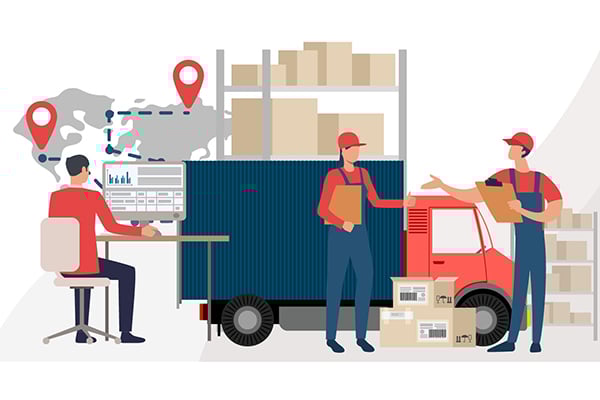
If you are buying from multiple suppliers and want consolidation, inspection, and logistics coordination, working with a sourcing partner reduces operational risk.
Our team consolidates products from different suppliers, inspects them, manages packaging, and arranges optimized shipping routes.
Explore product categories we support:
https://ucsourcing.com/products/
Best Shipping Methods for Small Quantities
Shipping is the most critical factor in small-volume importing.
1. International Express (DHL, FedEx, UPS)
Ideal für:
• Under 300kg
• High-value items
• Fast delivery
Advantages:
• Door-to-door
• Simple customs process
• Fast transit
Disadvantages:
• High cost
• Dimensional weight charges
2. Air Freight
Ideal für:
• 300kg+
• Medium urgency
Lower per-kg cost than express but requires airport pickup and customs clearance coordination.
3. LCL (Less than Container Load)
Ideal für:
• 2–10 CBM
• Cost reduction compared to air
If your cargo is under 1 CBM, LCL may not be cost-effective due to port and documentation fees.
Cost Efficiency Comparison
| Shipping Method | Cost Level | Speed | Suitable For |
|---|---|---|---|
| Express | High | 3–7 Tage | Samples & small high-value goods |
| Luftfracht | Medium-High | 5–10 days | 300kg+ |
| LCL Sea | Medium | 25–40 days | 2CBM+ |
| FCL Sea | Low per unit | 25–40 days | Full container |
Consolidation Strategy: The Smart Beginner Move
If buying from multiple suppliers, consolidate cargo before shipping.
Benefits:
• Lower per-unit freight
• Reduced handling fees
• Simplified customs
• Lower risk of lost parcels
Without consolidation, you may pay 5 separate express shipments instead of one combined LCL shipment.
We provide cargo consolidation, quality inspection, and shipping coordination as part of our sourcing solutions.
How to Avoid Scams as a Beginner
Scams are less common than beginners fear. The bigger risk is quality mismatch.
Key precautions:
• Do not focus only on lowest price
• Always request samples
• Verify supplier business license
• Use secure payment methods
• Clarify product specifications in writing
• Avoid branded goods sold far below retail price
Note about “Gold Suppliers” on Alibaba:
The badge simply indicates paid membership. It does not guarantee production capability or quality standards.
Small Quantity Import Cost Structure Breakdown
Example scenario:
Order value: $1,200
Products: fashion accessories
Weight: 120kg
Estimated cost structure:
| Item | Cost |
|---|---|
| Product Cost | $1,200 |
| Express Shipping | $280 |
| Customs & Duties | $150 |
| Total Landed Cost | $1,630 |
If average selling price yields $3,200 revenue, gross margin remains healthy.
But if product choice is wrong, shipping may exceed 40% of total cost, killing profitability.

Scaling Strategy After First Order
Small quantity importing is not the final goal. It is a learning stage.
Step 1: Test product with small batch
Step 2: Analyze sales data
Step 3: Adjust product selection
Step 4: Increase volume to reduce shipping cost
Step 5: Develop private label
Step 6: Move toward LCL or FCL
The objective is volume leverage.
Häufig gestellte Fragen
Can I import less than $1,000 worth of goods?
Yes, but product choice must support express shipping economics.
Is LCL suitable for under 1 CBM?
Usually no. Documentation and port fees make it expensive.
Can I consolidate goods from different suppliers?
Yes. Consolidation reduces shipping cost significantly.
What is the best product for beginners?
High-value, small-size niche products with branding potential.
How much budget should I prepare?
Minimum $1,000–$2,000 recommended for sustainable testing.
Should I visit China?
Not necessary at the beginning. Work with verified suppliers or sourcing companies.
Can I build my own brand with small quantity?
Yes, especially through customized packaging and private label services.
Is it profitable to import small quantities?
Yes, if product selection and shipping strategy are correct.
Start Small, Build Smart
Importing small quantities from China is not about finding the cheapest supplier. It is about selecting the right product, controlling logistics, and gradually scaling.
If you want professional help with supplier verification, cargo consolidation, inspection, private labeling, and shipping optimization, contact our sourcing specialists today.
Website: https://ucsourcing.com/our-services/
E-Mail: [email protected]
WhatsApp: +86-18026272594
We help global startups turn small test orders into scalable import businesses.