
Most importers and brand owners in markets like the United States, United Kingdom, Germany, Australia, and the Middle East don’t fail because of product ideas—they fail because of poor expansion structure.
A common pattern looks like this: a seller finds a “winning product,” immediately adds variations, enters new markets, and expands SKUs without evaluating demand alignment or supply chain readiness. The result is usually inventory pressure, inconsistent quality, and fragmented branding.
This is where the Market Product Grid (also known as the Ansoff Matrix) becomes a practical decision framework—not just a marketing theory.
In sourcing and manufacturing, this model is especially powerful when combined with structured procurement support like Ucsourcing, where product development and supply chain execution are treated as one system rather than separate steps.
You can explore how structured sourcing supports product expansion here:
https://ucsourcing.com/our-services/

What Is a Market Product Grid (Ansoff Matrix)?
A Market Product Grid is a strategic framework used to evaluate business growth through two core dimensions:
- Existing vs. New Products
- Existing vs. New Markets
By combining these dimensions, businesses can identify four growth strategies: market penetration, market development, product development, and diversification.
In global sourcing, this framework is not just for strategy teams—it directly affects product sourcing decisions, supplier selection, packaging strategy, and even MOQ planning.
The Four Growth Strategies Explained in a Sourcing Context
Market Penetration: Growing in the Same Product-Market Fit
Market penetration focuses on increasing share in an existing market using existing products.
In sourcing terms, this often means:
- Optimizing supplier pricing
- Improving packaging efficiency
- Enhancing product quality consistency
- Running better logistics and fulfillment
For example, Amazon sellers sourcing from China often increase penetration by working with sourcing agents to reduce unit cost rather than switching products entirely.
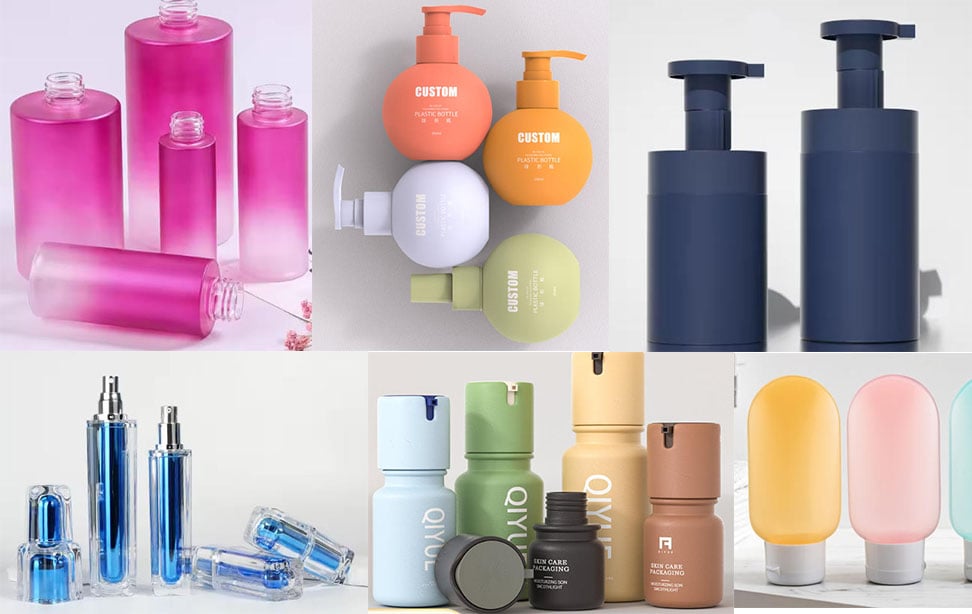
At this stage, packaging optimization becomes critical because even small branding improvements can significantly improve conversion rates. Many sellers integrate structured packaging solutions like:
https://ucsourcing.com/private-label-packaging-service/
Market Development: Selling Existing Products in New Regions
Market development means taking an existing product and entering a new geographic market.
This is especially common for importers expanding from:
- US → Canada / Mexico
- EU → Middle East
- Australia → Southeast Asia
However, many fail at this stage due to overlooked factors such as:
- Certification requirements (CE, FDA, etc.)
- Local packaging compliance
- Cultural product positioning
- Shipping cost structure differences
This is where sourcing partners become critical—not just for supplier access, but for compliance navigation and market adaptation.
Product Development: Creating New Products for Existing Customers
Product development is where most scaling brands either grow fast—or lose control.
It involves modifying or creating new products based on existing customer demand.
In sourcing execution, this includes:
- Sample development cycles
- Factory capability assessment
- Material selection optimization
- Packaging redesign
- Quality control definition
At this stage, communication gaps between buyers and factories are the most common failure point.
This is why structured sourcing support becomes essential when moving from idea → sample → mass production.
Explore product sourcing execution support here:
https://ucsourcing.com/products/
Diversification: New Products in New Markets
Diversification is the highest-risk growth strategy because it combines:
- New suppliers
- New product categories
- New target markets
- New compliance requirements
In sourcing practice, this often leads to:
- Incorrect factory selection
- Underestimated tooling costs
- Packaging misalignment with target markets
- Unexpected logistics cost increases
Without structured validation, diversification becomes speculation rather than strategy.
Market Product Grid in Global Sourcing Decisions
The real value of the Market Product Grid is not theoretical—it is operational.
Below is how sourcing decisions map to each quadrant:
| Strategy | Sourcing Action | Risk Level | Key Requirement | Common Mistake |
|---|---|---|---|---|
| Market Penetration | Optimize existing supplier | Low | Cost control & consistency | Over-focusing on price |
| Market Development | Adjust logistics + compliance | Medium | Market adaptation | Ignoring regulations |
| تطوير المنتجات | New sampling & factories | Medium–High | Strong supplier communication | Poor sample control |
| Diversification | New product + new supplier chain | High | Full supply chain validation | No feasibility testing |
Why Most Importers Misuse This Framework
The main issue is not understanding the model—it is applying it without operational support.
Typical mistakes include:
- Treating product expansion as marketing instead of supply chain strategy
- Switching suppliers too frequently without validation
- Ignoring packaging and compliance impact on margins
- Expanding SKUs before stabilizing production quality
In reality, product expansion is a supply chain decision before it is a marketing decision.

How Ucsourcing Applies This Framework in Real Sourcing Projects
At Ucsourcing, the Market Product Grid is used as a practical sourcing decision tool rather than a theoretical model.
Step 1: Product Positioning Assessment
We evaluate whether a product belongs to penetration, development, or diversification stage.
Step 2: Supplier Capability Matching
Factories are selected based on category strength, not platform visibility.
Step 3: Cost Structure Mapping
We break down total landed cost including packaging, tooling, and logistics.
Step 4: Production Risk Control
We define inspection standards and sampling validation before mass production.
This structure ensures sourcing decisions align with real business expansion logic rather than random product testing.
Comparison: Unstructured Expansion vs Grid-Based Sourcing Strategy
| Factor | Unstructured Expansion | Market Grid-Based Sourcing |
|---|---|---|
| Product Selection | Trend-driven | Strategy-driven |
| Supplier Choice | Random platform search | Verified factory matching |
| Risk Control | Low | High |
| Cost Predictability | Unstable | Structured |
| Scaling Capability | Limited | Systematic |
When to Use Each Strategy in Real Business
- If you are testing your first product → Market Penetration
- If you want to expand geography → Market Development
- If you are building a brand → Product Development
- If you are investing in long-term expansion → Diversification
Most successful importers do not use one strategy—they sequence them over time.
FAQ: Market Product Grid and Sourcing Strategy
1. Is the Market Product Grid useful for small importers?
Yes, especially for Amazon sellers and Shopify brands managing limited budgets and SKU expansion.
2. Can sourcing agents help apply this framework?
Yes. They translate strategy into supplier selection, sampling, and production execution.
3. Which strategy is safest for beginners?
Market penetration and controlled product development are the safest.
4. Why do many product expansions fail?
Because sourcing complexity is ignored during strategy planning.
5. How does packaging affect this model?
Packaging directly impacts market positioning, especially in product development and diversification stages.

Final Takeaway: Strategy Without Execution Is Incomplete
The Market Product Grid is powerful, but only when connected to real sourcing execution.
In global trade, strategy defines direction—but sourcing determines survival.
Importers who scale successfully do not just choose products. They build structured systems around supplier validation, product development, and packaging alignment.
If you want to move from random sourcing to structured expansion, explore Ucsourcing solutions here:
https://ucsourcing.com/our-services/
اتصل بنا
WAPhone / WhatsApp: +86-18026272594
بريد إلكتروني: [email protected]